Over the last decade, Toyota has been something of an outlier in the EV segment. While other brands have rushed headlong into all-electric vehicles, Toyota has taken a more measured approach. In fact, the automaker unveiled its first EV in 2023 with the debut of its first “Beyond Zero” (bZ) model, the bZ4X compact crossover. This might seem like an outdated strategy given today’s prevailing “move fast and break things” startup-inspired ethos, but it’s now starting to look like a very savvy move as other brands pay the price for their overeagerness. While Toyota’s multi-pathway method might be a significant departure from the established roadmap, it’s enabled the company to plot an ambitious EV surge at a time when other brands are facing heavy losses and culling their own all-electric offerings.
Toyota is swimming against the current with its big EV push, aiming to sell 1.5 million all-electric vehicles by 2026 and another 2 million by 2030 despite an industry-wide downturn in EV sales. That’s an ambitious goal by any measure, but it’s not outside the realm of possibility when you look at the new models coming down the pike. The new bZ roster could see Toyota become a major player in the EV space, making up for lost time and putting the company at the head of the all-electric class. Read on as we explore the EV effort, consider the tactical timing of the brand’s recent $17 billion EV investment, and learn how the new bZ models could do for Toyota’s EV fortunes what the Prius did for hybrids.
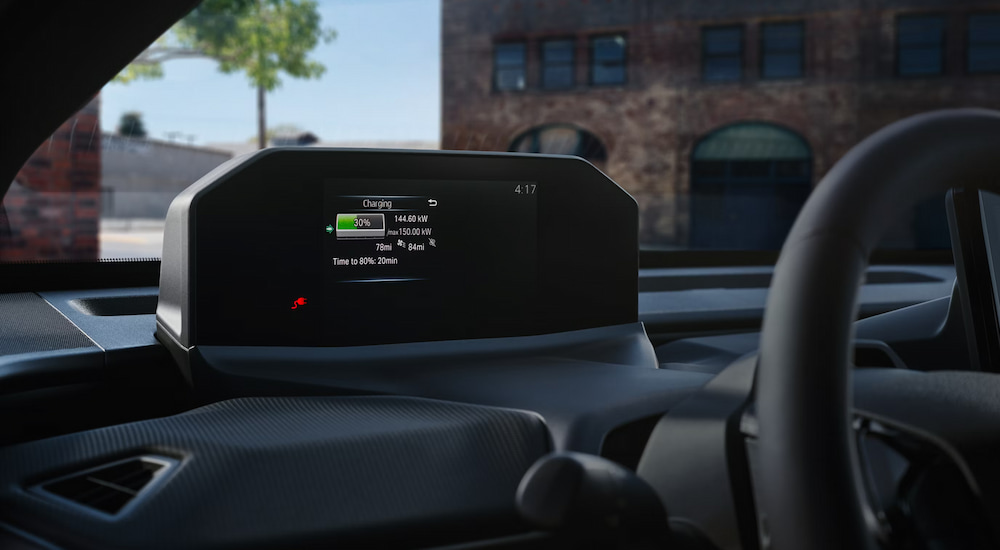
Unsteady EV Momentum
There’s a lot of money to be made in being one of the first brands to corner a new technology, but that sort of mastery doesn’t come cheap. Ford, GM, and other major brands have poured untold billions into their own EV campaigns, but high production costs, largely due to pricey batteries, have led to razor-thin margins and stiff competition. Battery prices have dropped significantly as improved techniques and technology have reduced the average cost from $150/kWh in 2022 to $99/kWh in 2025, which is one good example of why the “first to market” strategy has been something of a financial albatross for many automakers.
We’ve already seen a few EV models fall by the wayside, including Hyundai Kona, Kia Niro and even former EV poster boys like the Tesla Model S. These vehicles are largely making way for newer, next-generation options, but other EVs have also faced significantly slow sales, especially larger pickup and SUV models like the Ford F-150 Lightning, Tesla Cybertruck and GMC Hummer EV. The ongoing slump actually spurred Ford to halt production of the F-150 Lighting EV and write off some $19.5 billion in losses tied to its larger EV models. The F-150 Lightning isn’t entirely done, as it will soon return as an extended-range electric vehicle (EREV) that addresses range-related concerns by essentially turning the EV into a sort of souped-up plug-in hybrid (PHEV).
GM also wrote off around $6 billion on EV expenditures, while Honda canceled several upcoming EVs. The automakers could live with these sorts of losses if it were all leading to a brighter, more stable EV future, but the numbers have been a little underwhelming, to say the least. In 2025, EV sales trailed hybrids 1.3 million to 1.9 million, but it’s each segment’s momentum that’s really the biggest cause for concern. EV growth was as high as 85% back in 2021, but has been on a steady decline, with the segment logging 62% growth in 2022, 35% in 2023, and just 7% in 2024. The expiration of a lucrative $7,500 federal tax incentive for EVs hasn’t helped, leaving the EV segment somewhat adrift as we march through early 2026.
Meanwhile, hybrid growth has held relatively steady and routinely outperformed EVs. This trend has been especially noticeable over the last few years, with the hybrid segment expanding by 20% in 2024 alone. This cooling demand has led to plenty of sleepless nights amongst auto executives, who pegged much of their planning on increasingly robust EV sales. The numbers haven’t played along, and while it’s been a harsh realization for those who hitched their star to the all-electric wagon, it’s made Toyota look like something of a no-emissions Nostradamus.
Playing the Long Game
Toyota’s continued focus on the hybrid segment seemed a bit backward in a market steadily marching towards full electrification, but now it seems as though the strategy could pay dividends. The company has been cultivating a strong hybrid consumer base ever since the first Prius rolled off the line in 2000, and can now convert those loyal buyers into new EV drivers. The popularity of Toyota’s hybrid and PHEV models gives the brand a little extra wiggle room in its financial forecast, allowing hybrid sales to support the continued development of the company’s new EV offerings.
You don’t just wake up one day and decide to be a major player in the EV market. Toyota has been planning its EV push for years, investing in new facilities and making other improvements that have allowed the brand to hit the ground running. A cool $17 billion goes a long way toward building out your EV infrastructure, though most of that was reserved for a new $13.9 billion battery plant in North Carolina. The Toyota Battery Manufacturing North Carolina (TBMNC) will produce batteries for both EV and hybrid models, filling an important piece of the puzzle for Toyota.
Supply chain issues can wreak havoc on any enterprise, but they’re especially important in the auto industry, where margins are low and deadlines are tight. The COVID-19 pandemic proved just how fragile such supply chains could be, but TBMNC will allow Toyota to control its own fate with a proprietary battery that shields the automaker from the uncertainty of the open market. If all goes to plan, Toyota’s investment could reduce per-vehicle battery costs by as much as 50% by 2030, improve range, and reduce charging time to as little as ten minutes. In yet another example of the brand’s multi-pathway approach, Toyota is actually pursuing two different next-generation battery formulas, experimenting with both sulfur-based solid-state battery and lithium iron phosphate (LFP) designs instead of putting all of its eggs in one basket.
In addition to the new TBMNC, Toyota will also pour around $1.3 billion into its Kentucky plant (TMMK). The Georgetown, Kentucky, facility will primarily be used to assemble Toyota’s first three-row EV offering in the new Highlander EV, which will also be the brand’s first EV to be made entirely in the U.S. Additional funds will support the modernization of the company’s Missouri and Alabama plants, though those facilities will largely be focused on hybrid production.
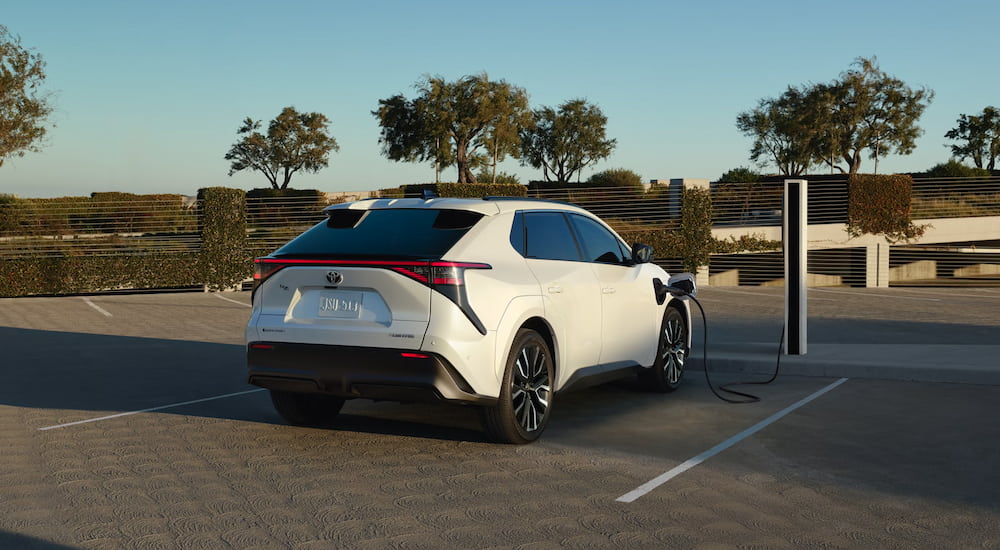
A History of Innovation
Toyota might be seen as an outlier in the modern EV segment, but the brand has actually been a pioneer in alternative fuel technology. It all started back in 1997 with the introduction of one of the world’s first mass-produced EVs. The RAV4 EV wasn’t exactly a household name, and for good reason. The all-electric crossover was largely limited to California government agencies, utilities, and major corporations as part of a fleet program mandated by the California Air Resources Board (CARB) Zero Emission Vehicle (ZEV) program. The electrified SUV was briefly marketed to the public in 2002, but production ceased in 2003 due to Toyota’s struggles to source the EV’s battery.
Next came the Prius. While not an all-electric model, there’s no denying the impact that the market’s first mass-produced hybrid had on the course of EV evolution. The popular hybrid served as an important proof of concept for alternative fuel technology, demonstrating the benefits of electrification and preparing U.S. drivers for the EVs of today.
Toyota revived the RAV4 EV in 2012 for a short two-year run in collaboration with a fledgling Tesla, but once again, the model was limited to the California market. The Golden State is also one of the only places where drivers can get behind the wheel of another one of Toyota’s alternative fuel creations, the Mirai. This fuel cell electric vehicle (FCEV) hit the market in 2014 and offers extremely fast refueling with the ability to recharge in just three to five minutes, but there’s a catch. California is one of the only states with hydrogen refueling stations to make the technology a viable alternative to a typical EV, hybrid, or gas-burning vehicle.
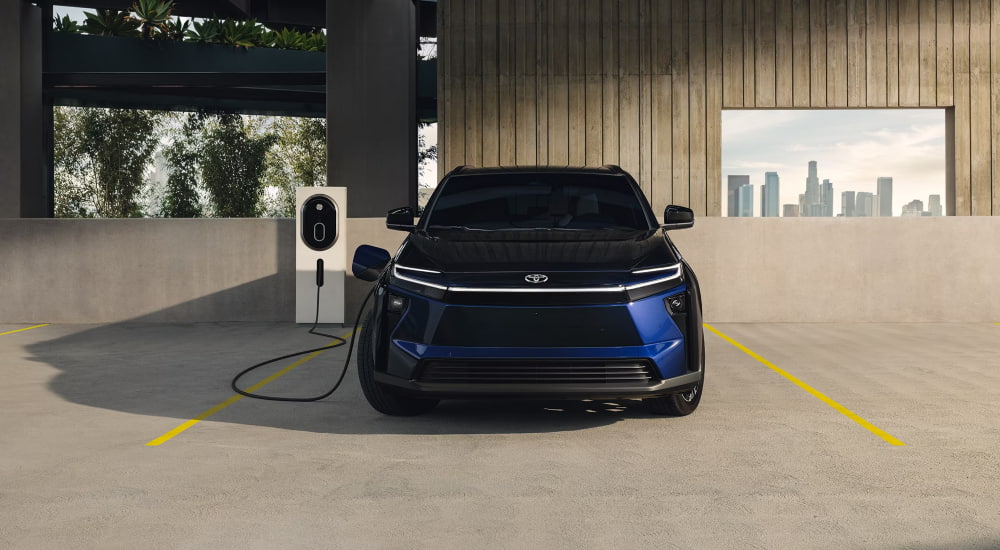
Then comes Toyota’s first contemporary EV in the bZ4X. Developed in collaboration with fellow Japanese brand Subaru, the compact crossover was the first model to employ Toyota’s new e-TNGA EV platform. The name was certainly descriptive, with bZ representing the Beyond Zero brand, “4” to invoke the similarly sized RAV4, and “X” for its crossover design, but the moniker has since been pared back to the much simpler bZ. 2026 marks Toyota’s biggest EV release to date, with both the bZ Woodland and C-HR+ joining the lineup. The first is a more rugged, adventure-ready version of the bZ with improved ground clearance and standard AWD, while the C-HR+ is a new, all-electric take on Toyota’s subcompact C-HR crossover.
That completes the current EV roster, but one more forthcoming model holds a lot of promise. The Toyota Highlander is a popular three-row option designed to meet the needs of today’s busy families. The SUV’s eight-passenger capacity and 84.3 cu.ft. of cargo space make the Highlander an especially attractive prospect for the domestic set, and the arrival of a new, all-electric version is sure to sweeten the pot. Set to hit the market in 2027, the Highlander EV will offer up to 338 hp, and Toyota estimates up to 320 miles of range. It’s a compelling combination, and one that could see the Highlander become the de facto leader in the three-row EV segment. The Kia EV9 and Hyundai IONIQ 9 represent the Highlander’s only real competition in this relatively new segment, giving Toyota a unique opportunity to corner the market with its family-friendly SUV.
Too Little, Too Late, or Perfect Timing?
If all goes according to plan, future bZ models will see Toyota become a force to be reckoned with in the all-electric segment. While it’s too early to call the effort a success, the company is certainly making some substantial investments that suggest this is no half-measure on the part of the Japanese auto giant. The brand has put its money where its mouth is, and done all the necessary groundwork with its new and improved facilities in North Carolina, Alabama, and Missouri. The bZ is still a bit of a niche model in the compact crossover segment, with 2025 sales totaling just 16,000, but the rugged bZ Woodland should enjoy some broader appeal, while the C-HR+ will be one of the segment’s more affordable options with an expected starting MSRP under $40,000. The Highlander EV is an especially exciting prospect, giving busy, eco-conscious families an exciting new option that offers the sort of cargo and passenger space most all-electric models simply can’t match. After years of playing possum, Toyota’s new all-electric push is poised to rocket the brand right back into the EV conversation.