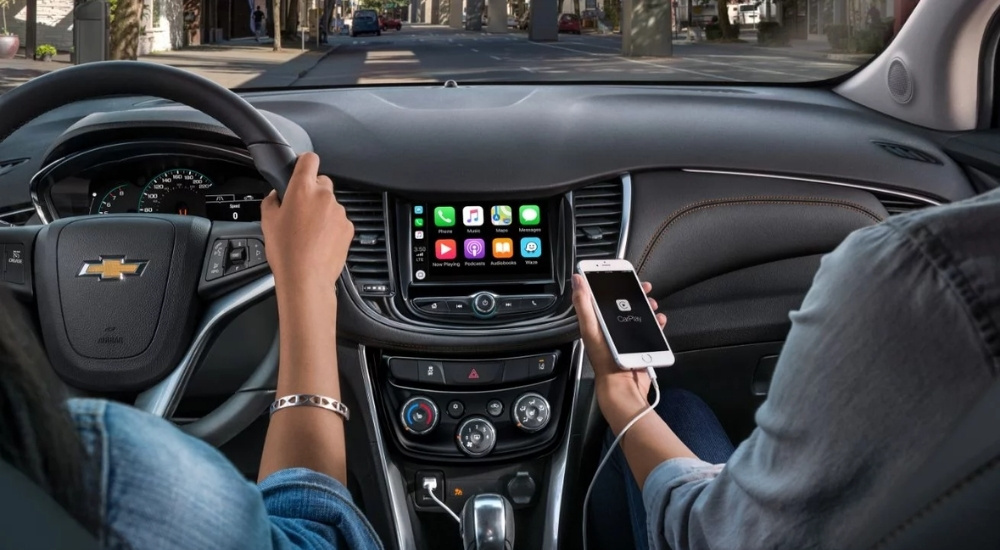
Since its March 2014 debut, Apple CarPlay has redefined the phone-based in-vehicle infotainment experience. By allowing iPhone and iPad owners to “screen mirror” their devices on compatible cars and motorcycles — more than 800 models as of this writing, plus aftermarket units that add CarPlay to those that don’t — drivers can listen to music, podcasts, and audiobooks, download mapping instructions, check their calendars, and more using Apple-based apps. In some cases, you don’t even need a USB cord.
Apple is continually updating its CarPlay system, and some users are about to experience another significant shift. They already got one in May 2025, when the introduction of iOS 26 brought the next-generation CarPlay system Apple calls CarPlay Ultra. By the time you read this, Apple should have released the final version of iOS 26.4, which will bring two other major developments in the screen mirroring world: video streaming and AI.
What should users expect from these new features? That’s what I want to answer today, while also recapping some of the other developments that accompanied the rollout of CarPlay Ultra. The screen mirroring game is changing again, and here’s what you should know about these new features, along with when and where you’ll be able to use them.
Video Streaming
The ability to stream video in a vehicle — not just on a rear-seat entertainment system, but on the main infotainment screen — has started to gain traction. Notably, OnStar offers the service on select Chevrolet, GMC, and Cadillac vehicles and subscription plans. Tesla and BMW also offer versions of this technology, with supported streaming platforms including YouTube, Netflix, Hulu, Disney+, and Tubi.
Now, beginning with iOS 26.4, this ability will come to CarPlay. Not surprisingly, the main video focus will be AppleTV. However, as users of the operating system beta have noted, if an app developer sets up a specific form of AirPlay, operators can stream that video source even if it isn’t specifically integrated into CarPlay.
Like other systems, the CarPlay Ultra video streaming feature can only be enabled when the vehicle is in park. This is because most states, as part of their distracted driving laws, have made it illegal to stream video on a screen visible to the driver while a car is in motion. Nevertheless, it’s a major step forward, and gives CarPlay a leg up on rival Android Auto.
AI Integration
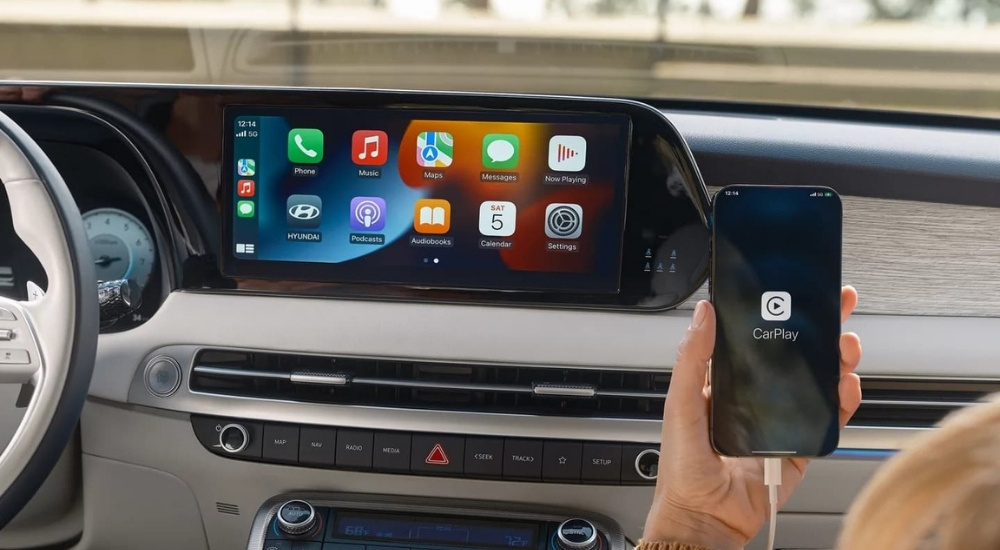
Does it feel like AI is everywhere? Soon, it might be in your vehicle, too. The other major update to CarPlay in iOS 26.4 is support for multiple third-party AI chatbots, most notably OpenAI ChatGPT, Claude, and Google Gemini. Additional support may arrive down the line, or developers can create their own chatbots.
Like on a computer, phone, or tablet, these tools can respond to questions and prompts and even perform more complex calculations and tasks. No longer will you have to fumble for your phone when you have a query. You can handle everything from the infotainment screen. Everything will use voice commands, so there’s no typing or driving.
I will add that just because chatbot support is there doesn’t mean you have to use it. Siri will still be the default assistant in CarPlay Ultra, and users must manually open a chatbot app and enable voice mode. Developers do have the option, though, of making their apps automatically open in voice mode, which would mean a smoother transition. Either way, the walls are coming down on AI’s advanced features.
Content and Functions for Every Screen
These arrive on top of many new features that debuted in the CarPlay Ultra launch. The most interesting change was that CarPlay is no longer limited to the infotainment screen. Now, when you turn on CarPlay Ultra, it will display content and controls across all dashboard screens. This includes the digital gauge cluster and any passenger screens.
Instead of separate CarPlay and vehicle-based displays and functionality, drivers will have a single connected experience. Along with selecting apps and media sources, you can now adjust the volume, control the temperature, get turn-by-turn directions, view tire pressures, and more with CarPlay. Apple also lets owners customize gauge displays and widgets based on what they use most, or even change the display color and background.
Compatibility and Vehicle Availability
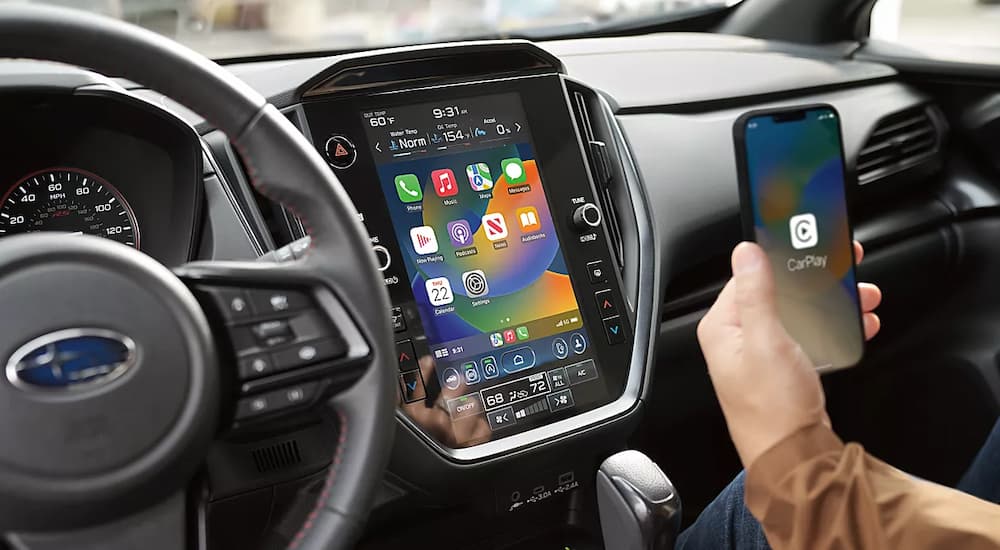
Of course, all of that only matters to you if you’re able to use it. Not surprisingly, accessing this new screen-mirroring technology requires relatively recent devices and software, and that’s before considering whether a vehicle is properly equipped. To run any version of CarPlay Ultra, users need an iPhone 12 or newer running iOS 18.5 or later. To get more advanced features such as video streaming, you will need iOS 26.4 or later. Clearly, it will take some time for both manufacturers and consumers to reach widespread adoption.
So where does adoption stand? The CarPlay Ultra system debuted on new Aston-Martin vehicles such as the DB12, DBX, and Vantage, with retrofits for some older model years. As of publication, Aston-Martin is still the only automaker shipping vehicles with CarPlay Ultra. However, the Japanese triumvirate of Hyundai, Kia, and Genesis should join before the end of 2026. It’s widely believed the 2027 Hyundai IONIQ 3 will mark the official arrival of CarPlay Ultra on a mainstream car model. Ford and Nissan have stated that their infotainment software is CarPlay Ultra-capable, but haven’t set a timeline for implementation. Porsche was also expected to start offering CarPlay Ultra support in 2026, but those plans have apparently stalled.
Backlash and Previous Generation CarPlay Expansion
That said, a few manufacturers are less keen on CarPlay Ultra. GM has started phasing out CarPlay altogether from new vehicles, especially EVs, replacing it with Google built-in and upgraded OnStar connectivity. Other automakers, including BMW, Mercedes-Benz, Volvo, and Polestar (along with sub-brands such as Audi), have stated they won’t support the Ultra system. Reportedly, the reasons for this rejection are twofold. One concern is about data control and privacy for car owners, as features like AI require extensive personal information. The second is that by taking over nearly every infotainment function, CarPlay Ultra may erode manufacturers’ autonomy and brand identity, despite Apple’s stated intent to collaborate with automakers to create a distinct look.
Another twist is that, along with getting CarPlay Ultra up to speed, Apple is also working to get more companies synced with the original CarPlay system. Bloomberg reported in November 2025 that Tesla is developing CarPlay support for its EVs after years of holding out. The current plan is to make CarPlay a window within Tesla’s existing interface, allowing them to coexist so operators can use the features of both. When support will begin remains to be determined, and it will only be for standard Apple CarPlay, but it’s still a significant development.
What to Expect From CarPlay
Like everything related to vehicle technology, things are moving forward at Apple. The addition of video streaming and AI chatbot support, along with other developments such as integrated vehicle screens, is pushing screen mirroring software into the new age. Still, I don’t think we’re even close to the end of the story. The hesitance of certain automakers to support CarPlay Ultra is notable, and maintaining it alongside the standard Apple CarPlay may further complicate implementation. If Apple views this as a long game rather than rushing or forcing people to get on board, I think that’s the best approach, ensuring acceptance and sustainable demand.