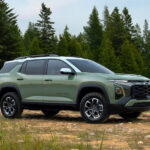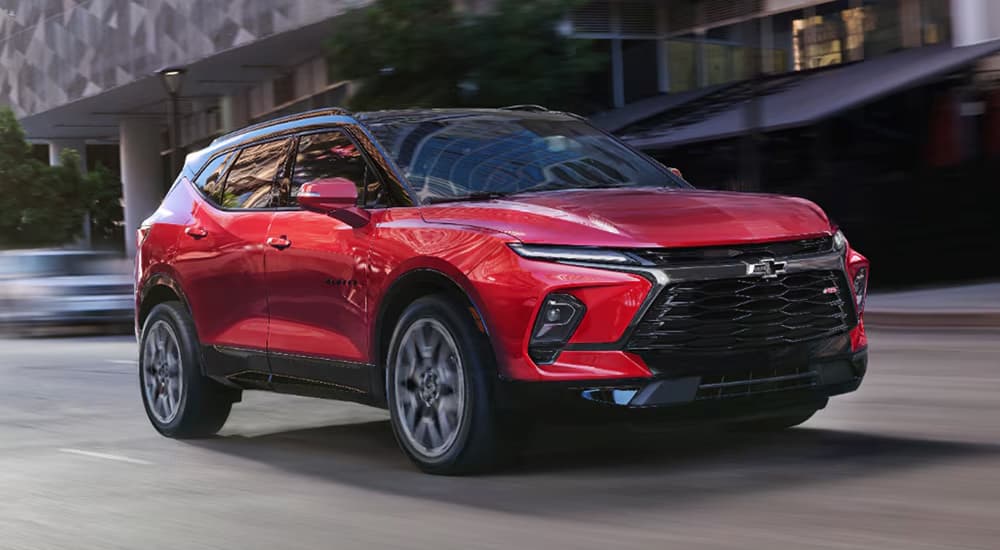
Since the reintroduction of the Chevy Blazer in 2019, this midsize SUV has gained a passionate following for its mix of everyday practicality, pony-car performance, and style inspired by the late, great Camaro. As a more powerful and aggressive alternative to the Equinox, it’s a vehicle made for drawing attention—a philosophy punctuated by the arrival of the Blazer EV in 2024, which produces up to 615 hp. It may seem odd to talk about a vehicle that’s only seven years old as undergoing a rebirth, but that’s exactly what’s about to happen.
A trio of announcements in 2025 set the stage for the 2027 Chevrolet Blazer. First was the news that production will switch locations from GM’s Ramos Arizpe plant in Mexico to Spring Hill, Tennessee. Second, the Blazer is expected to undergo its first major redesign since the 2023 refresh. Third, after previously declaring that the Blazer would switch to EV-only in the North American market, Chevy has reversed course, and the internal combustion engine (ICE) Blazer will remain for the foreseeable future.
That’s a lot to process—but I’m going to try. The year 2027 will be here before you know it, and people like me who are interested in sporty midsize SUVs should be ready. Here’s what to expect when it’s time to look for a 2027 Chevy Blazer for sale, and what I’d like to see when it rolls into dealerships.
Why Is Chevy Blazer Production Moving to the USA?
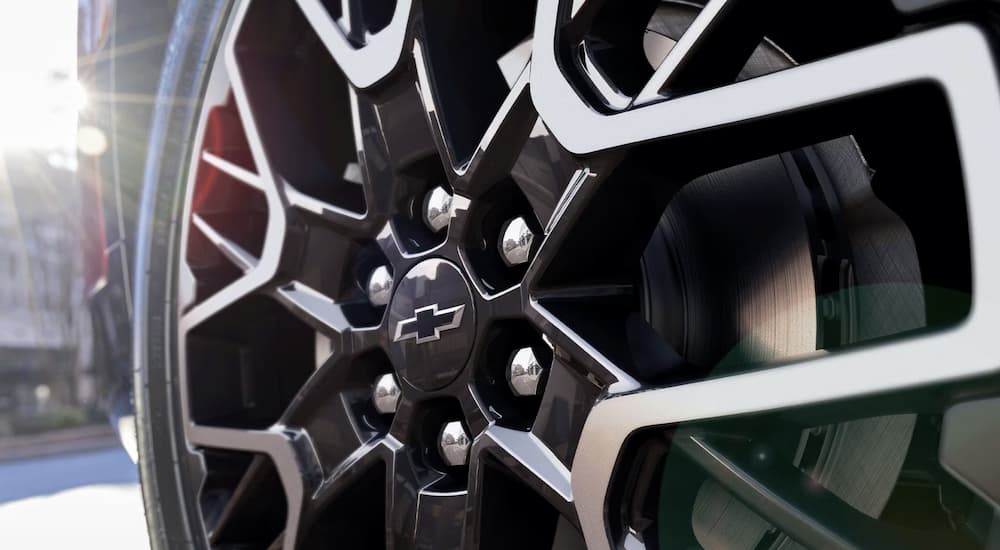
The change in locales for building the Chevy Blazer is part of a comprehensive investment in General Motors’ American manufacturing. Along with the Spring Hill Manufacturing plant, GM is also retooling its Orion Assembly plant in Michigan and Fairfax Assembly plant in Kansas. Between the trio, GM is pouring $4 billion into updates over a two-year span. Orion Assembly will produce full-size SUVs and pickup trucks, while Fairfax Assembly is focusing on the next-generation Chevy Equinox and affordable EVs such as the one-off Chevy Bolt return.
I mention all this to provide some context for the relocation of Blazer production. There is a single word behind all of it: tariffs. With ongoing uncertainty regarding tariffs on imported vehicles, GM has decided to move as much production as possible back stateside. This will reduce total assembly and shipping costs, which is important for lower-priced and mid-priced vehicles such as the Blazer. It also provides greater adaptability when consumers’ needs change and offers some protection against sudden tariff increases and marketplace shifts.
I should also note that American production on the Blazer will begin no earlier than 2027. As such, it’s possible that the first American-made Blazer, and thus the redesign, could end up being the 2028 model year. However, until there is official word otherwise, I am assuming both will make the cut for a 2027 designation.
What Is Known About the 2027 Blazer Redesign?
Performance-wise, the biggest news for the 2027 Blazer is still the combustion engine receiving a stay of execution. In this case, GM is responding to customer demand. Slower-than-expected EV growth has pumped the brakes on GM’s plans to go all-EV by the mid-2030s, as the automaker recognizes the need to maintain some gas engine vehicles.
Around the same time as the production plant updates, GM announced it would invest billions more in developing new combustion engine technology. This includes $888 million for building the sixth-generation GM V8 at the Tonawanda plant, $250 million to the Parma Metal Center of Ohio, and over $1 billion combined for various Flint, Michigan, facilities. However you slice it, that’s a lot of money, and it means the beloved gas-powered Chevy Blazer lives on.
Unfortunately, apart from the new production location and the continued use of a combustion engine, little else about the 2027 Blazer has been officially confirmed. It’s not even known for certain whether the 2027 model will be a refresh or an all-new generation. Since there aren’t a lot of hard details about the 2027 Blazer, all that most people can do is speculate—and that’s what I’m about to do with some thoughts and hopes on what this vehicle may offer.
Ideas for the 2027 Blazer
Performance
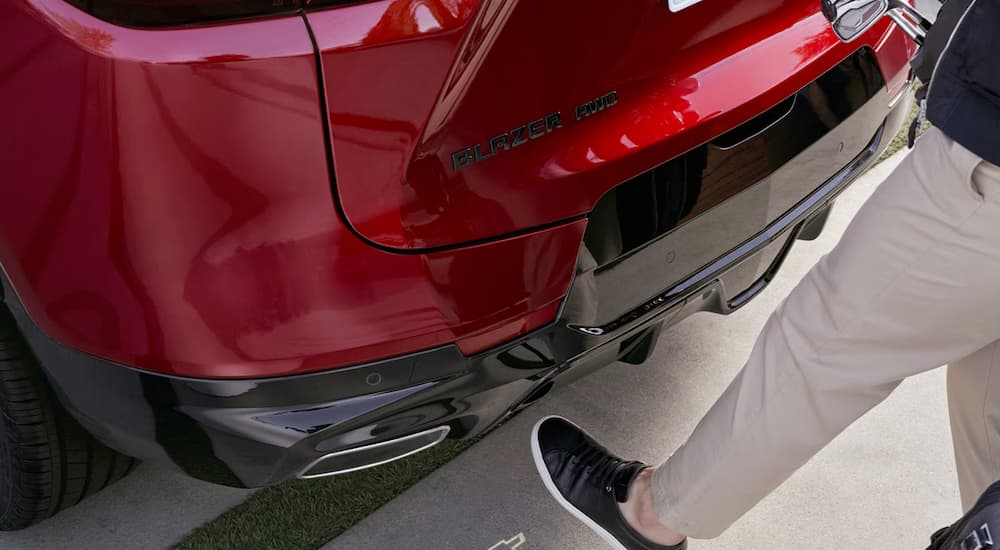
To me, the biggest remaining question is whether the 2027 Blazer will have a new engine and chassis, which are often part of a new generation. Although the Chevy Equinox and Blazer are both similarly-sized Chevy SUVs, they don’t currently share a platform—but they eventually could. The current Blazer is built on the C1XX platform, which is rapidly being phased out. All of GM’s other crossover SUVs, with the exception of the Cadillac XT5, are now on the VSS platform.
As such, if there is a new Blazer generation, it will likely end up on the same platform. The Equinox grew 2.3 inches wider in its update, and given that the Blazer is a performance-oriented model, it would make sense for it to also gain width for improved handling and stability. While the Equinox briefly sported a new CVT, I anticipate the Blazer will remain an automatic, as these are better for dynamic acceleration and driving.
Another clue to a potential overhaul is that the 3.6L V6 engine in the current Blazer is also in the process of being phased out. If the Blazer does receive any new engines, I’d like to believe one of them will be the 328 hp 2.5L turbo-four that now powers the Chevy Traverse. It seems unlikely the Blazer will receive one of the sixth-gen V8s being developed, but I can dream.
Tech and Interior
One thing that seems certain is that the redesigned Blazer will sport some technology updates. In particular, the Blazer’s infotainment has fallen behind the Equinox and Traverse. This is seen most obviously in the Blazer’s 10.2-inch touchscreen. Although certainly not tiny, it cowers in comparison to the Equinox’s 11.3-inch screen and the Traverse’s 17.7-inch screen. The Blazer’s digital gauge display options are also significantly smaller.
I’m predicting the new Blazer’s screens will at least match those of the Equinox, and will likely include the 17.7-inch screen found in most modern Chevy SUVs. Also, be on the lookout for Google built-in on at least some trim levels, as this was a big addition to the Equinox. I also think we’ll see more standard safety technology and potentially some more creature comforts on the lower levels, as the “trickle down” effect is in full force for both. One last question to be settled is whether Chevy Super Cruise hands-free driving will be included; it’s an option on the Traverse, but not the Equinox.
Awaiting the New Chevy Blazer
Regardless of how it turns out, the Blazer’s continued presence in the Chevy lineup feels worth celebrating. A year ago, the writing was on the wall, with official word that the 2025 model year would be its last. But not only is the Blazer sticking around, it’s also getting reinvigorated with production moving to the United States and either a refresh or redesign.
Again, there aren’t many official details yet on the redesign side, although they’ll hopefully start emerging soon. Until then, the next-gen Equinox and Traverse offer some clues to what new features could be incorporated into the Blazer’s exciting “muscle SUV” aesthetic. I’m excited about the Chevy Blazer’s second chance, and I hope to follow up once there’s more information about the next chapter.