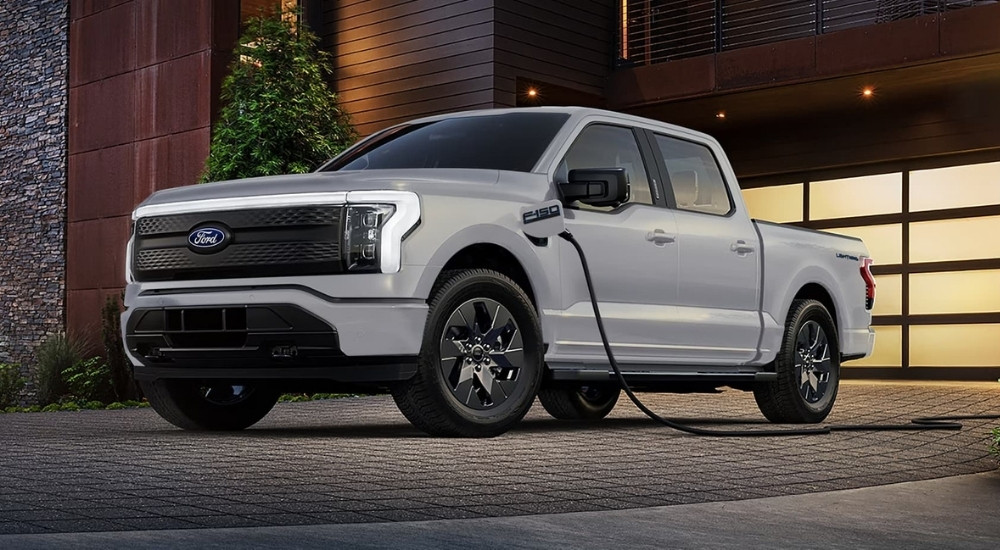
Ford shocked the automotive world in late 2025 when it announced that its groundbreaking F-150 Lightning would abandon the EV approach in favor of a new, more hybrid-like extended-range electric vehicle (EREV) design. It’s an unexpected move from Ford, but the Lightning’s cancellation is just one part of a massive organizational shift that’s seeing the storied U.S. automaker re-examine its EV strategy as the segment faces slowing sales and an uncertain future.
The company hasn’t abandoned its plan to shift 50% of its global volume to hybrids, EVs, and EREVs by 2030, but the Lightning’s failure has led to plenty of soul-searching at Ford HQ. The results have been both dramatic and expensive, with Ford set to take a $19.5 billion write-off on its EV business. But according to Ford Blue president Andrew Frick, it’s a simple case of not throwing good money after bad. “Rather than spending billions more on large EVs that now have no path to profitability, we are allocating that money into higher-returning areas,” said Frick in mid-December.
What’s next for the storied American automaker? While EVs haven’t proved as fruitful as initially hoped, Ford can’t afford to take its foot off the gas at such a critical moment. The auto industry is changing at an unprecedented rate as new hybrid and EV technology and increased competition from Chinese brands continue to rock the market, but Ford is hoping that a renewed focus on the development of smaller, more profitable EVs and existing internal combustion (ICE) vehicles will allow the company to weather the storm.
Purely gas-powered models will remain a key component of Ford’s core business, but EVs, EREV, hybrid models, and new power storage products will play an increasingly important role as Ford rides into the future. Read on as we learn what went wrong with the Lightning, explore Ford’s new focus, and learn how smaller all-electric models (including a game-changing $30,000 midsize pickup), power storage products, new manufacturing processes, and an entirely new EV platform are stepping in to fill the hole left by the Lightning.

Changing the Game Plan
While the Lightning’s cancellation might come as a surprise for some, there have been plenty of clues to suggest that all wasn’t right when it came to the full-size EV. The all-electric pickup garnered a lot of attention when it was first released in 2022, but slow sales have seen the Lightning sell fewer than 100,000 units over the last four years. The recent cancellation of the lucrative $7,500 federal EV tax credit didn’t help the pickup’s case, and Ford actually halted all Lightning production in late 2025 after a September fire ravaged one of the brand’s key aluminium suppliers. Ford has been losing around $5 billion per year on its EV offerings, and while that had once seemed like a reasonable price to pave the way for a new generation of all-electric models, the brand got a little gun-shy as 2025 came to a close.
The Lightning might not be long for this world, at least in its current EV form, but that doesn’t mean that Ford is abandoning the dream of producing a more sustainable pickup. The Lightning EV will be replaced by a new EREV that improves both flexibility and practicality thanks to a more hybrid-like approach. The new Lightning will feature a gas engine, but instead of spinning the wheels, it’ll simply serve as a generator responsible for keeping the battery juiced up. The pickup will likely be able to operate in all-electric mode, but can also leverage internal combustion to help alleviate range anxiety that might deter some drivers.
Ford also recently introduced an entirely new standalone business unit, dubbed Ford Model e, which will be responsible for developing new EVs and their underlying digital technologies. Ford Blue will handle the brand’s ICE models, while Ford Pro will focus on serving the commercial market with new ICE and EV options, along with associated software, charging, and services. Ford Model e hopes to turn a profit by 2029, but the unit’s fate is closely tied to the success of the brand’s forthcoming Universal Electric Vehicle Platform (UEVP).
While a crossover SUV might seem like the logical choice for the platform’s debut, given the segment’s strong sales, the honor will actually go to a new midsize pickup. The move is a little less surprising when you consider Ford’s status as the market’s leading pickup brand. The midsize UEVP truck will allow Ford to establish an early foothold in the all-electric segment, and will be refreshingly affordable with an expected MSRP of just around $30,000. The new platform holds a lot of promise as Ford looks to electrify future models, but the brand looks to be a little more discerning when it comes to introducing the next wave of EVs. Having learned his lesson from the F-150 Lighting’s failure, Ford president and CEO Jim Farley recently said that larger EVs are taking a back seat to smaller options aimed at a less rural crowd. “The pure EV market in the U.S. seems to us very clear: small vehicles used for commuting and around town,” said Farely.
A crossover SUV will almost certainly follow the UEVP midsize pickup. While Ford has been tight-lipped about the details, the recent discontinuation of the popular Escape compact does leave a gaping hole in the company’s lineup. The UEVP gives Ford a lot of flexibility in planning for the future, as it can be easily adapted to a wide range of vehicle segments. From pickups and SUVs to vans and more, an entire UEVP-based lineup could be on the way much sooner than you’d think.
A $30,000 EV Pickup?
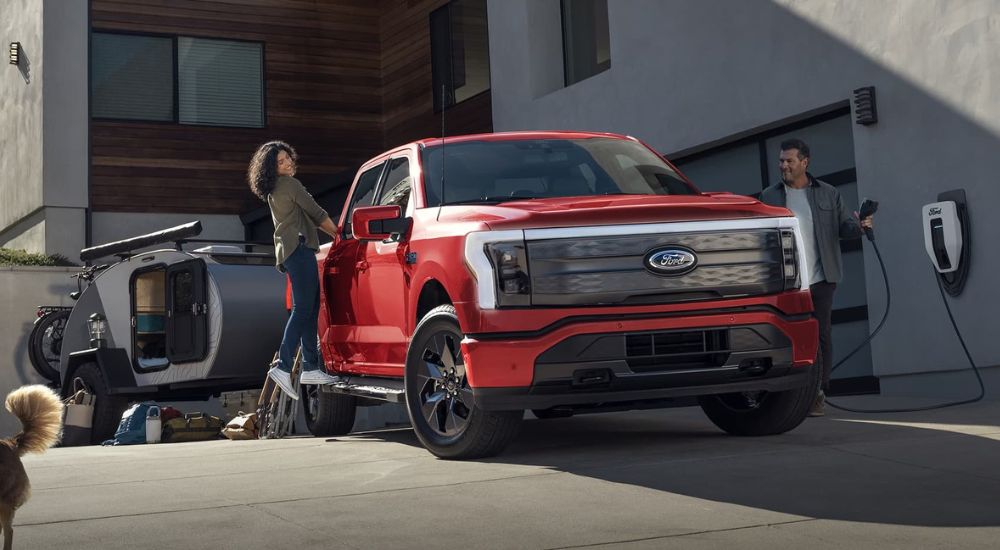
Set to be produced at Ford’s Louisville Assembly Plant, Ford’s as-yet-unnamed EV is still a bit of a mystery. The details released to the public so far look promising, with early reports pointing to a four-door design with ample cargo space and a long list of modern features enabled by the truck’s all-electric powertrain. The midsize EV will feature more passenger space than a compact crossover while offering the same zero-to-60-mph time as the Ford Mustang EcoBoost and plenty of storage courtesy of an ample cargo bed and front trunk. The innovative pickup will also include Ford’s critically acclaimed BlueCruise hands-free driving technology and, like the outgoing F-150 Lightning, will offer a vehicle-to-home (V2H) interface that allows the EV to double as an emergency generator.
The most intriguing part of the electric pickup’s resume might just be its starting price. The cost-saving benefits of the new UEVP should allow Ford to market the midsize model for around $30,000, making it not just the most affordable pickup EV but also one of the most affordable all-electric models of any kind. The pickup’s low price is made possible by a refreshingly simple design that lets it be built with half the fasteners, two-thirds the welds, three-quarters the parts, and 4,000 feet less wiring than the typical truck. Ford’s considerable production capacity, institutional knowledge, and over 100 years of experience all play a role in the EV’s budget-friendly price, but it’s a groundbreaking production technique that really allows the automaker to undercut the competition.
The company’s Louisville Assembly Plant is adopting a new Universal EV Production System that ditches the old-fashioned assembly-line approach in favor of an “assembly tree” approach. Instead of employing a single assembly line susceptible to delays, the modular assembly tree approach splits the process into three distinct branches. These three sub-assemblies are joined together towards the end of the process, reducing downtime and increasing Ford’s production capabilities by 15 percent. Funded by a $2 billion investment in the Kentucky plant, the system also improves employee ergonomics, promoting a healthier, happier workforce.
A New Investment in Power Storage
Ford’s new approach to EV technology isn’t limited to its four-wheeled creations. As the iconic automaker ramps up its battery production, power storage products represent an obvious opportunity. Power comes at a premium in today’s digitally connected world, and the rise of power-hungry AI data centers has only exacerbated the issue, as skyrocketing costs send brands searching for solutions. To that end, Ford recently announced it will invest $2 billion and begin retooling an existing Glendale, Kentucky, facility to develop new battery energy storage systems.
The new factory will focus on producing cutting-edge lithium iron phosphate (LFP) prismatic batteries that represent a significant improvement over the more ubiquitous nickel-manganese-cobalt (NMC) design. While these LFP batteries can’t match the energy density of their NMC rivals, they do offer more thermal stability and a longer service life. Most importantly, LFP batteries are much cheaper to produce because they don’t require expensive minerals like cobalt and manganese.
The overhauled Kentucky plant will be used to manufacture five megawatt-hour-plus (MWh+) battery energy storage systems that are built around LFP prismatic cells, battery energy storage system modules, and DC container systems. Ford says the Kentucky plant could begin churning out new battery storage systems within 18 months, aiming to produce at least 20 gigawatt-hours (GWh) of storage capacity by the end of 2027. The plant will be run in partnership with Ford, SK On, SK Battery America, and BlueOval SK, with a Ford subsidiary officially operating the facility. The automaker will also expand its backyard battery production capabilities at BlueOval Battery Park in Marshall, Michigan. In addition to producing LFP prismatic batteries for the UEVP-based electric pickup, BlueOval Battery Park will also be tasked with creating smaller cells aimed at the residential market.
Forging the Future at Ford
In retrospect, the full-size format might have been a questionable choice for Ford’s first all-electric pickup. While they’re tough to beat in terms of efficiency and boast some cool party tricks like the ability to power an entire house for up to 10 days, the Lightning fell woefully short in some of the areas that pickup drivers value most. The EV’s towing capacity fell a bit below average for a full-size model, and the Lightning’s range could dip as low as 90 miles when pulling a heavy load. Some important infrastructure-related issues left some rural drivers with frustratingly few charging options.
Ford already seems to have found a fix with the new EREV approach. The engine-assisted EV, along with the new UEVP and a revolutionary new production process, should go a long way in helping to soothe out the growing pains and enabling Ford to carve out a new niche in the EV segment while still retaining its position as one of the industry’s bestselling brands. Throw in the new power storage enterprise that’s made possible by the brand’s lithium iron phosphate (LFP) prismatic batteries, and it’s easy to be bullish on Ford’s future.