AutoInfluence is excited to report some breaking news: the minivan still exists in 2026. While the family-focused segment has lost a significant share of its customer base to traditional SUVs and crossovers, minivans have actually seen a bit of a bump in recent years. Sales have been buoyed by a new generation of Millennial parents who spent much of their own youth riding in mom’s minivan, and are now looking for a practical, reliable solution for their own brood. Minivan sales surged by 21% in 2025 alone, as the segment posted some of its best sales in five years, logging a 2.4% market share. “While still a relatively small segment overall, the recent increase reflects how competitive and well-rounded today’s minivans have become,” says Ivan Drury, Director of Insights at Edmunds.
That said, there’s no denying the automotive phenomenon that is the SUV. A new generation of crossover models has allowed drivers to leverage the utility and power of a full-size SUV while still enjoying the comfort and convenience of a much smaller vehicle. It’s a winning combination, and one that’s seen the SUV become the de facto mode of transportation for most Americans. But despite their popularity, these SUVs might not always be the right choice for every driver, especially those looking for a vehicle that can accommodate their growing family. It’s an age-old debate, but we’re here to settle the score as we see how SUVs and minivans compare in a few key areas.
Family-Friendly Tech: Minivans
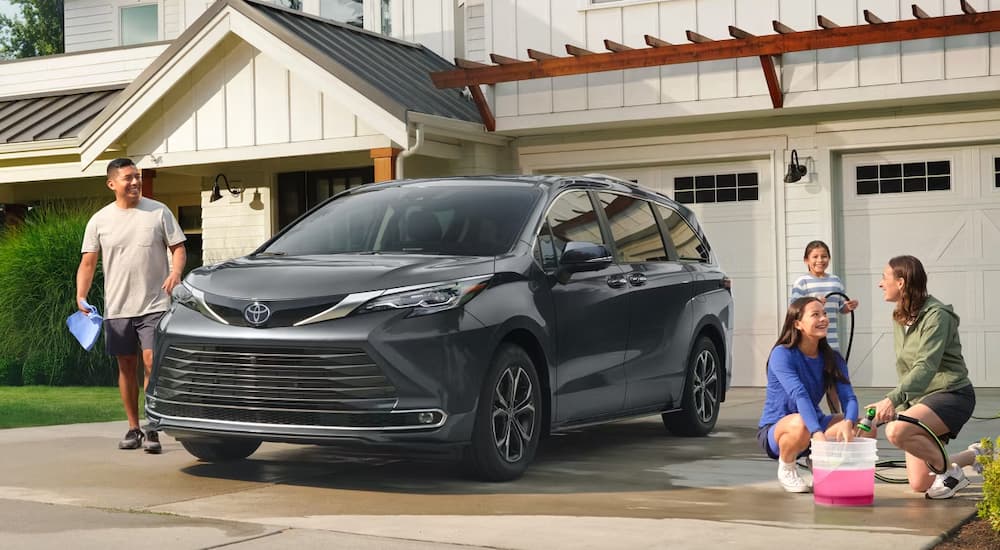
The minivan long served as America’s go-to family vehicle, and while it’s since lost that title to the SUV, automakers haven’t lost sight of the segment’s intended audience. Today’s minivans offer all the tech, safety, and convenience features buyers have come to expect from a modern vehicle, but they also go above and beyond with a few features clearly designed with families in mind. Take the Chrysler Pacifica’s built-in vacuum cleaner, for instance. Instead of lugging the home unit out to the driveway, drivers can tidy up whenever the mood strikes. The Toyota Sienna offers its own unique, convenience-enhancing tech in the form of its integrated FridgeBox refrigerator, which is sure to keep everyone’s road trip drinks on ice.
Many of today’s minivans also feature built-in second-row sunshades to protect little ones from UV rays, multi-zone climate control systems that let every passenger ride in comfort, and some impressive audio-visual tech. From in-cabin cameras and intercom systems to rear-seat entertainment systems that’ll keep kids occupied on longer rides, minivans give drivers the chance to bring all of the comforts of home with them wherever they go.
Minivans were the first to introduce many of these family-friendly features, but SUVs have closed the gap in recent years, adopting some of the best offerings to up the segment’s domestic appeal. The Hyundai Palisade offers a Rear Occupant Alert (ROA) system that uses ultrasonic sensors to detect children and pets. Both the Palisade and the Kia Telluride offer an in-cabin intercom that can be used to communicate with distant third-row riders. Built-in refrigerators are also available in some luxury SUV models from Cadillac, Land Rover, and Mercedes-Benz. While the built-in vacuum seems exclusive to the minivan segment, rear-seat entertainment systems are pretty easy to find when browsing SUVs.
Off-Road: SUVs
Three essential attributes that you’ll want to keep in mind when you’re looking to venture into off-road territory are traction, 4WD, and ground clearance. These happen to be the SUV’s strong suit, and means that there’s no shortage of off-road-ready models to choose from. Some of the segment’s smaller crossover options might struggle on bumpy terrain, but they’re balanced out by purpose-built rigs like the Ford Bronco Raptor, Jeep Wrangler Rubicon, and Mercedes-Benz G-Class. From rock-crawling and dunebashing to desert racing and fording remote streams, off-road SUVs are designed with adventure in mind.
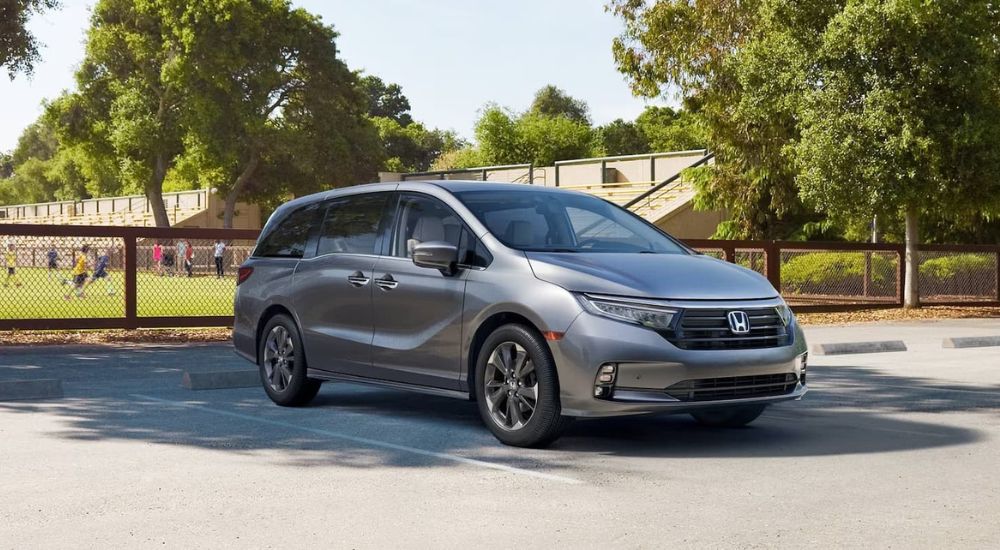
The same can’t be said for the humble minivan. While the Toyota Sienna can be equipped with an AWD powertrain, every other model is saddled with a FWD design that’s not designed to handle challenging terrain. Drivers can always throw a set of all-terrain tires onto a minivan, but the lack of ground clearance really prevents such models from exploring the road less traveled. The Kia Carnival stands a full 6.8 inches off the ground, but the rest of the segment is a little height-challenged, with every other model failing to clear 6.5 inches. The Honda Odyssey is practically a lowrider with 4.5 inches of ground clearance, but there’s actually a pretty good explanation behind this lack of height. The lower a vehicle’s ground clearance, the easier it is to get in and out of. This can be an especially important factor when trying to accommodate kids or older adults who might struggle with mobility issues, but you won’t have to worry about any entry- or egress-related anxiety when you settle on a minivan.
Selection: SUVs
SUVs, whether they’re traditional body-on-frame models or crossovers, are easily the most popular segment on the market, accounting for 61% of all new vehicle registrations in 2025. Drivers have dozens of models to choose from, from small, efficient crossovers that are designed to zip around the city to family-friendly midsize options, dedicated off-road rigs, and some of the industry’s most luxurious models.
Then there’s the minivan segment. While minivans enjoyed a notable resurgence in 2025, they still hold just a 2.4% market share. The results are even more lopsided when you take inventory of the entire 2026 minivan segment, which comprises just five models (six if you count the all-electric Volkswagen ID. Buzz, which skipped 2026 due to slow sales). It might make for an easier research process when you’re weighing your options, but selection is certainly not the strong suit of the minivan segment. While the category does include a few hybrid and plug-in hybrid (PHEV) models, you won’t find any off-road options or true luxury models.
Cargo Space: Minivans
A spacious cargo area is one of the main selling points of both the SUV and minivan segments, but when you run the numbers, the latter has a clear advantage. Even the market’s smallest model, the Toyota Sienna, offers 101 cu.ft. of cargo capacity. The largest, the Honda Odyssey, offers a cavernous 155.8 cu.ft. of storage, eclipsing even the Chevy Suburban’s 144.5 cu.ft. The segment average works out to around 136 cu.ft. for all minivans, which is right in line with what drivers would expect from a full-size, three-row SUV. Smaller midsize, compact, and subcompact models can’t even approach the interior space of a typical minivan and often lack some of its clever storage solutions. Take the Chrysler Pacifica’s Stow ‘n Go seats, for example. The innovative chairs fold down completely into the floor, turning the minivan into a versatile cargo hauler that can accommodate large furniture, appliances, and other bulky goods. Many SUVs settle for fold-flat seats that, while helpful, don’t have nearly as much of an impact on a model’s maximum cargo capacity.
Performance, Towing, and Efficiency: SUV
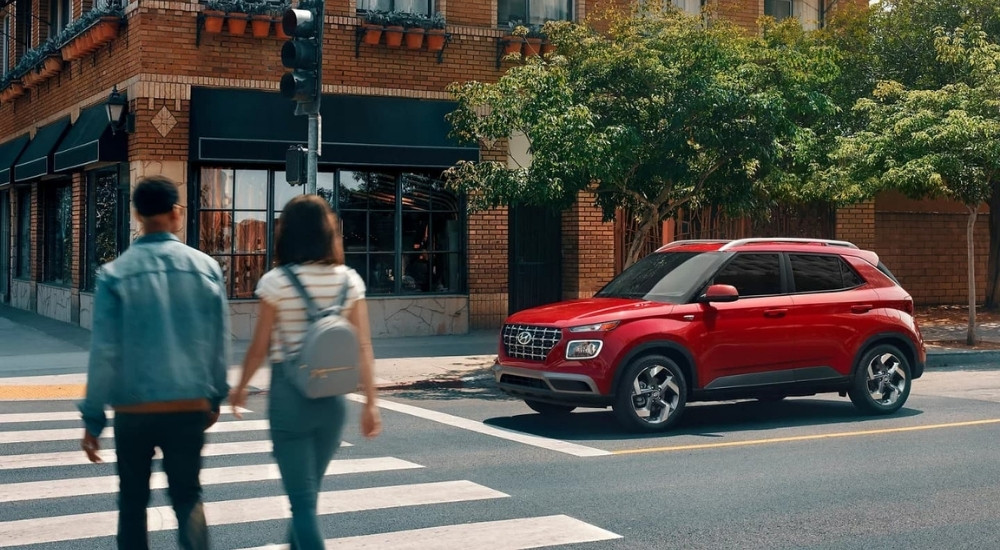
It’s fair to say that performance and towing power aren’t exactly the minivan’s strong suit. Of the five models on the market for 2025, none break the 300-hp mark, with the Chrysler Pacifica, Chrysler Voyager, and Kia Carnival all tying at 287 hp. The segment average works out to 269 hp, which, while unlikely to blow your socks off, is sure to satisfy the minivan’s target demographic. It’s tough to make generalizations when discussing the dozens and dozens of SUV and crossover models, which truly run the gamut from the subcompact Hyundai Venue at 121, to the 828-hp beast that is the three-row Lucid Gravity. Most models fall between 180 and 250, indicating that, on average, minivans are more powerful than their SUV counterparts. Unfortunately, most of that power is reserved for simply pushing the relatively large vehicle down the road, while high-performance SUVs like the Gravity, Hyundai IONIQ 5, and Tesla Model X leverage their EV powertrains to achieve blistering zero-to-60-mph times.
The SUV segment also outpaces the minivan class in terms of efficiency, but with some important caveats. Many of the market’s current minivan models are quite efficient, with all but two offering hybrid or PHEV powertrains. However, with so few options, the relatively thirsty gas-powered models bring down the average. The VW ID.Buzz is the lone EV model, while 40 distinct electric SUV and crossover nameplates were on the North American market in 2025. The minivan segment’s undisputed leader would have to be the Toyota Sienna, which, at 36 MPG combined, has a four MPG advantage over the second-place finisher in the Kia Carnival.
Finally, there’s towing, where, once again, it comes down to stats versus selection. The Chrysler Pacifica can pull as much as 3,600 lbs, with the Carnival and Sienna trailing close behind, but a few models aren’t rated for towing at all. Subcompact and compact crossovers often log as little as 1,500 lbs, while some full-size, body-on-frame models can give some pickups a run for their money with almost 10,000 lbs of pulling power.
Aesthetics: SUV
We’re certainly not the ultimate arbiters of what’s cool here at AutoInfluence, but we do have to address the aesthetic gulf between the SUV and minivan segments. SUVs were once fairly utilitarian and built around a boxy design. While that look is still all the rage in some corners of the luxury and off-road segments, today’s offerings are now often as sleek and stylish as some of the industry’s sportier sedans. The Ford Mustang Mach-E is probably one of the best examples, living up to its pony-car-inspired name with a fastback-style sloping roofline and an aggressive silhouette. BMW, Audi, and Mercedes-Benz also craft some compelling crossover models that are sure to turn some heads as you cruise around town, while SUVs from INEOS, Land Rover, and Lexus are no less stunning for their old-school angular design. The midsize Bronco has several trims built around unique aesthetic packages with 2026 examples including the Heritage, Stroppe, and 60th Anniversary Editions.
For all their practical appeal and family-friendly tech, minivans tend to trail far behind their SUV cousins in the looks department. That’s not to say that the segment has made some important advancements since its 1990s heyday, when the prevailing aesthetic seems to be something along the lines of “four-wheeled blob.” VW’s ID.Buzz is obviously the most futuristic of the current models and carries some EV-specific design cues that clearly mark it as a modern creation. Outside of that all-electric minivan, the only model likely to catch your attention is the Kia Carnival. It has been lauded for its SUV-like design, and it can be easy to mistake the Carnival for an actual crossover at a quick glance. Ultimately, style is pretty subjective. If the understated, utilitarian appeal of a minivan aligns with your personal aesthetic, it’s always going to feel like a more natural fit.
Which Is Better?
The final tally technically sees the SUV segment earn the nod, with a final score of four to two. However, the truth is a little more complicated. While minivans can’t compete with SUVs in terms of performance, towing power, aesthetics, or selection, every buyer measures a model by their own unique rubric. Some drivers might gravitate towards a rugged, off-road-ready SUV or stylish luxury model, while others are just searching for a sensible, spacious ride that’ll get them from Point A to Point B with minimal fuss or investment. A modern minivan might lack the pure curb appeal of that sporty crossover from your bachelor days, but it’s a great fit if your weekend routine now revolves around soccer practices and grocery runs.
If there’s one factor that really makes SUVs tough to ignore, it would have to be the wealth of EV options. Minivans have been quick to adopt hybrid and PHEV technology, but lag behind their SUV rivals in eco-friendly options. We’re prepared to call it a wash in the debate between the minivan and SUV, but we’ll leave you with one bit of advice: don’t make any assumptions. You might arrive at the dealership with your heart set on a new SUV, but a quick test drive could be all it takes to open your eyes to the convenience and comfort of the minivan segment.