The Dodge Durango’s high-performance R/T and SRT Hellcat models are both prime examples of high-performance design, allowing drivers to burn some rubber and become closely acquainted with the back of their headrest as they rocket from zero to 60 mph in 3.5 seconds. The range-topping Durangos are powered by a set of beefy 6.2 and 6.4L HEMI V8 engines that produce between 475 and 710 hp. However, the availability of the speedy SUV all depends on which state you call home. You won’t find the high-performance R/T and SRT Hellcat versions of the 2026 Dodge Durango for sale at a California car lot, or in any other of the 17 jurisdictions that have adopted the state’s strict California Air Resources Board (CARB) emissions standards.
The Durango trims are the latest models to run afoul of the CARB standards, but they’re certainly not the only ones. The Golden State has targeted several models, segments, and specific engines since the CARB started tackling emissions in the 1980s. While the program has expanded in terms of both its scope and standards, the polarizing, often politically charged nature of the standards has led to some recent requirements being rolled back at the federal level. What do California drivers, and those in the 17 other states that have adopted the CARB standards, need to know about the emissions standards? What vehicles are impacted, and is there any wiggle room when it comes to the emissions program? We’ll address all that and more as we take a closer look at the CARB requirements.
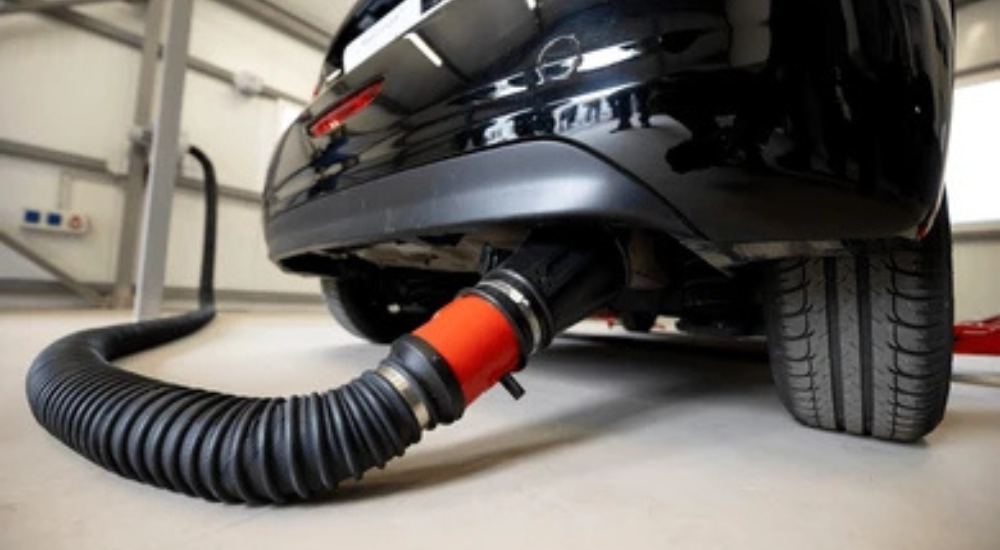
Fresh Air, Fresh Ideas
The California Air Resources Board (CARB) was first established in 1967 in response to a pervasive environmental issue. While California is often portrayed as a sunny, sandy West Coast oasis, the state’s car-centric culture had led to a surfeit of smog that threatened to tarnish both the state’s reputation and the health of its residents. This pollution problem led California Governor Ronald Reagan to combine the Bureau of Air Sanitation and the Motor Vehicle Pollution Control Board into a new entity known as the California Air Resources Board. CARB, which is technically a department within the California Environmental Protection Agency, is responsible for maintaining the state’s air quality by limiting the use of toxic contaminants and establishing vehicle emissions standards.
CARB is unique within the U.S. as it’s the only state agency that’s allowed to issue emissions standards as part of the federal Clean Air Act. Other states that don’t have the same regulatory latitude have worked around this rule by embracing California’s CARB standards over the decades, with the number growing to 18 as Oregon, Washington, New York, New Jersey, and Massachusetts all joined the list in 2025. The rest of the CARB roster includes Colorado, Connecticut, Delaware, District of Columbia, Maine, Maryland, Minnesota, Nevada, New Mexico, Pennsylvania, Rhode Island, Vermont, and Virginia, though some of these states have only adopted specific parts of the current CARB regulations.
The program has evolved over the years to become the comprehensive standard it is today. However, when it first took effect in the early 1970s, it was primarily focused on reducing emissions of hydrocarbons, nitrogen oxides, and carbon monoxide by requiring most passenger vehicles to be equipped with catalytic converters. New automotive technology enabled CARB to more accurately gauge the effectiveness of emissions-related components throughout the 1980s, thanks to the advent of the On-Board Diagnostic (OBD) system. However, the program truly took shape in the 1990s, when it launched the Low-Emission Vehicle (LEV) program. The LEV separated vehicles into five different categories based on their emissions, ranging from Transitional LEV and LEV to Ultra-LEV, Super Ultra-LEV, and Zero Emissions Vehicles (ZEV). As part of this effort, all automakers were required to produce a certain number of ZEVs, typically in the form of electric vehicles.
Standards continued to tighten through the early 2000s, with the CARB targeting greenhouse gas emissions as part of the LEV II program and introducing new fuel standards to promote the development and adoption of gas alternatives, such as biodiesel and ethanol blends. LEV II standards took effect in the 2010s to further restrict emissions, and the federal government followed suit with the introduction of new Clean Car Standards under President Obama. The new standard also mandated more ZEV sales, which was easier than ever before thanks to the increased popularity of EVs and hydrogen fuel-cell electric vehicles (FCEV).
That brings us to the modern era, which, up until recently, had been one of the most progressive in recent memory. CARB’s Advanced Clean Trucks rule sets strict requirements for the production of zero-emission trucks, and also addresses construction and landscaping equipment. The most ambitious policy was adopted in 2022 when the CARB embraced the Advanced Clean Cars II (ACC II) regulations. This policy would have required 35 percent of new vehicles to meet the ZEV standard by 2026, and would have phased out all sales of new internal-combustion vehicles by 2035 and required new cars to adopt either EV or FCEV powertrains. These restrictions came under fire as the current administration took power in 2025, with Congress voting to block the ACC II. President Trump signed the resolution in June 2025, which undercut the CARB standards and called the viability of further standards into question.
What Models Are Banned?
The CARB standards might sound like a classic case of government overreach, but they’re actually a little more flexible than many drivers realize. The program doesn’t typically ban models outright, but rather targets specific trims or engines that tend to be a little dirtier than others. Take the Dodge Durango, for example. While the R/T and SRT Hellcat trims are restricted in CARB states, the SUV’s GT trim is a different story altogether. The Durango GT’s 5.7L V8 engine enables the model to be sold in all 50 states, offering drivers 360 hp and plenty of fun. There is one way to circumvent the ban on the R/T and SRT Hellcat, but it requires a bit of patience. The CARB standards no longer apply once a vehicle enters the used market, which means that buyers can obtain a souped-up Durango if it has at least 7,500 miles on the odometer. Recently passed CARB rules have severely restricted the sale of new heavy-duty motorhomes that weigh in at more than 8,500 lbs, and the Durango’s 6.2L and 6.4L engines make them an easy target for a little CARB regulation.
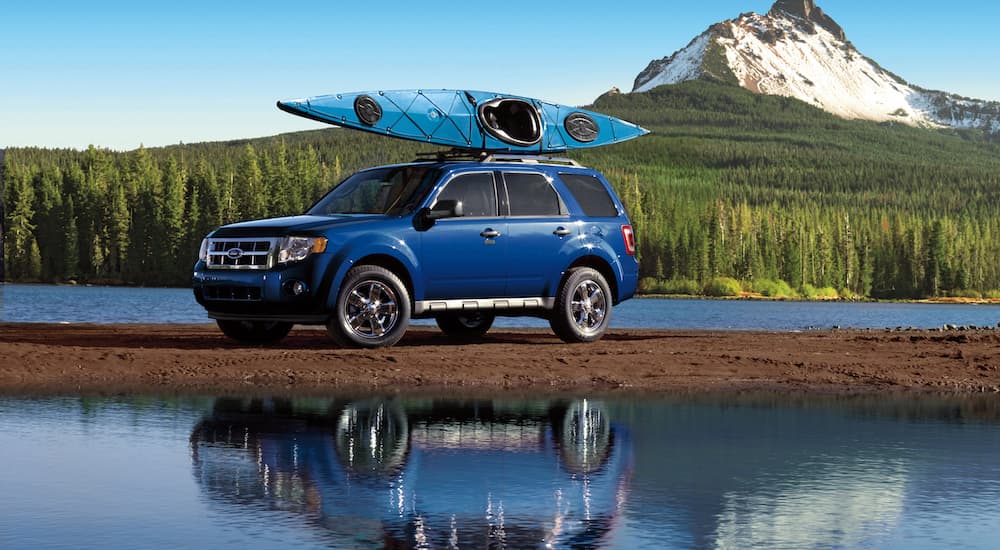
It doesn’t always come down to a matter of pure size. The compact Ford Escape has lost ground to the Bronco Sport in recent years, but it is still logging strong sales, with around 150,000 units sold in 2024. Despite its popularity and relatively modest I-3 and I-4 engines, the Escape and its luxury counterpart, the Lincoln Corsair, were set to be unavailable in six states for the 2026 model year due to stringent new standards taking effect in California, Massachusetts, Vermont, Oregon, Washington, and New York.
The Escape’s demise has been looming for some time, as the Bronco Sport has supplanted it. However, restricting sales to just three-quarters of the country has marked the death knell for the compact crossover, with both the Escape and Corsair being discontinued after the 2025 model year. The Escape isn’t a particularly pollution-prone model, but its limited availability likely has to do with helping Ford to meet its fleet-average greenhouse gas emission goals. The Louisville, Kentucky plant, where the Escape and Corsair were made, is also being retooled for Ford’s new Universal EV Production System.
Outside of the Durango trims and the 2026 Escape/Corsair, there aren’t many model-specific examples of CARB-related bans. California’s Advanced Clean Fleets (ACF) sought to ban the sale of heavy-duty, pre-2010 trucks, especially diesel models, but the law was repealed in recent months. That said, the lack of an outright ban doesn’t mean it’ll always be easy to find certain models in states that adhere to the CARB standards. Automakers often self-police the sale of more pollution-prone models in CARB states due to rules around fleet-average greenhouse gas emissions. When calculating compliance, CARB states the emissions of all the vehicles sold by a particular brand within its borders. If an automaker offers too many massive V8 options, such as the Durango R/T’s 6.2L engine, it becomes very difficult to meet the fleet average.
By restricting the sale of emissions-rich vehicles, companies can stay well within the limits and avoid any fines or other regulatory consequences. That means that even if a vehicle doesn’t technically violate the CARB standards, it might still be difficult to find in certain areas. These vehicles can often be custom-ordered, but generally speaking, brands tend to avoid flooding dealerships with models that might see them impact their emissions average. This is the case with some gas-powered Jeeps, such as the Grand Cherokee and Wrangler, which, due to fleet average requirements, are often replaced with hybrid offerings in CARB states.
Paving the Way to Greener Roads
As the auto industry moves towards a cleaner, greener future, there are bound to be some growing pains. The CARB standards have helped keep the industry in check for over 30 years, leading companies to develop new emissions-related technologies that benefit everyone. It’s important to check the latest laws and regulations in your specific state before jumping to any conclusions about the availability of a certain model or trim. As recent history has shown, these regulations aren’t set in stone and are subject to change at any given moment, depending on political, scientific, and economic factors. There are also a few compelling financial reasons to get excited about low-emission and zero-emission vehicles like hybrids and EVs. In addition to creating a healthier planet, these models also tend to have lower ownership costs, including repair, maintenance, and fuel expenses. They might seem a bit annoying if you’re the type of driver who appreciates the growl of a hearty V8, but these emissions-related rules ultimately incentivize environmentally responsible engineering.