As a relatively new market within the U.S. automotive segment, major and frequent EV shifts are commonplace. That remains the case midway through 2026, as a sharp decline in EV sales (some are even calling it a collapse) has led to questions about which automakers are best positioned for an uncertain path ahead.
I’ve written beforeabout the EV market for AutoInfluence, but with such frequent changes, it requires revisiting. Now that the dust is starting to settle, I wanted to look at the state of the EV market, the reason for its recent shakeup, and who the winners and losers are. There’s plenty to talk about as things stand, and recent trends may offer some insight into what’s ahead.
The Post-Tax Credit EV Downturn
In less than a calendar year, EV sales have gone from stagnant to a brief surge to a steep downfall. U.S. sales reached 438,487 vehicles in the third quarter of 2025, an all-time quarterly record which represented a 40.7% increase from Q2 and a 29.6% year-to-year rise. But then numbers hit the deck. Sales plunged to 234,171 EVs in Q4, a 46% quarterly decline and 36% year-over-year drop. In the process, EVs went from 10.5% of total new vehicle sales to just 5.8%. In the first quarter of 2026, sales fell another 7.6% quarter to quarter and 27% year to year, with only 216,399 EVs leaving showrooms.
Unlike some sales slumps, which have multiple factors, the EV situation has a clear trigger. Federal tax credits for new and used EVs were introduced on August 16, 2022, as part of the Inflation Reduction Act of 2022 (IRA), offering rebates of up to $7,500 to spur sales. (Fun fact: there was actually a previous tax credit system dating to 2009 that was eventually phased out.)
The IRA credits were originally supposed to last until 2032. However, in a new federal funding bill signed on July 4, 2025, the credits were repealed effective September 30, less than three months later. The only exception was if you’d placed a down payment on a vehicle that wasn’t delivered yet.
As a result, people who might have been putting off an EV purchase rushed to take advantage of the tax credits while they were still available. That led to a temporary bump in a market that had flatlined, only to cause the bottom to drop out on October 1. Sales will stabilize eventually, but without the added financial incentive to buy an EV, automakers are looking at a new reality.
The EV Winners and Losers
With EVs looking more like a niche market for the foreseeable future, which automakers and groups are poised to capitalize? Who finds themselves in a bad spot? Here are some of the winners and losers from all the shaking and rattling over the past year.
Winner: Tesla
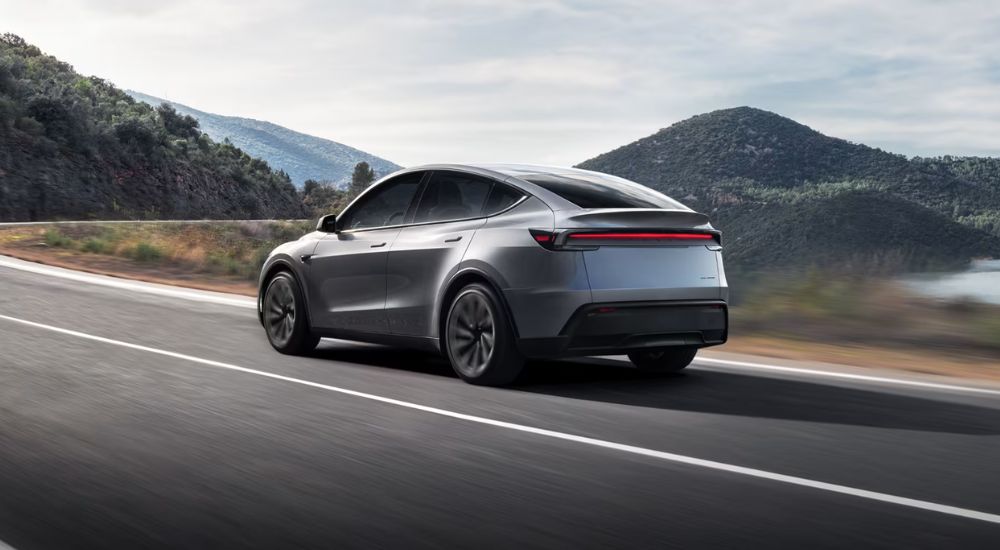
Some automakers that exclusively sell EVs could be in trouble. Tesla, however, appears to be in good shape. Its 4.6% year-over-year sales decline in 2026 Q1 was significantly less than the 27% collective market slip. As a result, Tesla’s U.S. EV market share soared from 46 to 58%, giving it an even tighter grip on the scene.
Between its large proprietary Supercharger network, advances in hands-free driving technology, and appeal to younger buyers, Tesla seems well-positioned to weather the storm. Furthermore, it could end up with equally firm control over the used EV market thanks to the domination of the Model 3 and Model Y.
Loser: Volkswagen
Maybe no automaker took it harder on the EV front than this German giant, which was already facing multiple problems. Sales of the ID.4 fell a whopping 96% in 2026 Q1, selling a mere 338 units. It was so bad that in early April, Volkswagen pulled the vehicle from the U.S. market.
Remember how exciting the prospect of an EV version of the classic VW bus seemed? Sales of the inaugural 2025 model year were so disappointing that VW decided to skip the 2026 edition and try again in 2027. As of this writing, Volkswagen has no new EVs available to U.S. customers.

Winner: General Motors
Not all legacy brands are taking the current EV situation hard. Chevrolet has established itself as the country’s number two EV brand. In 2025, the Equinox was the third-best-selling EV behind Tesla’s Model 3 and Y. By taking a different approach than Tesla’s, establishing itself as a high-value option with great technology, Chevrolet is in a good spot.
If drivers are looking for a luxury EV alternative, General Motors provides that. The Cadillac EV lineup is even more extensive than Chevrolet’s, with full-size SUVs, midsize crossovers, sporty vehicles, and even sedans, giving people many options.
Loser: Honda/Acura
It might seem hard to believe that a global automotive power like Honda could suffer a huge setback, but it has on the EV front. On the surface, sales of the Honda Prologue, its one true EV in the states, were up 19% from 2024 to 2025. However, after the tax credits expired, the vehicle suffered an almost as large drop-off as the VW ID.4. That contributed to Honda posting its first-ever annual financial loss. In response, Honda has canceled all future EV models, including the Honda 0 Series SUV and sedan, as well as the Acura RSX luxury crossover. Instead, Honda will double down on its already successful hybrids and PHEVs.
Winner: Toyota/Lexus
At a time when many automakers are reducing or even abandoning their U.S. EVs, Toyota is doubling down. Continuing with plans announced in late 2021, it is in the process of launching four new EV models from 2026 to 2027: a refreshed bZ, the Highlander EV, the C-HR, and the bZ Woodland. Plus, its Lexus luxury subsidiary is adding the RZ 550e F Sport and TZ crossovers.
Why would Toyota forge ahead during uncertain times? It’s partly because, thanks to a diverse lineup that also includes successful ICE, hybrid, and PHEV models, Toyota can play the long game. It’s also thanks to shared badge engineering with Subaru. Sales of the Solterra, Subaru’s version of the bZ, are boosting Toyota’s EV bottom line and giving it more flexibility.
TBD: Rivian
This is one automaker that I’m not sure what to make of. Like Tesla, Rivian is exclusively an EV manufacturer, making a shrinking market a potentially precarious position. As of mid-May 2026, Rivian stock was down 30% year to date. However, there may be light at the end of the tunnel. Pre-production feedback on the R2 midsize SUV has been positive, and deliveries should have begun by the time you read this. Rivian is also investing heavily in autonomous driving, and in March, Uber announced plans to buy up to 40,000 R2s for use as robotaxis.

The Evolution of EVs
That doesn’t even paint the full picture of where the U.S. EV circuit is at and where things could go. Hyundai/Kia is also positioning itself to wait it out with new EV models. I didn’t even discuss Ford, BMW, Mercedes-Benz, and other automakers who are approaching the situation in diverging ways. I could also write a full article about the effect on used EV sales.
Nonetheless, it’s clear the EV market is a far cry from what it was a few years ago. In a few years, things may have done another about-face. Some manufacturers are clearly faring better than others, and if EVs do rebound, the companies that position themselves well now will be ready to capitalize.