If you think car technology has gotten out of control, you’re not alone. A survey by UK-based Carwow found that over 40% of drivers think modern vehicle technology is “excessive and distracting.” Furthermore, one edition of JD Power’s annual Tech Experience Index (TXI) reports that over a third of advanced vehicle technologies weren’t used in the first 90 days of ownership.
The biggest complaint about these technological features is that they’re trying to solve a problem that didn’t exist in the first place. In other words, it’s technology for the sake of technology. Other features are considered either too invasive or too limited in scope, and some have denounced certain technologies as being too difficult to use for what they do.
With that in mind, I wanted to examine some of the most unnecessary technologies found in present-day vehicles. Between official survey results and common online complaints, here are six modern car technologies that usually qualify as gratuitous.
Excessive Touch and Voice Controls
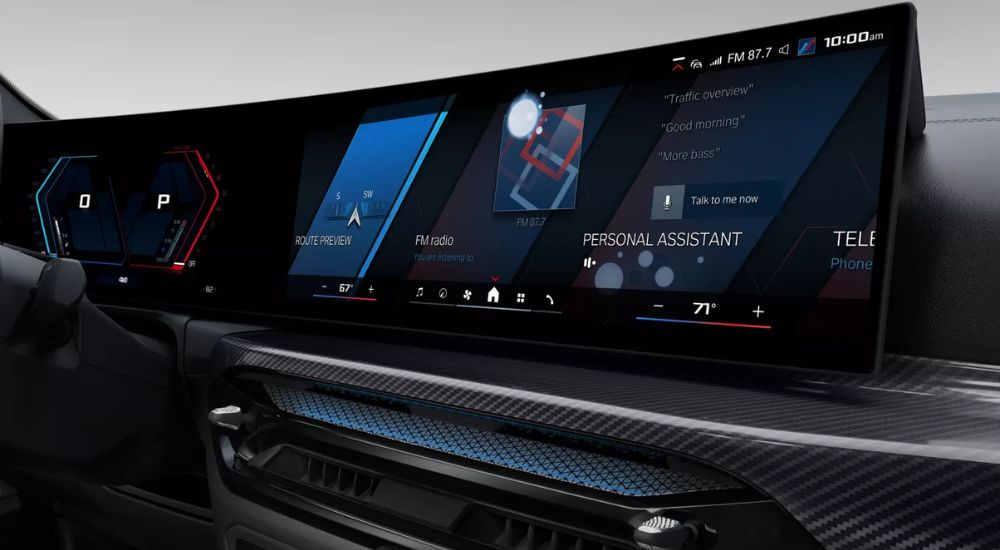
Don’t get me wrong, I like a good infotainment touchscreen. The problem is that many automakers went through a period of giving almost everything touch-controlled functionality, including the climate, volume, and channel-switching systems. Voice controls are now prominent even in entry-level vehicles. Then there was BMW’s gesture-control system, which attempted to interpret hand motions.
At best, these systems are counterintuitive. After generations of proven physical controls, the wheel is being reinvented for no obvious reason. At worst, having too many touchscreen controls is unsafe. Certain functions are buried multiple menu layers deep, diverting a driver’s attention from the road. Voice controls have gotten better, but still struggle to interpret certain words and accents.
Reportedly, cost-cutting was the main reason automakers shifted away from physical controls. The good news is that some have heard the complaints and responded, as brands like Hyundai, Volkswagen, and Mercedes-Benz are reintroducing old-fashioned rotary and push-button controls.
Paddle Shifters
The idea behind paddle shifters is noble. By adding shift buttons on or near the steering wheel, drivers can shift gears faster and more safely without the traditional lever. The problem is that for decades, manual transmissions have been a niche in the U.S. Motor1 reports that fewer than 2% of new cars come equipped with them. As such, the main purpose of paddle shifters is to operate an automatic transmission like a manual transmission.
This can make sense on sporty and high-performance vehicles like the Chevy Corvette, Porsche 911, Subaru WRX, or even the Mazda3, where drivers want more control. But is manual shifting really necessary for your Toyota Camry or Nissan Altima? On a vehicle with a CVT, the whole point of which is to have infinite gear ratios, paddle shifters seem even more pointless.
Passenger Screens
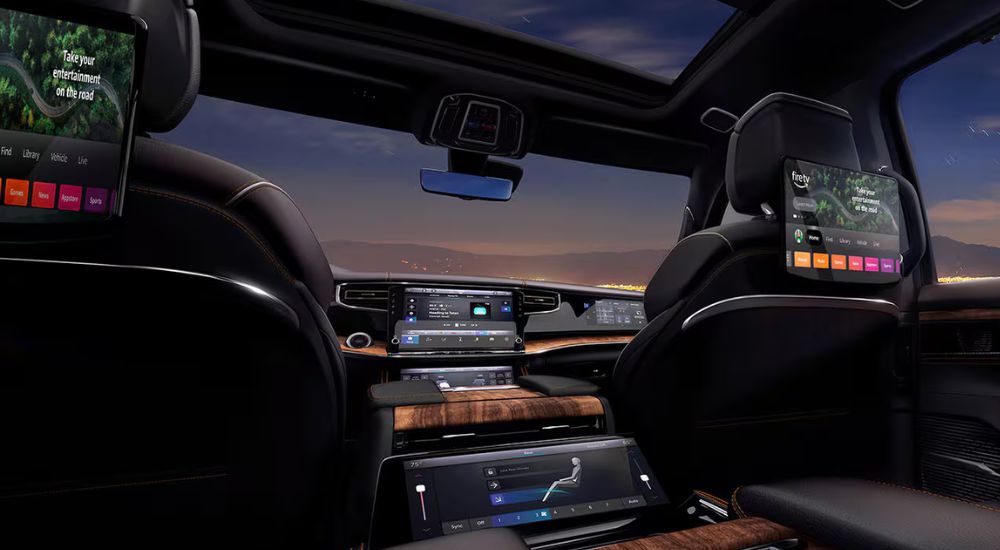
This option to include a second infotainment display centered on the front passenger seat has become more prevalent in recent years. The Jeep Wagoneer, Grand Wagoneer, and Grand Cherokee all offer such screens, as do the Ram 1500, Porsche Cayenne, and Cadillac Escalade IQ, to name a few. The premise is that it allows the passenger to control the infotainment system with less distraction to the driver, and also to watch videos and view certain data independently.
However, these screens can still distract the driver. They also make it more difficult to learn how to use the infotainment. Furthermore, most passenger screens just won’t be used enough to justify the investment. According to the 2024 JD Power TXI Study, only 10% of drivers have a front passenger daily. With a good, centrally placed touchscreen, the front passenger already has the same access as the driver, and that’s usually enough.
Wi-Fi Hotspots
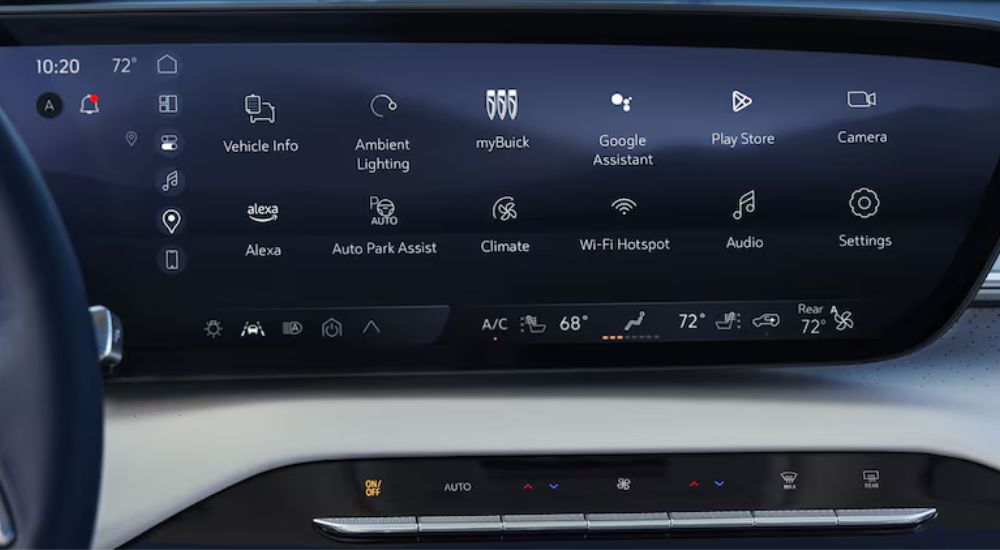
It’s way easier to count the new vehicles that don’t have built-in hotspot capability, since most of them do these days. Even budget daily sedans and SUVs offer this feature, and many automakers will provide a trial of up to a year. Beyond that, drivers must pay a monthly data subscription, as they do with smartphones and tablets.
In most cases, the fee isn’t worth the hotspot alone. People who primarily use their vehicle for short solo commutes don’t need Wi-Fi. If you’re going on the occasional road trip with friends, many cellular data plans include their own hotspot services. With the proliferation of unlimited plans, most people aren’t in danger of hitting a data limit, anyway.
That’s not to say it’s completely useless. In-vehicle hotspots can be helpful for business users or to take advantage of the car antenna if you live and travel in low-signal areas. If the Wi-Fi package includes other services you want, like crash alerts and app downloads, then it might be worth the money. However, the average driver won’t get enough use out of it to justify the price.
G-Force Meters
I won’t lie, I couldn’t believe it when I learned this was a thing. However, modern performance vehicles like the Nissan Z, Chevy Corvette, BMW M3, and Toyota GR GT now come with factory meters that measure G-forces as you drive. Purportedly, the purpose is to collect data that helps you drive better or learn how the car handles.
Yet these meters are more gimmick than substance. First, there are concerns about accuracy, especially if the sensors are improperly placed or aren’t calibrated. Second, some meters only show a maximum reading, which doesn’t provide much usable information. Third, reading the G-force meter while driving qualifies as a distraction.
Most importantly, for 99% of drivers, G forces don’t matter. Daily commuting rarely exceeds 0.1 Gs, and even aggressive drivers rarely reach a range worth analyzing. From what I can tell, the main purpose of these meters is to let people compare numbers on forums. So you hit 1.3 Gs instead of 1.2? Great! But it means nothing beyond bragging rights.
AI Chatbots
You knew this was coming. The AI chatbots that people use to create workout plans, come up with recipes, and help them write papers are being added to vehicles. Tesla is already working xAI Grok into its lineup. GM has announced it is partnering with Google Gemini to offer the service in all its 2022 and newer vehicles with Google built-in, over four million cars overall.
The promises are grand, with hands-free control, reading emails and texts out loud, and answering questions among the supposed upsides. Yet AI’s accuracy is still best described as questionable. Even in early testing, concerns have been raised that AI chatbots may contribute to distracted driving.
Ultimately, barring huge improvements, it’s hard to see in-vehicle chatbots offering a meaningful upgrade to the driving experience. When you add that people will need a premium connectivity package, such as OnStar, to access these chatbots, it seems like paying a lot for minimal benefits.
Beware the Technology Glut
Unfortunately, there’s a lot of excess technology these days, some of which is unavoidable. Along with the features I’ve discussed, many others have drawn criticism, including certain advanced driving assistance systems, automatic stop-start, social media integration, driver-to-passenger communication systems, and the growing “Car Wash Mode.”
I think most drivers would agree they only want to pay for in-vehicle technology if they plan to use it. Fortunately, in many cases, you can avoid unnecessary technologies by choosing certain car models and trim levels, avoiding certain option packages, or simply not paying for the required subscription. It might not be possible to ditch everything you don’t want, but smart choices can avert some of the clutter.