The best word to describe the current state of the U.S. EV market is “uncertain.” After near-constant growth throughout the late 2010s and early 2020s, sales and market share plateaued from late 2023 to mid-2025. Despite a significant surge in Q3 of 2025, which was largely artificial, the lull caused many automakers to reconsider their all-electric goals.
While trying to assess every automaker would be a fool’s errand, there have been notable shifts and announcements among a swath of companies. To help AutoInfluence readers make sense of it all, I put together an overview of the major automotive names that are scaling down their EV emphasis and those that remain centered on the technology.
Why Are Some Automakers Pulling Back on EVs?
Several reasons have led to EV sales stalling out. EVs remain much more expensive than internal combustion engine (ICE) and hybrid vehicles. This gap widened after the expiration of federal tax credits in September 2025, which is believed to have triggered the Q3 sales surge. New U.S. tariff policies are expected to make importing EVs and parts even more expensive. There are also not nearly as many EV options compared to gas and hybrid vehicles, limiting consumer choice.
Legitimate concerns remain about the practical capabilities of EVs. For example, electric trucks still can’t tow anywhere near as much as gas- and diesel-powered trucks. Many areas still lack the infrastructure needed to support large-scale public or private EV charging, leading to “range anxiety” and sometimes causing long lines at existing public stations. Even in areas with good charging infrastructure, it takes much longer to charge an EV than to put gas in a car, causing a major inconvenience.
With all that in mind, here’s how some major automakers are handling this decision point, starting with those who are backpedaling from their ambitious plans, or at least significantly revising them. Note that we’re not including automakers such as Tesla, Lucid, Polestar, and Rivian, which have been all-electric from the start.
Automakers That Are Backtracking
Some manufacturers have made an abrupt about-face on their previous plans for EVs in light of major changes to government policies and incentives. Here are some of the automakers that have changed course.
Ford
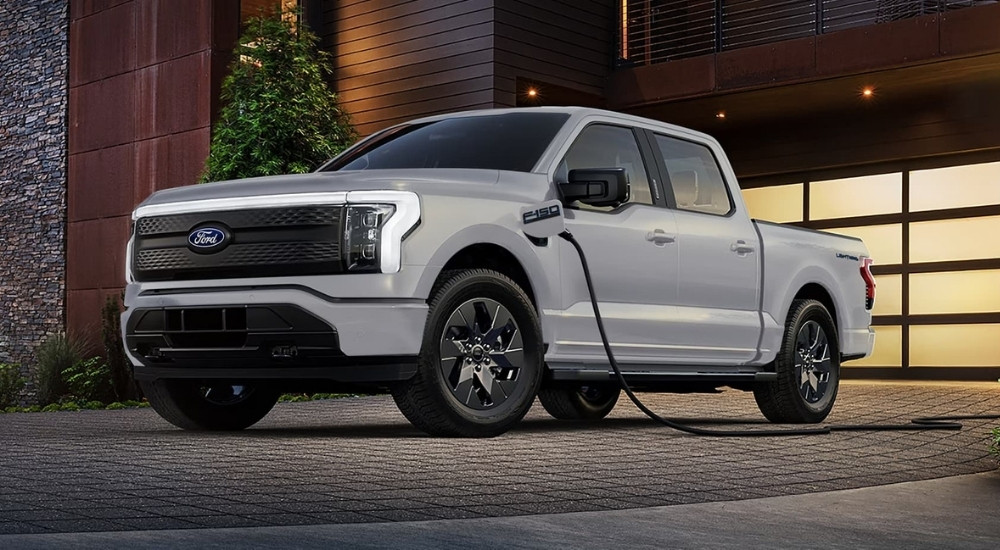
The Blue Oval has significantly curtailed its EV plans. In August 2024, Ford canceled a project to develop three-row SUV EVs after investing over $400 million, saying battery costs were the primary factor. As part of the fallout, Ford abandoned plans to convert its Oakville assembly plant for EVs. Then, in November 2025, reports emerged that Ford might discontinue the F-150 Lightning. This follows two delays of the next-generation model, as well as the indefinite pausing of production due to a fire at the assembly plant.
General Motors
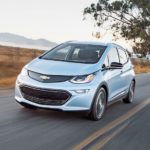
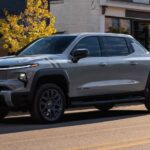
GM publicly remains committed to being all-EV in the U.S. by 2035, but its actions tell a different story. Among other things, it has delayed production of EV pickup trucks and the first Buick EV, cancelled a planned EV partnership with Honda, committed $4 billion to gas-powered truck and SUV technology, and stated plans to offer more hybrid vehicles. The automaker did bring back the Chevy Bolt and introduce the Cadillac LYRIQ, but it’s clearly not all-in on EVs like it once was.
Stellantis
Yet another conglomerate is toning down its EV plans. It cancelled the Dodge Charger Daytona SRT Banshee in October 2025, and the 2026 Charger Daytona EV is down to one trim level. Ram canned a proposed full-size EV pickup, instead transferring the REV name to the PHEV variant. But even PHEVs aren’t safe, as the planned Jeep Gladiator 4xe is no more. For good measure, an electric version of the Maserati MC20 supercar was axed after five years in development.
Porsche/Lamborghini
Both of these Volkswagen Group sport-luxury kings have hedged their EV bets. Porsche delayed its long-awaited 718 EV in May 2025 after its battery supplier, Northvolt, went bankrupt. A few months later, Porsche cancelled plans to produce EV batteries in-house. Lamborghini’s EV debut, the Lanzador, has been delayed until at least 2029, and it may become a PHEV instead. It has also postponed plans to convert the Urus PHEV to an EV, which may now not occur until 2035.
Lotus
This exotic sports car maker had ambitious plans to utilize EVs as a means of emerging from a prolonged slump, announcing in 2021 that it would phase out ICE cars entirely and develop four new EVs. However, as of late 2024, Lotus is now focusing on making PHEVs and using range-extending powertrains. The Lotus Emira that was supposed to be the company’s gas-powered swan song in 2022 is still here, making those rumbling harmonies. The Eletre SUV for China, which was originally supposed to be EV-only, will now gain plug-in hybrid versions, which were not part of the original plan.
Automakers That Remain Full Speed Ahead on EVs
While the U.S. has backtracked on EVs, other parts of the world have not, particularly Europe and China. As a result, these manufacturers remain committed to an electric future, both here and abroad.
Audi
Although Audi has abandoned plans to be all-EV by 2033, it’s still charging forward with development. The Audi Q6 and SQ6 e-tron debuted for the 2025 model year, and the automaker plans a facelift for the Q4 e-tron to compete with Tesla. The company website states it is preparing all its worldwide plants to produce electric cars eventually. It did discontinue the Q8 e-tron, but that was more reflective of the vehicle’s aging platform than a larger strategy.
Honda
Honda has taken its time building an all-electric portfolio, and its plans were largely undeterred by the market’s ebbs and flows. In 2026, it will debut the Honda 0 Series SUV, with a sedan version set to follow in 2027. Additionally, through its partnership with Sony, the AFEELA 1 luxury EV sedan promises advanced technology and interactivity. It’s hard to count the discontinuation of the Acura ZDX against Honda, as that vehicle was actually built by GM.
Mercedes-Benz
The recent actions of this German luxury brand are best described as a reset. Following the acceleration of the EV tax credit expiration, Mercedes-Benz reduced prices and halted new production for the U.S. market. However, the development of multiple new platforms to succeed the EQ is still on track. To demonstrate its commitment, Mercedes-Benz will construct over 400 new charging stations in North America by 2027 and at least 10,000 total public charging ports by 2035.
Toyota
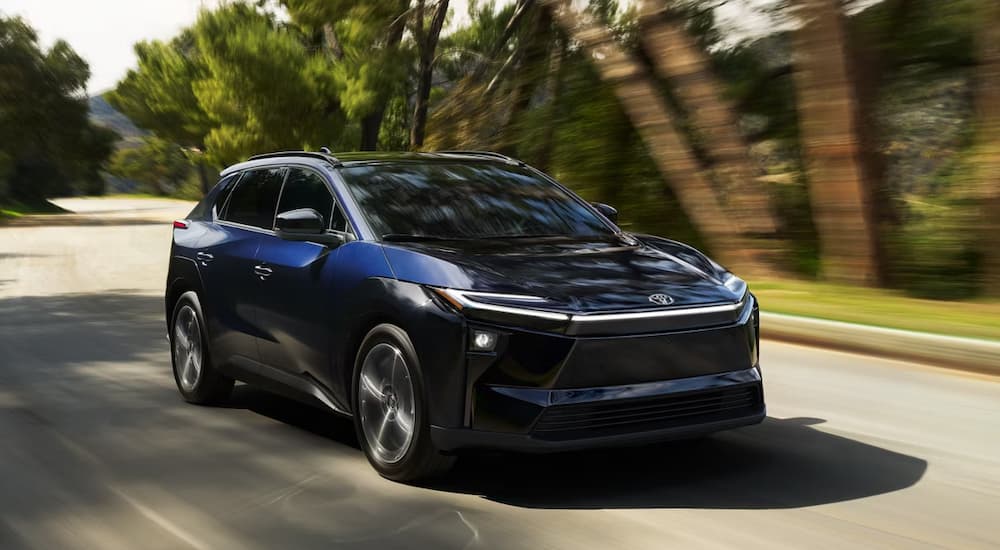
On the surface, it might appear that Toyota is backing away from EVs, as it has twice reduced its 2026 sales target and delayed the construction of a new EV battery factory. But Toyota has long been committed to a multi-faceted approach, and the EVs it currently offers are bucking the trend of stagnant sales. Moreover, Toyota plans to introduce five new EV models, plus an overhauled bZ4X/bZ, by the end of 2026. By all accounts, Toyota is focusing on features that people say they want.
Renault Group
This may be the one manufacturer accelerating its EV timeline. Renault and Geely (the owner of Volvo and Lotus) were already engaged in a joint venture for ICE and hybrid powertrains, and in August 2025, Renault was granted access to Geely’s GEA EV platform. Renault is using it to hasten the development of a new SUV with electric and PHEV variants. It’s unknown whether the vehicle will come to the U.S., but it’s a remarkable reinvention for the French legacy automaker.
Waiting Out the Future of EVs
Clearly, each automaker is handling the current landscape in a different way. This makes sense, as the stagnation of EVs affects each company uniquely, and some have more ability to adapt and shift than others. We didn’t even mention a few automakers, such as Nissan, Hyundai, Kia, and Subaru, because their situations are so complicated that they could warrant their own article.
There are many more chapters to be written in this story, both for individual automakers and the collective EV market. Still, it’s fascinating to see which automakers are pivoting away from EV technology and which are committed to the long haul. We will all have to wait and see which paths prove correct.