We might still be waiting on flying cars, but it’s tough to ignore just how far the auto industry has come over the last few decades. While a basic cruise control system once represented the height of luxury in a car, truck, or SUV, brands have now automated almost every aspect of the driving experience. From hands-free driving systems that can perform automatic lane changes and navigate dense highway traffic to automated parking, collision avoidance, and more, today’s advanced driver-assistance systems (ADAS) are making the daily commute easier than ever.
It can be tough to keep up with all the automotive advancements hitting the market. That’s why we’ve compiled a quick guide to a few of the industry’s most innovative ADAS features. Join us as we take a closer look at some of the more advanced ADAS features you’ll find on today’s vehicles, learn how they work, and learn which brands are helping to create a safer, simpler driving experience.
Trailer Hitch Assist and Trailer Backup Assist
Brand: Ford and Ram
Models: Ford F-150 and Ram 1500
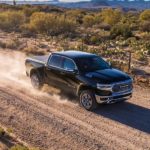
Today’s full-size pickups are capable of some impressive feats, especially when it comes to towing and hauling. The F-150 leads the segment with the ability to pull up to 13,500 lbs, and the Ram 1500 is no slouch with 11,610 lbs of maximum towing capacity, but it takes more than raw pulling power to complete some tougher towing tasks.
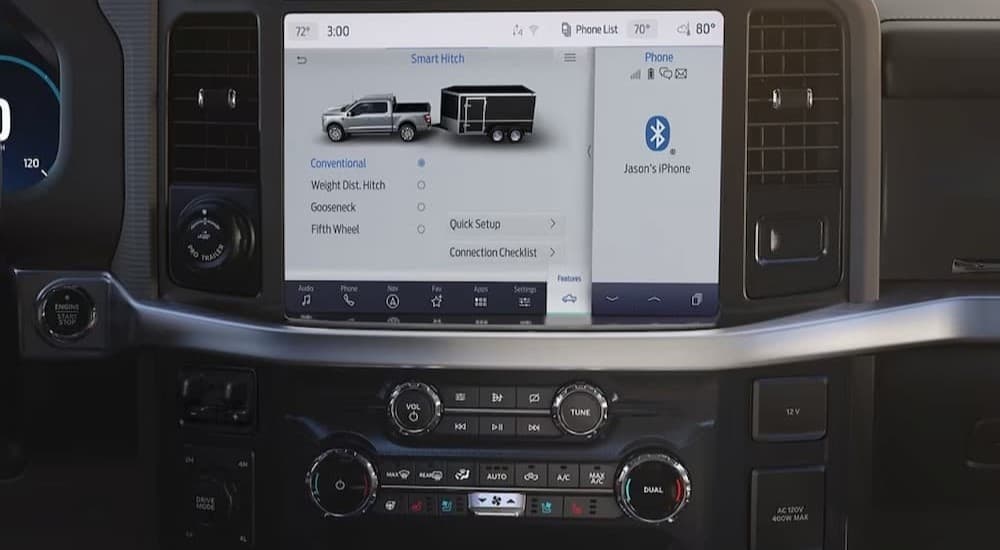
Both Ford and Ram have you covered with some clever towing tech that’ll make all the difference when you’re trying to make that tricky trailer connection or steer cargo into a tight spot. We’ll start with Ford’s Pro Trailer Hitch Assist and Ram’s Trailer Auto Hitch Assist, which largely serve the same purpose.
Connecting your truck to an unattached trailer is often one of the more frustrating aspects of the towing process. While a designated spotter always comes in handy, this sort of co-pilot can be hard to come by. Ford has engineered around this issue with Pro Trailer Hitch Assist. This system uses a rear-facing camera to detect the trailer coupler, then lets the truck handle the rest.
Just press a button, and the F-150 will handle all steering, braking, and acceleration, aligning the hitch ball directly beneath the trailer tongue. Ram’s Trailer Auto Hitch Assist requires a little more driver input. While it can handle the steering logistics, owners are responsible for manipulating the pedals.
If there’s one thing that strikes fear into the hearts of new pickup drivers, it’s having to back down a boat ramp during a busy day at the lake. The process requires a sort of mirror-image thinking that can be tough to master, but both Ford and Ram are here to help. The F-150’s Pro Trailer Backup Assist skips the steering wheel in favor of a dash-mounted control knob that drastically streamlines the process.
Turn the knob left, and the truck commandeers the steering wheel, turning the trailer left and saving you from the ire of a dozen sunburnt boaters. The Ram 1500 offers a Trailer Reverse Steering Control feature that follows a similar process, though both systems still require motorists to operate the gas and brake pedals.
Active Lane Change with Gaze Confirmation
Brand: BMW
Models: 5 Series, 7 Series, iX, X5, X6, X7, and XM
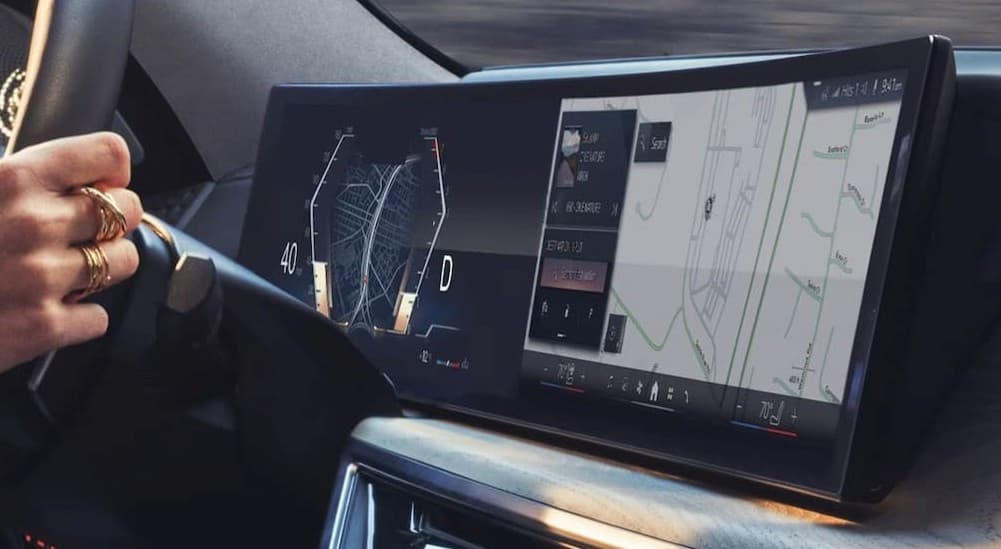
Today’s hands-free driver-assistance systems have become increasingly complex in recent years. While they were once limited to keeping a vehicle centered in its lane and maintaining the correct speed, they can now navigate complex traffic patterns, respond to surrounding vehicles, and even perform automatic lane changes.
This last feature is especially useful for maintaining a steady pace on the highway, but in most cases, it still requires some form of driver intervention. Many systems require the operator to flick their turn signal stalk to initiate a lane change, but the team at BMW has developed a different approach that seems ripped straight from your favorite sci-fi movie.
The brand’s Highway Assistant system includes an Active Lane Change with Gaze Confirmation that allows drivers to confirm a lane change using only their eyes, thanks to the interior driver camera. When your BMW approaches a slower vehicle, the Highway Assistant system will use visual and audio cues to suggest a lane change. Simply look at the corresponding side mirror, and your BMW will take the reins, activating the correct turn signal and steering safely into the indicated lane.
It might sound like something of a novelty, but Active Lane Change with Gaze Confirmation can have a big impact on road safety. While other automated driving systems require a more hands-on approach, Active Lane Change with Gaze Confirmation means there’s one less thing to worry about on the road and a much lower chance of accidentally activating an automatic lane change you didn’t intend to make by brushing the signal stalk.
Automated/Remote Parking Assistance
Brands: Genesis/Hyundai/Kia, BMW/Mini, Mercedes-Benz, Tesla
Remote-control cars have long been a childhood staple, but they’ve become a little more sophisticated in recent years. While they might not be primed for jumps, flips, and other high-flying antics, these full-size, remote-control cars can make all the difference when it comes time to slide into a tight parking spot.
BMW was the first to pioneer this automated parking tech with its Remote Control Parking system in the 2015 7 Series. The sedan’s key served as the remote, allowing owners to automatically park their car while they watched from the sidelines. The feature made its way to U.S. shores in the 2016 model year, and Mercedes-Benz jumped on the bandwagon that same year with its Remote Parking Pilot system. Tesla put a twist on the feature with the Summon function in the Model S/Model X. While Summon wasn’t initially intended for parking in particular, Tesla’s EVs have since added an Autopark feature that serves a similar purpose.
This sort of cutting-edge tech might not come as much of a surprise in a BMW, Mercedes-Benz, or other high-end luxury model, but it certainly made some waves when it showed up on select Hyundai models in 2019.
While it first appeared on the hydrogen fuel cell electric vehicle (FCEV) Nexo, most drivers became familiar with Hyundai’s Remote Smart Parking Assist (RSPA) system when the 2020 Sonata hit the market. The original RSPA system was relatively simple, with drivers using the car’s Smart Key to remotely move the vehicle forward and backward to complete basic parallel and perpendicular parking.
RSPA has only become more complex in the years since, with Hyundai unveiling the new 2.0 version back in 2021. Like many of these parking systems, RSPA has become increasingly automated, combining the remote-control approach with automated parking for a more seamless experience that’ll nestle the vehicle into an empty parking spot at the touch of a button. Hyundai’s new camera-based parking-line recognition feature also complements the existing ultrasonic sensors, enabling RSPA2-equipped vehicles to quickly recognize marked spaces. While the original was limited to parallel and perpendicular spaces, RSPA2 can also handle diagonal parking.
The Hyundai Motor Group has since expanded RSPA2 to both its Kia and Genesis models, and BMW/MINI has also gotten in on the fun with its Parking Assistant Professional/Remote Control Parking system. These newer offerings use a smartphone-based approach that provides drivers with a familiar control interface and lets them enjoy a whole new type of mobile gaming.
An Era of Automotive Evolution
These ADAS features represent some of the market’s most cutting-edge tech, but there’s plenty more where that came from. From increasingly sophisticated hands-free driving systems to clever, safety-enhancing features like intersection collision avoidance, evasive steering assist, and even new traffic-sign recognition technology that can automatically adjust your cruise control based on posted speed limits, this technology is allowing drivers to hit the road with a new sense of confidence.
While not strictly classified as ADAS, many of today’s advanced camera systems serve a similar purpose. The standard backup camera has been legally required on all new passenger vehicles since 2018, but brands are going above and beyond to provide drivers with a clear view of the road. Mercedes-Benz and BMW have both championed night-vision camera systems designed to help identify and avoid pedestrians and animals. Many off-road models have added underbody/forward-facing trailer cameras that make it easier to avoid obstacles.
Some of these features are bound to become the status quo, while others will quietly disappear from the market or be replaced by new and improved alternatives. It’s tough to know how the market might respond to new ADAS features, but automakers still deserve a little credit for taking the small risks that steadily push the industry forward. Whether you’re looking for a stress-free alternative to your typical trailer attachment routine, appreciate the convenience of active lane-change technology, or just want to impress your friends with your full-size RC car like James Bond, there’s never been a better time to explore the auto market.