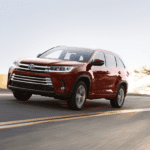
The SUV that popularized the compact crossover segment now risks becoming a victim of its own success. The original Toyota RAV4 represented nothing less than a revolution in the SUV category when it debuted in the U.S. market in 1996, paving the way for decades of crossover dominance.
The iconic SUV has only continued to gobble up market share in the years since and, in 2024, became the best-selling vehicle in the U.S., narrowly edging out the longtime leader in the Ford F-150 pickup. Toyota’s compact all-star carried this impressive run into 2025 with the automaker moving around 479,000 units, but 2026 is shaping up to be a very different story.
While demand is still strong, a perfect storm of economic and political factors threatens the RAV4’s impressive run of form. The numbers don’t lie. As of late May, Toyota has moved just 121,000 units, which represents a 40% decrease from the same period last year. Luckily for Toyota, it appears to be a lack of supply, not a collapse in demand, that has led to the sluggish sales.
Supply-chain issues, production challenges, and trade uncertainty have made it difficult to get the RAV4 to the dealership in the first place, and even harder to keep it on the lot. According to Cars.com, the 2026 RAV4 spends just 12.9 days on dealer lots on average and routinely sells for more than MSRP. Inventory is also down across the board and, as of early 2026, sits some 51% below where it was just 12 months before.
What’s the real story behind these challenges, and what are your chances of landing a 2026 model of your own? We’ll answer those questions and more as we explore the curious case of the chart-topping crossover.
The SUV That Changed It All
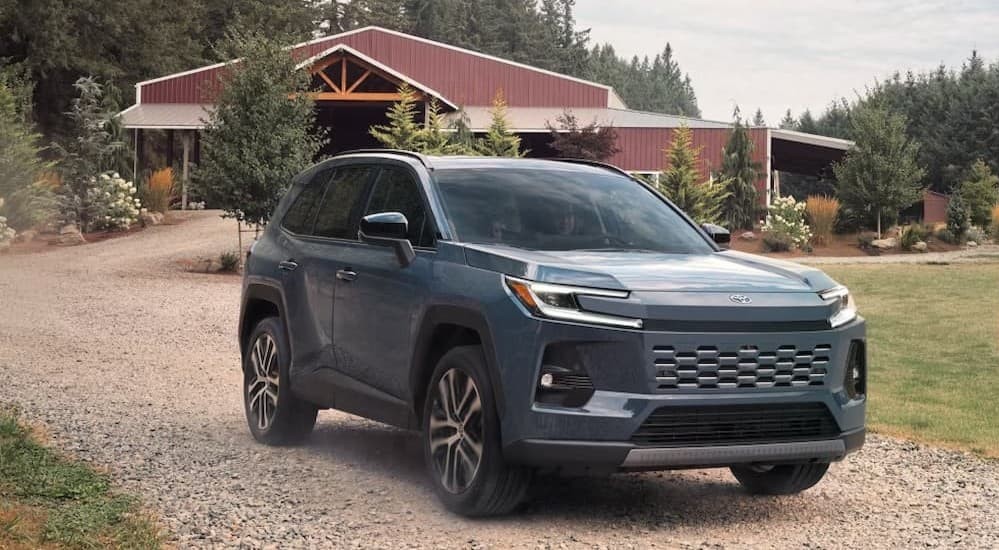
Before we dive into the key reasons behind the RAV4’s current struggles, let’s take a moment to trace the evolution of the game-changing SUV. It’s easy to understand the RAV4’s appeal, especially when you consider the state of the SUV segment back in the late 1990s.
Traditional body-on-frame SUVs had grown steadily larger and more truck-like throughout the 1980s and 1990s. These models traded on their sheer size, towing capacity, and off-road capability, but asked drivers to make considerable compromises in fuel economy, comfort, and maneuverability.
The RAV4 represented a compelling alternative to the average SUV, largely because it employed the same unibody construction used by most cars. This made all the difference in comfort and fuel economy while still allowing owners to enjoy the ride height, utility, and cargo space an SUV offers.
The original crossover spawned no shortage of imitators, with Honda, Subaru, and Ford all following suit and releasing their own unibody SUVs within the next few years. While Honda’s CR-V does give the RAV4 some stiff competition, and the Tesla Model Y has made inroads in the EV niche, the RAV4 routinely posts sales nearly twice those of any other compact SUV.
In just a few decades, crossover models have become the dominant force in the modern auto market, now representing 49% of all new light-vehicle sales in the U.S. In fact, if you were to combine the market share of the other top five categories—pickups, SUVs, compact and midsize cars—you would still be well short of the crossover category.
Why is the RAV4 So Hard to Find?
New Generation
We said the 2026 RAV4 spends just 12.9 days on the dealer’s lot, but that doesn’t tell the whole story. While 2026 models are flying off the shelves, the outgoing 2025 version hasn’t proved to be quite as popular. In fact, the 2025 model is spending around 50 days on the lot, and is even being discounted by some $1,000 on average as dealerships seek to unload excess inventory.
Why would one model be selling like hotcakes while the other is relatively stagnant? It’s all thanks to the fact that the RAV4 has made some significant changes with the debut of the newest model. The 2026 RAV4 marks the start of the SUV’s sixth generation, and it’s an electrifying time for the popular model.
That’s because the RAV4 is going entirely hybrid with the debut of the new model. The 2.5L I-4 engine that powered the previous version will remain, but the base model now gains two electric motors (or three with AWD) that make all the difference in both output and fuel economy.
The new RAV4 offers 11% more horsepower than the outgoing model while also blowing it away in terms of efficiency. The entry-level hybrid can achieve an EPA-estimated 43 MPG combined, while the available plug-in hybrid (PHEV) version boasts 320 hp, 101 MPGe, and an all-electric driving range of 54 miles.
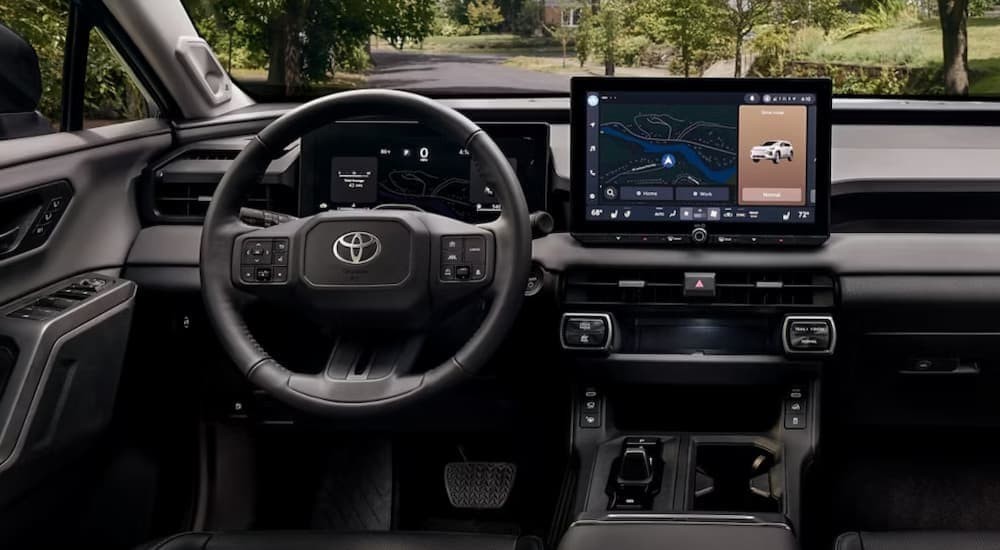
Throw in updated styling, increased cargo space, and a full slate of new infotainment that includes an optional 12.9-inch touchscreen display, and it’s easy to see why the 2026 model is so hard to source. Drivers have been waiting for the sixth-generation model for years, and strong sales suggest demand will continue to outstrip supply for some time.
Production Challenges
The new RAV4 has brought some considerable challenges to the production process. Building your bestselling SUV around a new hybrid powertrain isn’t as simple as it might sound. While the core of the crossover’s hybrid setup remains relatively unchanged, the system has been treated to some significant updates that have required Toyota to make some major changes to its production process.
From factories in Japan and Canada to Toyota’s oldest and largest manufacturing plant in Georgetown, Kentucky, the automaker has retooled many of its facilities to make way for the new RAV4. While Toyota’s Canadian factory produced the bulk of RAV4 models for the North American market, the Kentucky plant was expected to supplement production of new RAV4 models for the U.S. market following a significant investment that began in 2024. Unfortunately, things didn’t exactly go to plan.
Retooling a plant is no small task, especially when you’re trying to produce a relatively new hybrid powertrain. Toyota saw these challenges coming and intentionally created an excess of 2025 models to meet the increased demand and buy a little extra time for the retooling process. But that brings us back to the problem we mentioned above. Drivers aren’t as interested in the fifth-generation model now that the newest version has hit the market.
Tariff Challenges
Love ’em or hate ’em, one thing is for sure. Tariffs create a lot of uncertainty when you’re a Japanese brand that’s trying to create a car, truck, or SUV on U.S. soil. Many RAV4 models might be produced in the Bluegrass State, but a modern automaker like Toyota relies on a highly integrated global supply chain, with key parts arriving from every corner of the globe.
Those parts fluctuate in price when tariffs hit, raising production costs and putting brands in a difficult position. The RAV4 was initially produced at Toyota’s plants in Canada and Japan, but after a wave of new tariffs was imposed following the 2024 U.S. election, the company renewed its focus on its Kentucky plant.
This might seem like a win for the pro-tariff crowd, which is often focused on the job-creating benefits of such trade policies. But it also affected the SUV’s production schedule as Toyota rushed to retool the U.S. facility to increase production. The first U.S.-made 2026 RAV4 didn’t even roll off the line until 2026, which does little to alleviate the current shortfall.
Earthquake
The new RAV4 isn’t necessarily cursed, but it’s certainly faced its fair share of challenges. The most recent came in late July, when a magnitude-7.1 earthquake struck Japan’s Kyushu region. Toyota was forced to temporarily suspend operations at three plants due to safety concerns, further exacerbating the brand’s supply chain issues.
The affected facilities included plants that produced Toyota’s hybrid units and engines, but there’s an important caveat regarding the RAV4. The plant that produces the hybrid unit for the RAV4 is actually located at Toyota’s Takaoka plant in Aichi Prefecture, not the Kyushu region. There’s no reason to think that the earthquake is directly responsible for the RAV4’s production struggles, but it’s still shaping up to be a model year to forget for the Toyota brass.
A Perfect Storm of Problems
Ultimately, the answer to the question “Where’s my RAV4?” is pretty simple. It probably sold before you made it to the dealership. The 2026 model arrived at a strange time for Toyota, which didn’t seem to anticipate the massive demand for the new sixth-generation model. Production challenges and tariffs have certainly played a part, but hopefully, this is just a temporary hiccup for the bestselling SUV.
There’s no denying the impact that the RAV4 has had on the U.S. auto market since it first hit the streets in 1996. The compact singlehandedly created the crossover category, and the RAV4’s legacy can be seen in every small SUV that you’ll find on the road today.
If Toyota’s past prognostications have been any indication, the decision to ditch the gas-powered approach for a new hybrid model could well become the norm. It might seem a bit far-fetched in an industry where internal combustion has long been the go-to approach, but if any brand has developed a knack for reading the technological tea leaves, it’s Toyota.
While 2026 has proven a challenging year for the iconic SUV, a little patience goes a long way with the RAV4. Supply should catch up with demand before too long as the Kentucky plant gets into full swing, allowing drivers to enjoy the latest iteration of America’s favorite SUV.