Stellantis raised a few eyebrows in early 2026 with the announcement that it was axing its plug-in hybrid (PHEV) models. It’s a major reversal on the part of the world’s third-largest automaker, which, as of late 2025, actually led the segment, with the Wrangler 4xe representing the market’s most popular PHEV. Stellantis isn’t alone. Other major players like Ford and GM are also reassessing their electrically powered offerings, but an overcommitment to PHEV tech means Stellantis is now paying the price, as stagnant sales and competing EV technology undermine the plug-in approach.
“Stellantis continually evaluates its product strategy to meet evolving customer needs and regulatory requirements,” said Stellantis in a recent press release. The company will not shutter its electric-assisted lineup entirely, but rather “focus on more competitive electrified solutions, including hybrid and range‑extended vehicles where they best meet customer needs.” What went wrong? What can this announcement tell us about the state of the PHEV segment? Which models will be missing from the lineup as Stellaris ditches the plug-in hybrid approach? Read on as we give Stellantis a little PHEV postmortem.
What Went Wrong?
Stellantis owns Jeep, Ram, Dodge, Chrysler, and a handful of European brands. It isn’t some struggling company that’s suddenly pivoting away from PHEV technology. The conglomerate was a leading name in the plug-in niche. The discontinued Chrysler Pacifica, Jeep Wrangler 4xe, and Grand Cherokee 4xe accounted for almost 23 percent of the segment’s year-over-year growth between 2024 and 2025 and seemed to hold a lot of promise, but the market clearly had other ideas. In retrospect, this 2024 to 2025 period might have represented the PHEV heyday, with new vehicle registrations skyrocketing from 1.5 to 1.8 million. A confluence of factors has made such hybrid models a harder sell moving forward.
The first and most obvious is the PHEV’s status as a sort of bridge technology. All-electric vehicles (EVs) are a tough sell for some drivers, especially given their relatively high cost and concerns about range and charging infrastructure. Traditional hybrid models (HEVs) are a good on-ramp to EV tech, but still rely on a gas engine to handle the bulk of the work. That’s where PHEVs come in. By leveraging larger batteries, PHEVs typically offer 20 to 40 miles of all-electric range while delivering superior fuel economy when the engine is running. Since the average American drives about 30 miles per day, HEVs can theoretically offer a fully gas-free alternative to a typical internal combustion engine.
It’s a compelling package, but one that’s lost a bit of its luster as EV technology and infrastructure have continued to improve. The cost of a new EV has actually fallen in recent years as increased competition and lower battery prices combine to create a more affordable market. Just 10 years ago, a lithium-ion battery cost around $1,000 per kWh, but that price has since fallen to about $136. EV charging infrastructure has also more than doubled since early 2021, and while PHEVs also benefit from this improved network, it’s really helped to make all-electric models a more practical option for today’s drivers.
Then there are the federal regulations and tax incentives, or lack thereof. PHEVs initially helped automakers address tightening fuel-economy standards by lowering their fleet-wide average emissions. However, as the current administration rolls back such restrictions, brands have little incentive to develop eco-friendly vehicles. A lucrative $7,500 EV tax credit also expired in late 2025, making PHEVs less economically viable and potentially stymying growth in the segment.
What’s Next?
Where does this leave Stellantis in terms of EV, PHEV, and HEV tech? While the plug-in models might be headed for the great junkyard in the sky, the auto giant isn’t giving up on electrically-powered vehicles just yet. After a two-year hiatus, the compact Jeep Cherokee returns with a new hybrid powertrain that represents a significant improvement over what was one of the industry’s least efficient small SUVs. While the previous gas-powered model returned 24 MPG combined, the new hybrid Cherokee delivers 37 MPG combined and adds 30 hp over the previous standard engine. 2026 also marks the introduction of a new off-road-ready option, the Recon EV. This midsize model puts a futuristic spin on the familiar Wrangler formula, can churn out 650 hp, and retains the 4WD powertrain and the removable roof and doors that made the original off-roader such a hit.
The automaker also introduced the Wagoneer S, an all-new, all-electric version of the Wagoneer, offering up to 294 miles of range, a refined interior, and an available 600-hp, dual-motor setup that propels it from zero to 60 mph in 3.4 seconds. Jeep also plans to outfit the 2027 Grand Wagoneer with a hybrid powertrain that puts a unique twist on traditional PHEV tech. Known as an Extended-Range Electric Vehicle (EREV), the new Grand Wagoneer differs from a typical PHEV in that the gas engine is used solely to charge the battery. This is the same approach Ford is championing, which recently revealed that its F-150 Lighting EV pickup will be replaced by an EREV model. The EREV method represents a satisfying middle ground between PHEV and EV tech, offering up to 100 miles of all-electric range while retaining the convenience of a gas-powered model. All signs indicate that the forthcoming Ram 1500 REV will adopt a similar EREV powertrain, giving Stellantis a compelling new contender in the electric pickup battle.
Which Models Are Missing?
I’ve already mentioned some in passing, but let’s take a closer look at the PHEV models that have left the Stellantis lineup.
Chrysler Pacifica Hybrid
Production: 2017 to 2026
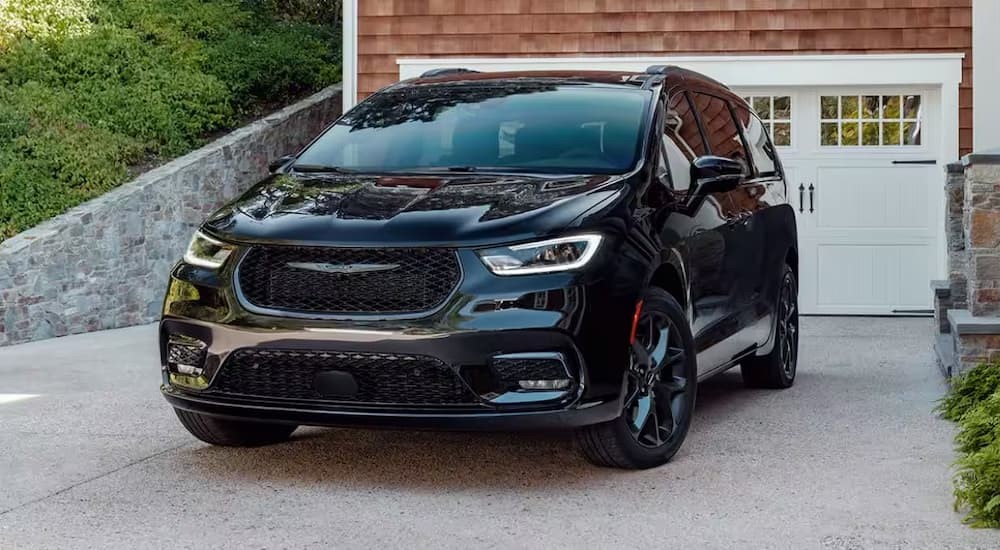
Released in 2017, the Chrysler Pacifica was the first PHEV model from Stellantis. The hybrid powertrain is particularly well-suited to the family-friendly minivan, allowing drivers to enjoy a spacious, efficient ride that’s also easy on the wallet. The Pacifica hybrid is powered by a 3.6L V6, a 16.2-kWh battery, and two electric motors for a total output of 260 hp. However, it’s the minivan’s fuel-sipping design that really marks its biggest selling point. While the purely gas-powered model delivers a respectable 22 MPG combined, the PHEV powertrain puts that figure to shame with an MPGe rating of 82. Best of all, the Pacifica can travel up to 32 miles on battery power alone, so most drivers won’t even need to tap into the gas tank as they complete their daily commute or run errands around town.
Aside from its impressive fuel economy, the Pacifica also includes some clever features designed to promote domestic harmony, including an automated parking system, the Stow ‘n’ Vac onboard vacuum cleaner, a Uconnect Theater rear-seat entertainment system, the FamCam interior-view camera system, and Chrysler’s innovative Stow ‘n’ Go seats that can completely fold away to make the most of the minivan’s 140.5 cu.ft.. of cargo space.
Jeep Wrangler 4xe
Production: 2021 to 2025
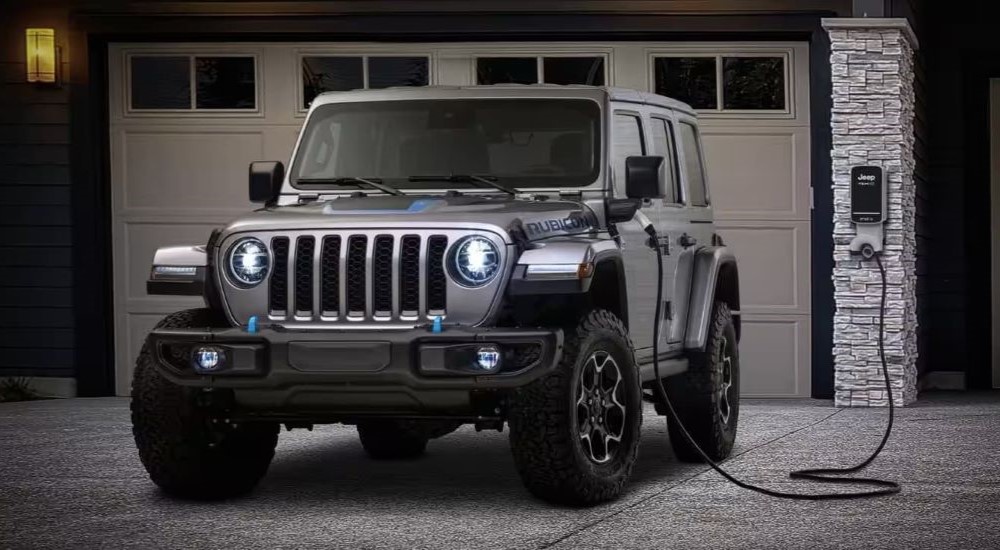
The iconic Jeep Wrangler adopted a more eco-friendly approach in 2021, with Stellantis unveiling a new 4xe PHEV model powered by a 2.0L turbocharged I-4 and a 17.3-kWh battery. The Wrangler 4xe quickly became one of the industry’s most popular PHEV options and, at one point, represented 12% of the entire segment’s sales. It’s hard to ignore one of your most famous models when you’re trying to usher in a new generation of hybrid models, but in truth, the PHEV approach was always an odd pairing for the Wrangler. The PHEV powertrain actually benefitted the Jeep in one important off-road metric by providing the SUV with as much low-end torque as the HEMI-wielding V8 at 470 lb-ft. It also allowed drivers to enjoy the sounds of nature with its whisper-quiet operation.
However, the hybrid model simply started too far from the original Wrangler ethos. Mechanical simplicity has long been a hallmark of the Wrangler, allowing owners to perform trailside repairs even when they’re venturing far off the beaten path. The 4xe’s hybrid powertrain is a lot less accessible, and its heft makes it a particularly weighty model when compared with many of its off-road competitors. Add in the fact that most off-road trails tend to lack conveniently placed charging stations, and the Wrangler 4xe ends up looking like a solution for a problem that might never have existed in the first place.
Jeep Grand Cherokee 4xe
Production: 2022 to 2025
Jeep is no one-trick pony when it comes to SUV design. While the Wrangler might trade on its off-road ability, the Grand Cherokee proves that the brand knows its way around the premium end of the market with a luxurious design that still packs plenty of adventure-ready appeal. The midsize model shares the same PHEV powertrain as the Wrangler 4xe, with its 2.0L I-4 and 17.3-kWh battery, and delivers just as much punch with 375 hp and 470 lb-ft of torque. The SUV offers around 23 MPG combined when running solely on gas, but that figure jumps to 56 MPGe when the battery and dual electric motors are involved.
The PHEV design is also a major boon to the Grand Cherokee’s performance resume, allowing the Jeep to outpace the non-hybrid model by 2.1 seconds with a zero-to-60-mph time of 5.3 seconds. Unlike many PHEV models, the Grand Cherokee doesn’t sacrifice any cargo space due to its battery, offering the same 70.8 cu.ft. of maximum storage capacity as the gas-powered model. That makes the Grand Cherokee a pretty enticing option for budget-conscious families, and will leave a sizable hole in the Jeep lineup with the PHEV’s departure.
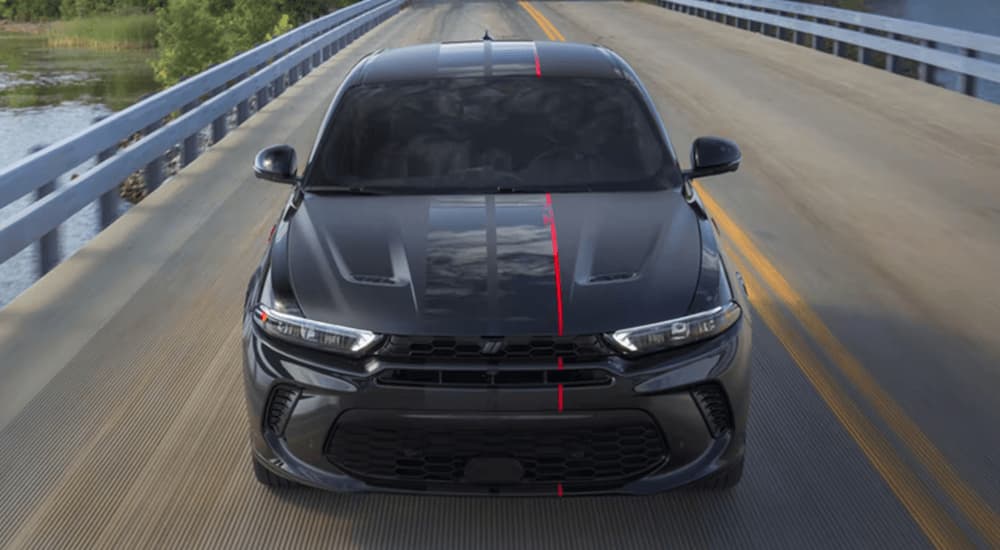
Dodge Hornet/Alfa Romeo Tonale PHEV
Production: 2024 to 2025
The Dodge Hornet and the nearly identical Alfa Romeo Tonale represent the shortest-lived experiments in Stellantis’ PHEV portfolio. The compact crossovers initially debuted in a gas-only guise, but added a PHEV option in their second year on the market with both models leveraging a 1.3L I-4 engine, a single electric motor, and a 15.5-kWh battery. The Hornet takes a more performance-minded approach, but both models log the same 5.5-second zero-to-60-mph time and feature a fully independent suspension along with optional adaptive dampers. Dodge also allows drivers to access a little extra output with a PowerShot feature that gives the SUV a brief 30-hp boost, but the Alfa can churn out the same power without the parlor trick.
The Tonale and Hornet are equipped with steering wheel-mounted paddle shifters that combine the convenience of an automatic with the added control of a manual transmission. But how do the two PHEVs stack up when it comes to efficiency? Again, it’s tough to separate the two models, with both earning an EPA-estimated 77 MPGe. There are plenty of reasons behind the PHEVs’ short run, including the relatively high cost, general PHEV struggles, and, in the case of the Tonale, a lack of brand recognition amongst U.S. drivers. However, it’s hard to ignore the impact of recent tariffs. The Tonale and Hornet were both produced in Italy, which means the SUVs were subject to a 25% tariff, contributing to a less-than-attractive MSRP.
Lessons Learned
The Stellantis PHEV lineup will ultimately go down as an expensive lesson on championing new technology, but it’s hard to know how history will look back on the PHEV era. Was it always just going to act as a stepping stone to full EV adoption, or do these plug-in models have a place in today’s automotive market? One thing is for certain: these PHEVs and traditional hybrids have paved the way for new EV options and proven that drivers are willing to compromise on convenience when there are performance and financial benefits to be had. While the Pacifica, Wrangler 4xe, and Grand Cherokee 4xe might not be long for this world, it’s not too late to get your hands on one of Stellantis’ discontinued PHEV models. There are already plenty of options popping up in the pre-owned market, and reports indicate that Chrysler actually managed to produce a few Pacifica PHEVs before Stellantis HQ issued its edict.