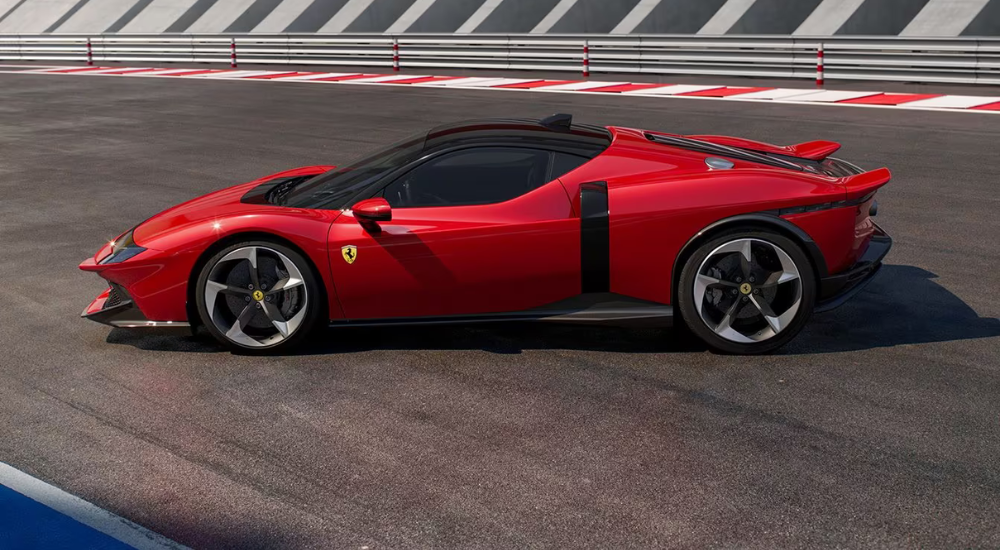
I’m always skeptical when it comes to car revivals. On one hand, it’s exciting to see a beloved nameplate return from the dead—especially one that shaped my love for cars in the first place. On the other hand, most resurrections fail to capture the magic of the original. Some feel like ghosts in modern clothes. The headlines in 2025 have been about two very different comebacks for two very different reasons: the Honda Prelude and the Ferrari Testarossa. One honors heritage while pushing the future; the other, at least so far, seems to be grasping at the past.
Let’s take a look at what makes or breaks these rebirths. One is inspiring, while the other reminds us that some legends should stay legendary.
The Prelude
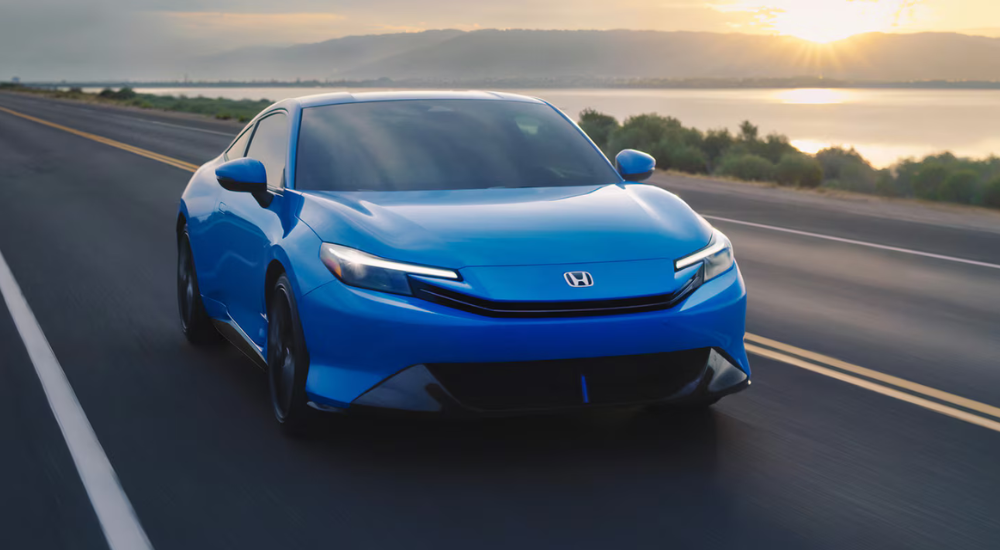
Honda has a knack for bringing back icons the right way. The new Prelude, revealed as a sleek hybrid coupe concept, doesn’t try to relive the glory days of the 1990s in a carbon copy shell. Instead, it reimagines what the Prelude stood for—balance, precision, and a driver-focused spirit—and updates it for a world that values sustainability as much as speed.
The original Prelude was never about brute force. It was about finesse. It was the kind of car that rewarded skill over swagger, giving everyday drivers a taste of what made Honda engineers so beloved by enthusiasts. The 2025 iteration carries that torch. It’s powered by a hybrid system that blends efficiency with performance, rumored to be the same setup as the Civic e:HEV, tuned for sportier response.
But the magic of the Prelude was never in the numbers — it’s in the attitude.
Honda didn’t chase power or push gimmicks. They built a compact coupe that prioritizes connection, offering a manual transmission and a lightweight architecture in an era when both are becoming increasingly rare. The design walks a perfect line between the future and familiar, with a long hood, clean panels, and taillights that echo the original’s refined coolness.
It’s not just a revival; it’s a refinement. Honda took time to understand why the Prelude mattered in the first place and built on that foundation. That’s why this feels like a genuine continuation of the story rather than a reboot for the sake of marketable nostalgia.

Why the Prelude Works
What makes the Prelude’s return so effective is its restraint. Honda isn’t pretending this car will sell in massive numbers. They know it’s for the enthusiasts—the ones who still care about steering feel and mechanical honesty. They’ve created something that appeals to both those who grew up loving the name and to younger drivers discovering it for the first time.
This is the recipe for a revival done right:
- Keep the soul intact. The philosophy of driving has remained the same.
- Evolve with intent. The hybrid system makes sense for today’s market.
- Respect the name. The design pays homage without being stuck in the past.
The rebirth of the Prelude shows confidence. Its goal isn’t to be everything to everyone. It’s just trying to be a Honda again.
The Testarossa
Then we have Ferrari’s revival of the Testarossa—a car that, for many, defines 1980s excess. The original was an icon of design, power, and drama. The flat-12 engine, the side strakes, the unfiltered aggression—it was quite literally the poster child for a decade when cars weren’t afraid to be bold.
So when rumors began swirling about Ferrari reviving the icon, fans hoped for something equally daring. Instead, what we’ve seen so far feels performative at best.
The new Testarossa—at least what we’ve seen in concept form—is a PHEV grand tourer that borrows the name and some visual cues from the classic, but leaves the spirit behind. Its proportions are softer, and its silhouette is more generic. And while the plug-in hybrid platform offers staggering performance; it risks becoming just another digital-age Ferrari: fast, but emotionally distant.
Here’s the problem: You can’t revive an analog legend in a digital body without losing something essential.
Ferrari’s pursuit of perfection sometimes erases personality. The Testarossa wasn’t perfect—it was flawed, loud, wide, and occasionally ridiculous—but that’s what made it unforgettable. When you remove the imperfections, you also remove humanity.
It’s like recreating a rock song with all synthetic instruments—it might be technically better, but the soul is gone.

When Heritage Becomes Hype
There’s a fine line between paying homage and exploiting heritage. Ferrari’s revival feels like the latter. The Testarossa name carries weight, and attaching it to a sleek PHEV is a surefire way to draw attention—but it risks alienating the very fans who made it iconic in the first place.
If Ferrari had introduced this as a new model—a next-generation GT that symbolized their transition into electrification—it could’ve been praised for innovation. But by calling it a Testarossa, they invite comparison to the car that embodied a different world.
It isn’t that electric Ferraris can’t be emotional. It’s that this one doesn’t seem to want to be. It’s more about numbers and narrative than nostalgia and noise.
That’s the danger of revivals done for recognition rather than reverence.
What Revival Really Means
A true revival isn’t about cloning the past—it’s about continuing the conversation. The best revivals understand what made the original special and reinterpret that essence through a modern lens. The worst focus on surface-level callbacks, hoping familiarity and nostalgia will do the work.
The Prelude represents evolution. It understands that its audience has evolved, that performance and sustainability can coexist, and that a car’s character matters more than its number of cylinders.
The Testarossa, on the other hand, feels like an identity crisis. It’s trying to wear old clothes in a world that’s moved on, forgetting that style without substance is just nostalgia in disguise.
Lessons on Both Ends of the Spectrum
There’s something poetic about these two revivals arriving around the same time. One is a modest, front-wheel drive coupe with a hybrid system. The other is a multi-million-dollar electric supercar. Yet both are dealing with the same question: How do you bring back a legend without betraying it? Honda’s answer is humility. Ferrari’s answer is spectacle.
And that’s what separates the two outcomes. The Prelude feels like it was made by engineers who loved the original. The Testarossa feels like it was made by marketers who studied it.
It reminds me that automotive passion isn’t measured in horsepower or price tags—it’s measured in intention. Whether you’re building a hybrid coupe or a hybrid electric hypercar, you either understand what made the original matter, or you don’t.
Revival and Reinvention
Revivals are tricky. They tug at our memories, our nostalgia, and our desire to believe that things we loved can come back better than ever. However, sometimes the best way to honor the past is to let it inspire, rather than define, the future.
The Honda Prelude shows that it’s possible to bring a classic name into a new era without diluting its DNA. It proves that passion and progress can coexist. The Ferrari Testarossa, at least in its current form, reminds us of the opposite—that even the greatest names can lose their meaning when they become branding exercises instead of belief systems. In the end, that’s the difference between a revival and a remake. One adds another verse to a timeless song. The other just plays the greatest hits on repeat.