What do you do when the power goes out at home? If you don’t own a standalone generator or battery bank, the traditional approach has been to grab a few flashlights, keep the fridge closed as much as possible, and wait it out. However, the rapid advance of EV technology has opened a new possibility: using your vehicle as a generator. With the right car and integration system, an EV can provide hours and even days of home power, keeping you and your family operational until the grid is restored.
This added functionality that lets EVs double as an emergency power source has major potential, and I could even spur a bump in EV sales. Still, it involves more than just plugging your vehicle in like a coffee maker. To help you understand and use this technology, we’ll look at how it works, what vehicles currently offer such capability, and what equipment you’ll need. Use this guide to determine what add-ons are necessary for your existing EV or inform your decision-making the next time you’re in the market for a vehicle.
How an EV Becomes a Home Generator
A traditional EV home charger is unidirectional, meaning electrical current can only flow one way. Alternating current (AC) travels from an outlet or standalone charger, which converts it into direct current (DC) that the vehicle battery can use. This charging technology is also used for countless other battery-powered devices, including phones, media players, laptops, tools, and electric bikes.
Recently, though, we are seeing the rise of bidirectional charging, where current can flow in both directions. Along with the AC-to-DC converter, there is also a DC-to-AC inverter that can convert battery energy into outlet-style power that buildings and appliances can use. There are two ways to achieve bidirectional charging. One is to add a special charger with an inverter, and the other is to build an inverter into the vehicle.
Bidirectional charging allows many possibilities, including:
- Vehicle-to-home (V2H), using vehicle energy to power a home or building.
- Vehicle-to-load (V2L), where the vehicle acts as a power bank to operate or recharge electronic devices and appliances.
- Vehicle-to-grid (V2G), where battery energy is fed back into the grid during peak hours, then recharges during off-peak hours.
- Vehicle-to-vehicle (V2V), to charge another vehicle from your own so that it can get to a proper charging station.
What New EV Models Can Power a Home? What Is Required?
When using an EV for home power, you’ll want either V2H to energize the entire home or V2L for specific devices. While not yet widespread, you can find a decent amount of bidirectional-capable vehicles, and more are being developed and released. Here’s an overview of what generator-capable EVs are available as of publication time, and what, if any, additional equipment is necessary.
General Motors
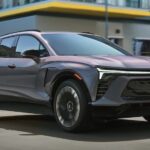
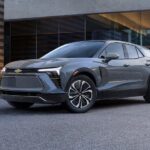
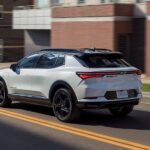
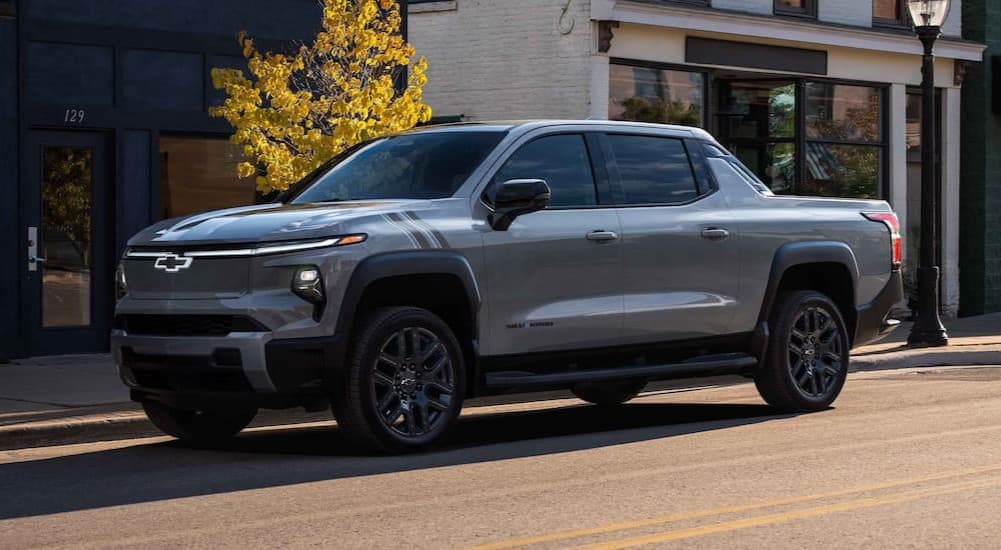
All GM EVs based on the Ultium platform can be upgraded to V2H backup power by adding the GM Energy V2H Bundle. Compatible EVs from different GM nameplates include:
- Chevrolet: Silverado EV, Blazer EV, and Equinox EV
- GMC: Sierra EV
- Cadillac: LYRIQ, Escalade IQ, and OPTIQ
The V2H Bundle includes a special charger that can provide up to 19.2 kW of AC power, and an enablement kit peaking at half that number. According to GM, this is enough to power your home for up to three weeks in some cases. It isn’t cheap, though, with a list price of almost $9,000. As for the GMC Hummer EV truck and SUV, current models only support V2L, but V2H will be added for the 2026 model year.
Ford
The only Ford model with V2H capabilities is the Ford F-150 Lightning, which has sported them since its debut in 2022. An Intelligent Backup Power charging system comes standard on the extended-range F-150 Lightning and is available as an add-on for the standard-range truck. You also need to purchase a Ford Charge Station Pro in-home charging station and a Sunrun home integration system. Ford says an 80-amp charging station can fully power most homes for three days or provide rationed power for 10 days. Without the integration system, you can still use the backup power for V2L.

Jeep
The debut of the PHEV Wrangler 4xe also marked the debut of Jeep’s portable power technology. Adding the official Mopar Jeep Power Box unlocks V2L charging to run essential home appliances like freezers, laundry machines, and heaters. It has two 120V, 15-amp outlets, and you connect it to the vehicle’s J1772 charging port. Battery, generator, and blended mode determine whether power is drawn from the battery pack or engine. Away from home, people use the Jeep Power Box for devices like coffee makers and power tools.
Hyundai-Kia-Genesis
This trio of nameplates has a shared Hyundai E-GMP EV platform, used since 2021, with V2L outlets that can deliver up to 3.6 kilowatts of power. This is enough to operate large TVs, portable fridges, medical devices, and more. You can directly plug into a 120V outlet beneath the rear seats or add an adapter. No other equipment is necessary. Vehicles with this technology are:
- Hyundai: IONIQ 5, IONIQ 6, Kona Electric
- Kia: EV6, EV9, Niro EV
- Genesis: GV60, GV70 Electrified, GV80 Electrified
Additionally, for the 2026 model year, Hyundai introduced the IONIQ 9, its first vehicle with true V2H. To utilize this tech, you will need a compatible bidirectional EV charger and home energy management system (HEMS).
Mitsubishi
Similar to the Jeep Wrangler 4xe, the Mitsubishi Outlander PHEV is a plug-in hybrid with V2L to weather home power outages. On the current generation, high-end trims like the SEL have two 120V AC outlets built into the vehicle for V2L, which supply up to 1.5 kilowatts. You can also add a CHAdeMO-to-AC adapter to enable higher outputs of up to 3.5 kilowatts. However, these are hard to find in North America since CHAdeMO charging is less common.
Volkswagen
In late 2023, VW debuted its bidirectional charging with the new Volkswagen ID. The tech is available on all ID.4 models with a 77 kWh battery and software version 3.5 or better. Its V2H function can power the average home for up to two days. To achieve this, you will need a VW home power station and a HagerEnergy HEMS. It’s also one of the few vehicles with vehicle-to-grid capability.
Tesla
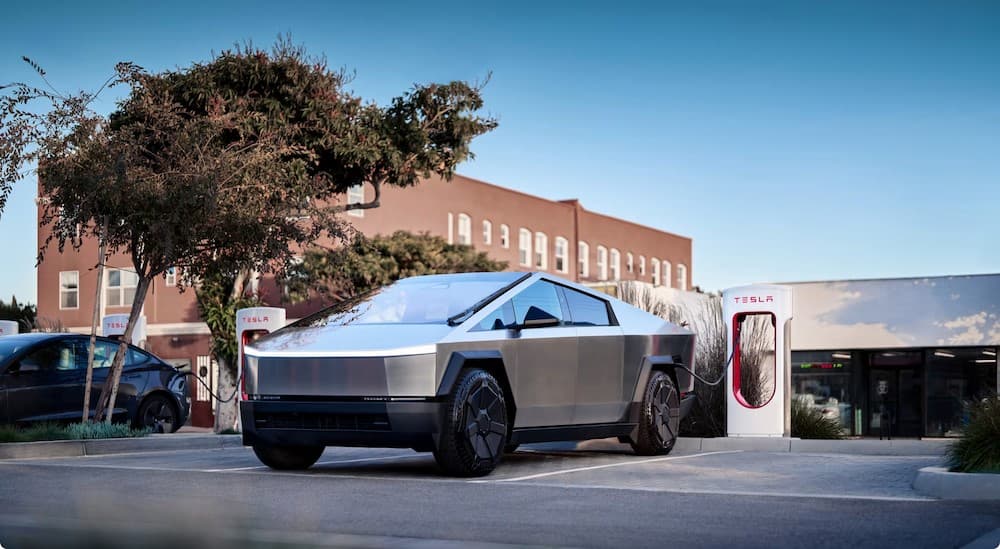
Although reportedly reluctant to adopt bidirectional charging technology, Tesla has gotten on board with Tesla Powershare for the Cybertruck. It’s a 3-in-1 bidirectional charging system that can perform V2H, V2L, and V2V power transfer. Its V2H function delivers 11.5 kW of power for up to three days of household power, and V2L can provide 9.6 kW of appliance power. Bidirectional charging hardware is supposedly also built into the Model 3 and Model Y, but not yet activated. However, Sigenergy recently introduced an aftermarket module that supports bidirectional charging on Tesla vehicles.
EVs That Keep Your Home Running
Beyond the new models mentioned here, a few discontinued EVs offer bidirectional charging, including the Kia Soul EV and Fisker Ocean. Thanks to bidirectional charging, an EV does more than help you travel and enjoy life away from home. It becomes a crucial part of your backup system at home, providing emergency and supplemental power when you need it with an integrated system that doesn’t require a stack of batteries or a noisy generator. Look for even more automakers and models to adopt this technology in the coming years as an added feature to sway potential buyers.