
Automakers and dealerships love to tout how much cargo space vehicles have, especially for SUVs, vans, and trucks. A large cargo area can certainly be useful. The space can be utilized to carry luggage on vacation, haul music equipment, go camping, help friends move, and more.
At the same time, it’s important to be realistic about your cargo needs. If you buy a full-size SUV with 120 cu.ft. of cargo space, but you rarely use more than a fraction of it, that’s a lot of wasted space. Conversely, getting a compact sedan with a small trunk may bite you if you regularly can’t pack enough. It’s time to have a serious talk about cargo space. How is it calculated? How much do you really need? How do you make the most of the space you have?
How Cargo Space is Measured
In a nutshell, the stated cargo area of a vehicle is the product of its cargo space’s height, width, and depth. The resulting volume is measured in cubic feet (cu.ft., or liters in Europe). Most manufacturers follow the SAE International J1100-200911 Motor Vehicle Dimensions recommended procedures to measure the cargo area.
However, it’s not that simple. Factors such as the area’s shape, wheel well size, and rear seat design can affect the cargo volume. For SUVs, vans, and hatchbacks, you’ll also see multiple cargo numbers. Since the second row of seats (and the third, if applicable) can often be folded down or removed, automakers offer different volumes for each situation. I’ll use the Chevrolet Traverse as an example of how this works. With all seats up, this SUV has 22.9 cu.ft. of cargo area. Behind the second row per the SAE standard, capacity jumps to 56.6 cu.ft. If you only fold down both the second- and third-row seats, the Traverse can hold up to 97.6 cu.ft. of supplies.
Luggage Size and Cargo Space
How much space will a typical family actually use? To estimate that, you need to know how cubic feet equate to luggage. So, I decided to look at common suitcase sizes, taking a page from airline carry-on bags.
Among major airlines, the most common standard for a carry-on suitcase, which is what fits in the overhead compartment, is 22 x 14 x 9 inches, which equates to 1.6 cu.ft. It might not seem like much, but if you’re creative with your packing, you can fit anywhere from four to seven days’ worth of clothes, toiletries, and accessories in that space.
What if you’re packing for a longer trip and need items such as tablets and diaper bags, or want extra space for souvenirs? Large suitcases range from 2.6 to 3.9 cu.ft. A family of five can each pack a large suitcase and fit them into the Traverse’s cargo area without needing to put the rear seats down.
Based on this, if an average family has 20 to 25 cu.ft to work with, they should be in good shape. Obviously, there are exceptions. If you regularly go fishing, haul building materials, or have kids who play equipment-intensive sports like hockey and football, you’ll need more space. But for everyday situations, the ideal cargo volume is surprisingly small.
How Cargo Area Affects Driving
A lot of unused space may impact your driving experience in ways you didn’t realize. Every aspect of a vehicle works in lockstep, and changes never happen in a vacuum. Consider the unintended consequences of having more cargo room than you need.
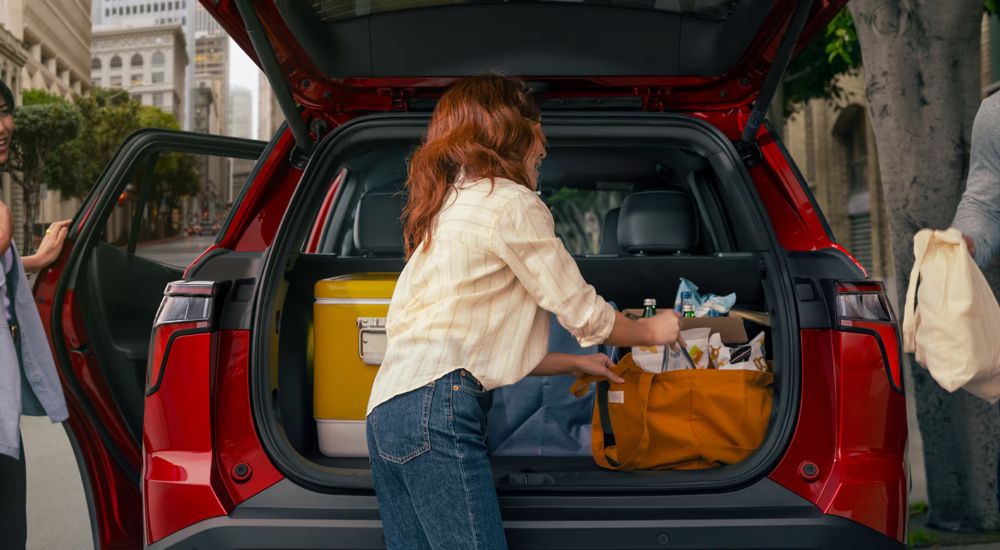
Interior Space and Agility
Ultimately, there are only two ways to add cargo space to a vehicle’s design. One is to move the seats closer to the front of the cabin, which reduces legroom. The other is to lengthen the vehicle. Both have considerable drawbacks.
If a manufacturer achieves more cargo space by compromising passenger space, it means a cramped, uncomfortable drive. If they make the vehicle longer, it becomes more difficult to maneuver in heavy traffic or fit into garages, driveways, and parking spaces. I can attest to this as someone who’s driven vehicles ranging from a Toyota Yaris to a Dodge Caravan.
Fuel Efficiency and Operating Costs
Then there’s the matter of what you’re paying. Vehicles with more cargo space, such as three-row SUVs and full-size trucks, tend to cost more upfront than compact SUVs and sedans. They also get worse fuel mileage because even before you add your cargo, the vehicles weigh more and thus require more power to operate. According to Statista Consumer Insights, fuel efficiency is tied with safety as the most important factor that car buyers consider. However, if you want or genuinely need more cargo space, you must accept lower MPG in return.
How to Maximize Storage Space in Your Vehicle
Making the most of the space you have is as important as the total space. Reducing waste in the cargo and cabin area makes a huge difference in your “true” capacity. Based on expert knowledge and my personal experience — I could wedge a lot of music gear into that Yaris — here are four tips to use your storage space more efficiently.
Prioritize Usability and Layout
The total cargo volume doesn’t tell the full story. There’s also the shape of the cargo area, which depends largely on the vehicle. A low, wide cargo area is often more conducive to loading everyday items than a tall, narrow area, even if the volume is identical. If the wheel wells jut into the cargo hold or the roof slopes, that also reduces realistic volume.
Ensure You Have Flexibility to Rearrange the Interior
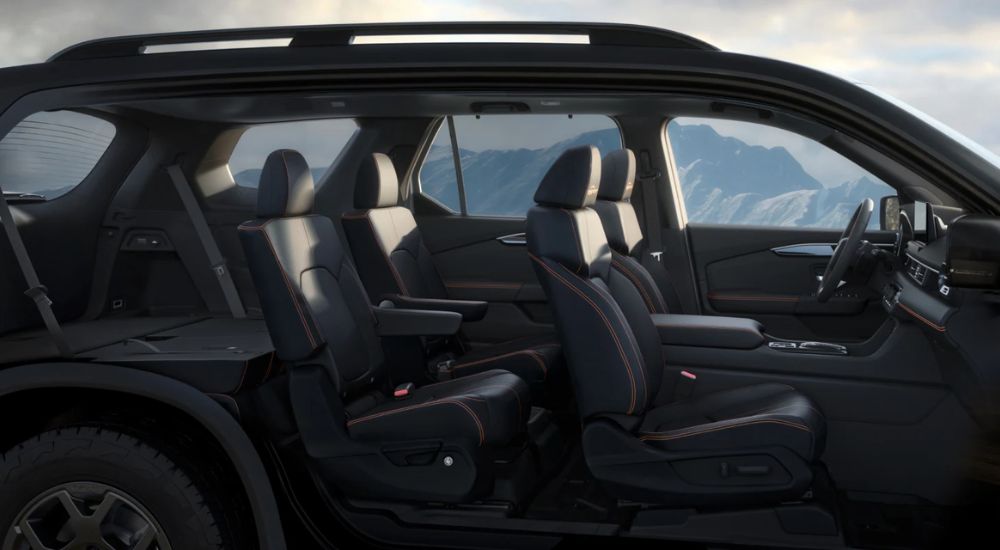
The easier it is to shift seats around and add accessories, the more you can fit into your vehicle. Whether a seat simply folds down, folds into the floor, or can be fully removed greatly influences what you can fit and how. If your vehicle didn’t come with accessories such as storage bins, cargo nets, and hangers, add them to help you organize.
Look for Designs and Features That Emphasize Easy Access
More cargo space is only good if you can use it. A low liftover height, which is the height of the cargo floor, will make it easier to load and unload. If you have a truck, you might want built-in bumper steps or aftermarket steps. A large truck opening or liftgate makes it easier to load and shoehorn items, which is why sedans are more limited.
Look at External Storage
Are you short on space inside your car? Use the space outside of it. Buy a vehicle with roof rails preinstalled or add them so you can mount luggage racks, snowboards, bicycles, and more. Carriers are available to strap to the rear of the car or the tow hitch, too. There are even swing-out racks that let you reach the rear liftgate without dismounting the carrier.
Carrying the Right Cargo
It’s tempting to buy a giant SUV or the largest possible truck bed, so you have the capability to carry whatever, whenever. But the reality is that most families don’t need infinite space, and buying a vehicle that’s too big can harm more than help. Midsize sedans and compact SUVs often have more than enough cargo space, while midsize and full-size SUVs are reserved for the biggest, most adventure-heavy families. Even in a smaller vehicle, a few tricks will let you utilize all the space that’s advertised and then some.