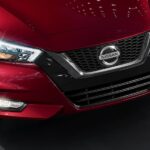
The design language is one of the most important aspects of a vehicle’s identity, and sometimes of an entire automotive brand. In simple terms, design language is a concept that drives the overall look and feel of a car model. It can be seen in specific design aspects, such as the Jeep seven-slot grille and Kia “Tiger Nose,” or from bumper to bumper, as with the Cadillac Art and Science theme.
While some design languages stick around, an automaker may decide it needs to change things up. Such is the case for Audi, the venerable German luxury performance brand. Its two latest models, the Concept C and Nuvolari, are set to revamp the design language that has permeated the lineup for over two decades.
The two obvious questions that arise from this ongoing story are: what is the design language changing to, and why is it changing? The answers are about more than appearance — they point to the direction Audi is going with its automobiles.
Aggression No More
To understand the revamp, it’s necessary to know what the current language is and why it was so successful. In terms of public perception, Audi officially entered the same class as fellow German luxury heavyweights BMW and Mercedes-Benz with the 2003 Le Mans quattro concept, which eventually became the R8 production car in 2007.
Riding on the heels of its 24 Hours of Le Mans victory in 2000, the Le Mans quattro would eventually rewrite the automotive rules. Its boldly aggressive lines and humongous front grille eventually made their way into almost every Audi series and were even copied by other automakers. (Toyota Corolla fascia, anyone?)
The inside of each Audi has become just as busy over the years, with giant touchscreens and digital-only controls. Despite the brand’s success, though, there has been a widespread customer backlash against this approach. As the argument goes, cars like Audis are now so cluttered inside and out that the pure driving experience has been lost.
A New Focus on Clarity
Audi has responded with its two latest concept cars, which buck the design language that has carried the company to new heights. It’s making no secret about the altered approach, either. In a September 2025 press release announcing the Concept C, Audi declared that it was “offering a definitive preview of the design of future models.”
The new era of Audi’s design language has been described in several ways, including “Strive for Clarity,” “The Radical Next,” and “Radical Simplicity.” Under any moniker, the idea is the same. Rather than continuing to make vehicles more complex to the point they border on chaos, Audi is stripping things down and getting back to the basics.
Those hyper-sharp creases and lines are gone. The grilles that look like they’ve been stretched to fit the nose are no more. The wall-to-wall screens and endless touch-only controls have reversed. Instead, Audi is aiming for a more subdued, minimalist design with fewer distractions and the same great performance. You could call it pure athleticism in vehicle form.
How do these principles apply to the Concept C and Nuvolari? I took a closer look at each vehicle to see Audi clarity in action. While each vehicle is inspired partially by Audi’s recent return to F1 and the need for production cars that showcase this involvement, they are also a platform for reinventing Audi’s aesthetic.
The Audi Concept C
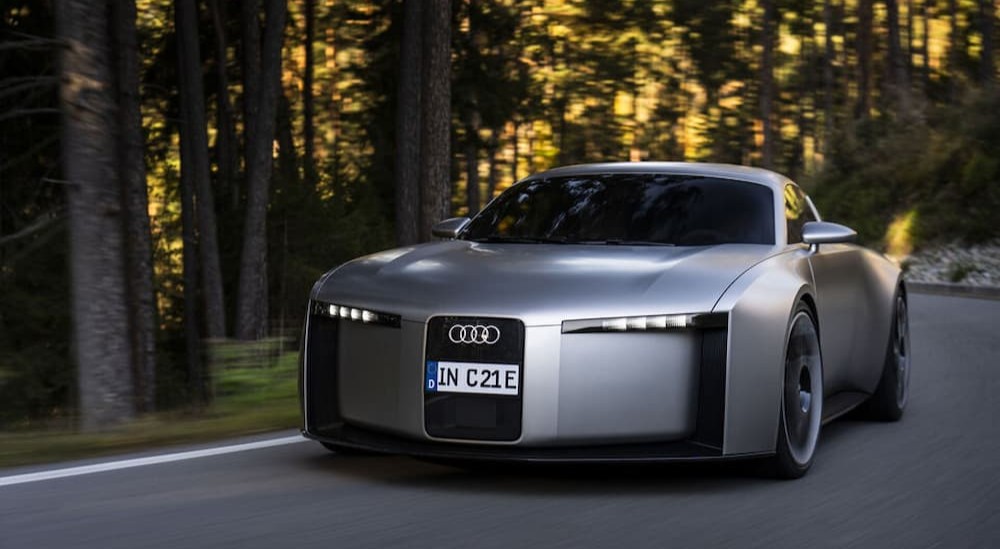
As the vehicle that heralded the design revamp, the Audi Concept C is as notable for what it isn’t as what it is. As the first major Audi design from Massimo Frascella, the Concept C is an electric vehicle that doesn’t “look” like an EV. Instead, Audi took cues from heritage vehicles such as the 2023 TT, early R8 models, and the 1936 Auto Union Type C.
When you look at Concept C next to those cars, you can see the same basic vision. Rather than an aggressive, heavily angled monster, the Concept C offers a simpler form, a confident stance, and well-proportioned components. It’s handsome and clean-cut, like a partner to come home to rather than a quick fling.
The rectangular upright grille frame, which is based on the Type C and the 2004 Audi A6, is also worth noting. Those cars were generations apart, but they had an undeniable presence, and the Concept C captures this same confidence while better displaying Audi’s iconic four-ring logo. As a bonus, it conceals the various driver assistance hardware and sensors.
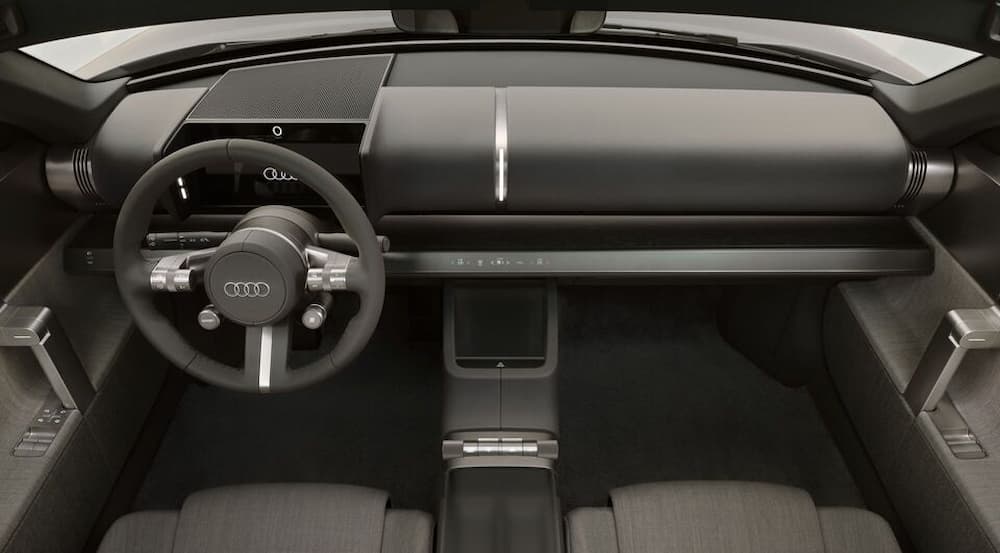
Inside, you’ll find a “shy interior” that is easy to navigate. Using higher-quality materials is part of the changeover, and Audi will no longer have exposed plastic on cars priced above certain thresholds. The Concept C instead has cloth-lined doors, genuine metal accents, and shag carpets.
Although the official infotainment screen size hasn’t been announced, it earns major points for being a foldaway that frees up dashboard space when not in use. Audi has also restored one of its signature interior elements, physical controls that each have a similar feel and satisfying click.
Not much information is available yet beyond the design language aspects. The main info is that the Concept C will be based on the same platform as the upcoming Porsche 718 EV and will cost between $80,000 and $100,000. Full-scale production is expected to start in late 2027.
The Audi Nuvolari
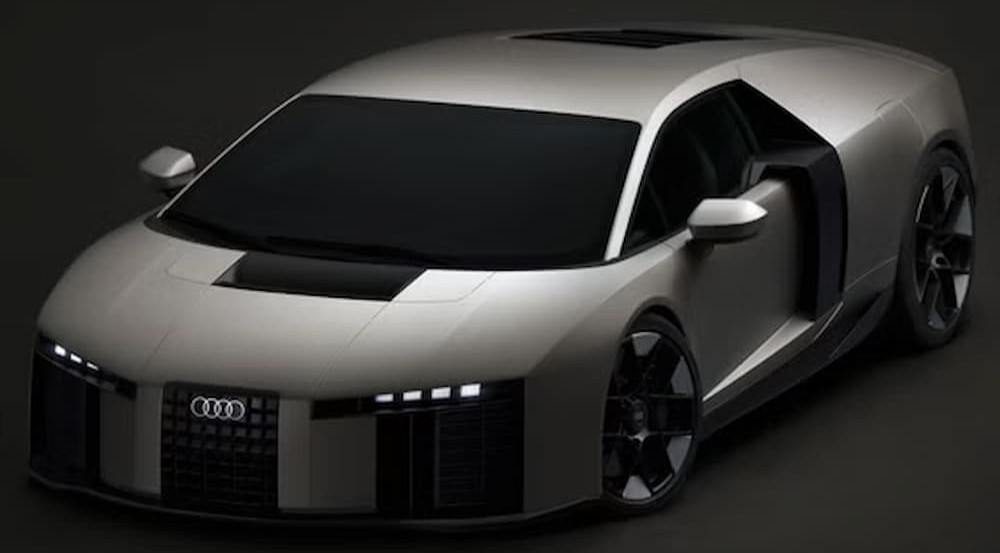
First unveiled in June 2026, this machine is impressive no matter how you slice it. The first Audi hybrid supercar is the heir apparent to the beloved R8, which was discontinued in 2023. Named for 1930s Italian racing legend Tazio Nuvolari, this two-seater uses a twin-turbo V8 hybrid powertrain based on the Lamborghini Temerario, producing nearly 1,000 hp. It goes from 0-60 mph in 2.6 seconds and has a top speed of over 215 mph.
Once you get past the fact that it’s Audi’s best-performing production vehicle, you can see the same design language as in the Concept C. The Nuvolari does share a few cues with the R8, such as side fins. While the R8 featured a pronounced front section, high-angled windshield, and large center front grille, the latest Nuvolari prototype has a more subdued aesthetic. The front and rear sections are more balanced, the windshield has a gentler slope, and the vertical grille center section more closely matches the side pieces.
Audi does infuse the Nuvolari with its latest performance and infotainment technology, some of which is taken from the F1 effort. But it emphasizes that “every design decision has a clear purpose.” There are no decorative elements on the Nuvolari, and nothing, not even the interior trim, is strictly for show.
Unlike the Concept C, the Nuvolari will be highly exclusive, with production limited to 499 vehicles and pricing rumored to be around half a million dollars. But don’t be surprised if some elements beyond the design language eventually trickle down into other Audi models.
A New Era for Audi
Even when an automaker is successful, it must be willing to look one step ahead and reinvent itself if necessary. Examples include Jaguar’s ongoing transformation into a luxury EV-only brand, Ford and GM’s shift away from sedans, and Kia’s elevation from a budget automaker to one that produces legitimately sporty cars and exciting SUVs.
Audi is the latest company to embrace a new identity, and it’s doing so by rebelling against the modern noise with a simpler, more direct design language. The vehicles are still among the best in the luxury segment, but this time, they don’t need to announce how great they are. Instead, Audi will let the performance and comfort do the talking.