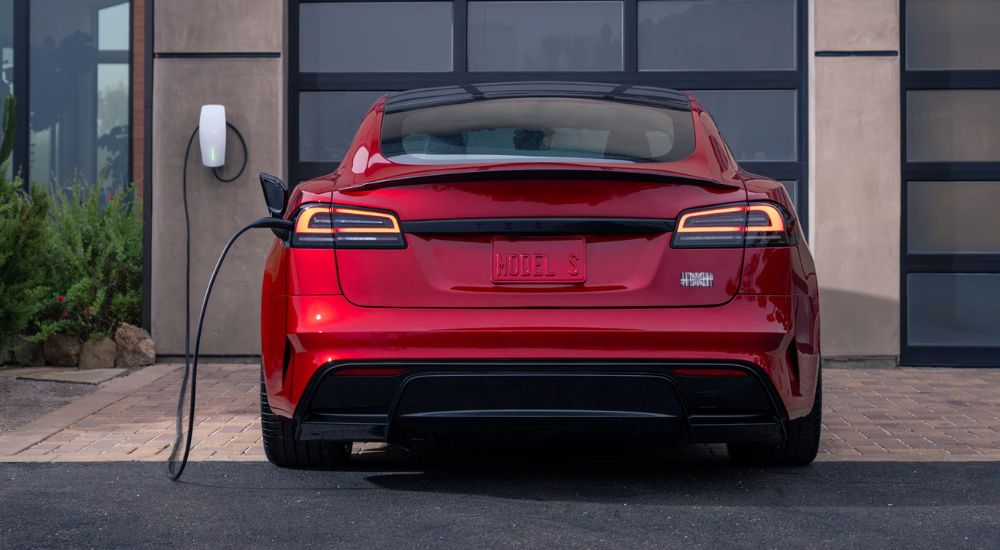
This year marks a slightly sorrowful one for the electric vehicle world because Tesla has announced it will be discontinuing the Model S. Today, you’re probably so used to seeing the Model S cruising around whichever town or city you’re in that you barely notice it. Now, it’s a slice of automotive history that just passed you by.
The Model S was Tesla’s flagship model. First launched in 2012, it marked an exciting new era for the entire electric vehicle market, quickly becoming a leader to which other EV makers looked for inspiration and direction. Today, we give this luxury full-size EV sedan the goodbye it deserves by examining what it means for the world of electric models.
The First Purpose-Built Tesla
The Model S was not the first Tesla. That distinction belongs to the Tesla Roadster, introduced in 2006 and going into production in 2008. Unlike today’s practical Teslas, the Roadster was a two-seat sports car, a halo car intended more to generate interest in EVs by breaking all the rules. At the time, EVs were seen as slow and boring. The Roadster was anything but, with 248 hp, 200 lb-ft of torque, and a range of 244 miles in the original model. All of these figures improved during its five-year production run.
However, the Roadster was not entirely a Tesla design. It was strongly based on the Lotus Elise and shared some components, though not many, by the time Tesla was done transforming it. The Lotus was made for a gas engine in the back and no EV battery packs, so the Roadster’s design had to be compromised to fit into this pre-existing package.
Tesla changed the game with the Model S by doing something bold and unprecedented: building it as an electric model from the ground up. There never was a gas model, there never was meant to be, and there never will be. I know the first time I got in a Tesla, I could feel how a vehicle designed specifically for electric performance is different, and even better than a gas model turned electric. Everything about the way the Model S is built enables it to optimize its powertrain. The battery pack sits beneath the floor, improving handling and providing more cargo space. From the way it drives to the way it supports passengers and cargo, the Model S’s design simply feels intentional.
On the flipside, sometimes when a brand takes a previously gas engine model and tries to adapt electric components to its chassis, things end up feeling clunky. Things can feel Frankensteined together. The Tesla Model S simply demonstrated superior aerodynamics and a stronger center of gravity out of the gate. If anything, Tesla showed the world that there was a market for models only available with an electric powertrain. It pulled electric models out of the niche and into the mainstream.
A Posh EV Like Never Before
The Tesla Model S also brought electric vehicles into the luxury space. Or, perhaps you’d say it brought the luxury space to the electric vehicle one. Either way, the Tesla Model S didn’t hold back on premium features from day one.
With its futuristic technology, high-end upholstery, and thoughtful touches throughout the cabin, the Model S competed with top-tier brands like BMW and Mercedes-Benz instantly. Previously, electric models were designed for economy, not luxury. The Nissan LEAF, for example, was designed to be a commuter car that, while efficient, was not exactly a lap of luxury. The world simply seemed to associate electric powertrains with functionality, at least until the Model S came out.
An All-Electric Range That Left Others in the Dust
The Model S showed people that electric vehicles didn’t have to have a range problem. Others had, but Tesla fixed it. The 2012 could go for about 265 miles on a full battery. That was a game-changing number. To give you an idea of how big a deal that was, the 2012 Ford Focus Electric had a range of 76 miles. The Toyota RAV4 EV topped out at 103 miles. The Honda Fit EV could only last 82 miles. The Tesla Model S revolutionized the way commuters viewed EVs, finally treating them as true contenders for long-distance drives.
Put simply, Tesla helped the public be less hesitant to get an electric vehicle, for fear that they’d practically live at the charging station. Many Americans travel roughly 40 miles per day. With the prior competitors, that driver would have to plug in almost every other day. The Tesla Model S made it possible to charge only once a week.
The Plaid Ushered in the Performance Era
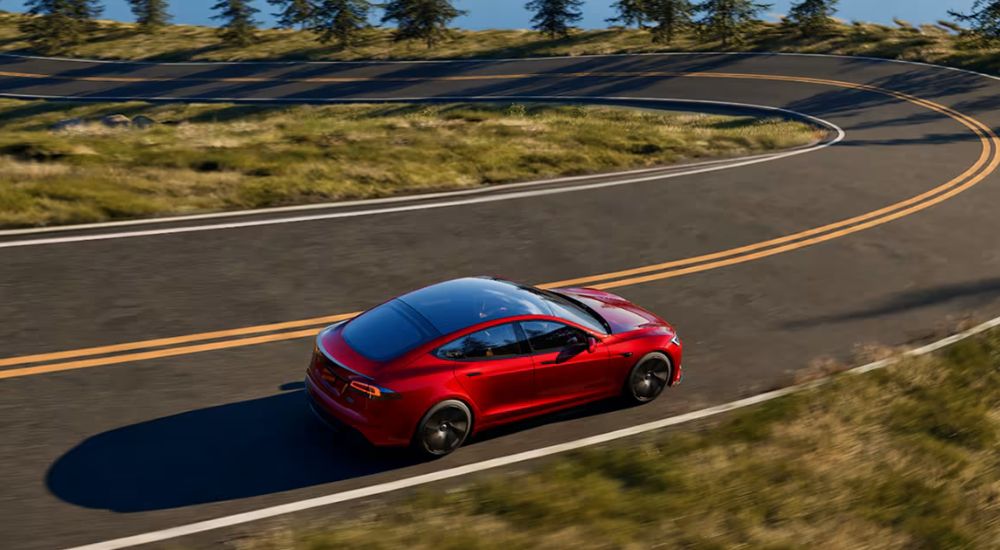
The Model S had some fun variants, too, like the Plaid, its performance model. It caused a splash, especially when it entered into a rivalry with the Porsche Taycan to see who could achieve better stats at Nürburgring. The Model S Plaid made a whopping 1,020 hp in its very first year on the market. It went from 0 to 60 in 2.28 seconds and could cover the quarter mile in 9.30 seconds.
In contrast, the Porsche Taycan needs 2.53 seconds to go from 0 to 60, and 10.39 to run the quarter mile. These are still very fast numbers, but the Tesla was even faster, beating out a legacy manufacturer like Porsche. The Model S was simply one of the first EVs ever to be a major performance player. I’m not just talking about a vehicle with a “performance” trim that can speed up a bit faster than the others. I’m talking about the type of vehicle that people pay to see race around a track.
Continuous Evolution
Throughout the years, Tesla just kept making the Model S better and better. Even the way it updates its vehicles was unique. Rather than waiting for a new model year to make changes, Tesla makes updates throughout the calendar year, whenever it sees fit. This is a method that benefited the Model S greatly.
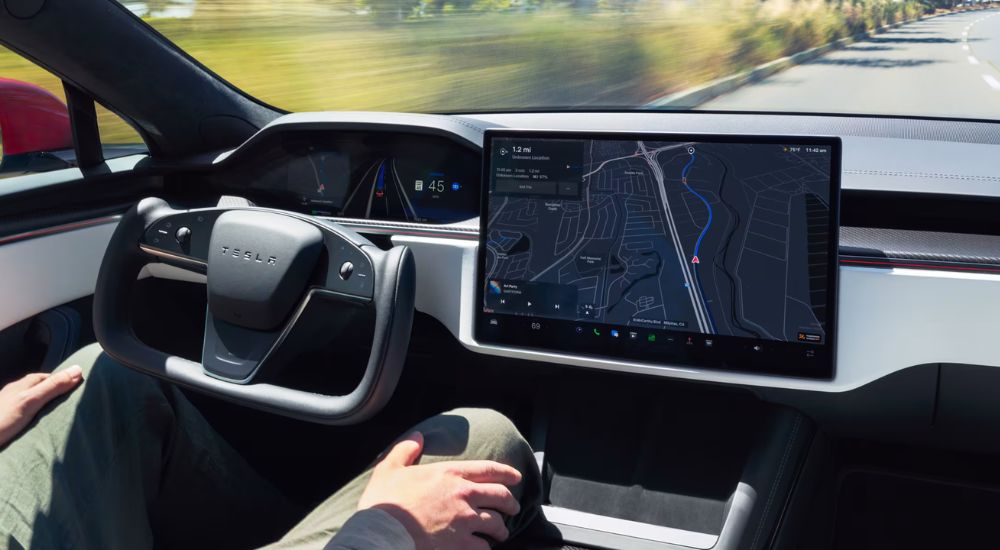
The Model S rapidly became a pioneer in the tech space by offering over-the-air updates, a feature that other manufacturers quickly adapted. This allowed for changes to features like tech and performance without a visit to the dealer. In 2021, the Model S made waves with its horizontal 17-inch touchscreen and its three-screen layout, complete with a rear passenger display. That same year, the Model S got a yoke-style steering wheel, creating what could only be described as a spaceship feel.
The Tesla S Paved the Way for All EV Manufacturers
We need to tip our hats to the Tesla Model S. It opened doors that other electric vehicle manufacturers have happily walked (or driven) through. It showed us that manufacturers could take a leap by creating a purely electric model, built from the ground up as an electric vehicle with no gas engines to be found.
The Tesla Model S showed us that electric powertrains shouldn’t be confined to the economy segment. It also showed us that electric vehicles can go really fast and really far. Some might even say the vehicle is behind the rapid global expansion of electric vehicles, even if other brands don’t want to admit it. Goodbye, Model S, and thank you for your service.