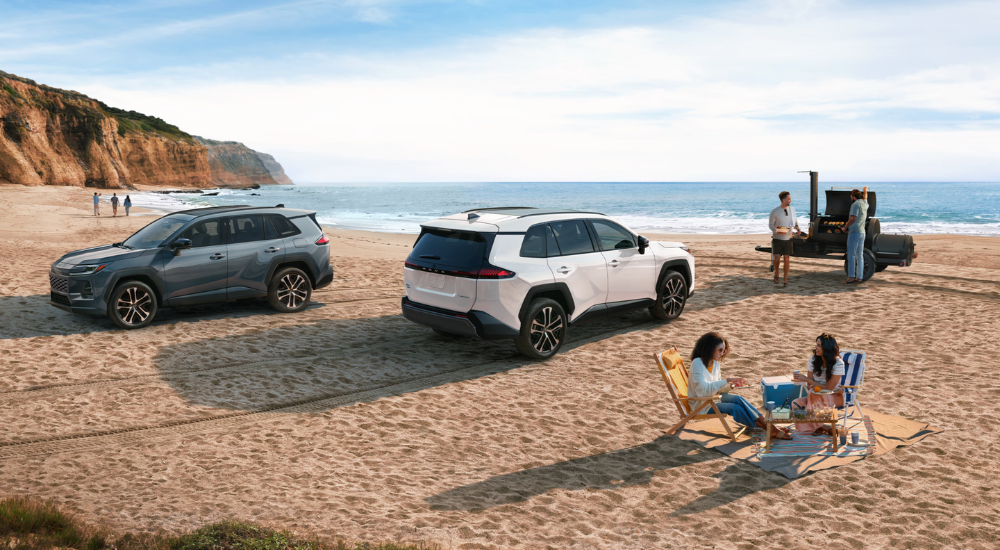
Over its 30-plus history, the Toyota RAV4 has become more than a vehicle: it’s a symbol of how 21st-century North American automotive tastes have evolved. This compact SUV was the top-selling model in 24 states in 2024, and as of now, it remains the best-selling non-truck of 2025, with more than 350,000 units sold. Along the way, the RAV4 spearheaded a meteoric rise in small SUV sales, a segment that has now grown to represent 21% of all new vehicles sold in the U.S. For those anticipating the next generation, the excitement for the Toyota RAV4 for sale is already building.
With the RAV4’s popularity and Toyota’s reputation for innovation and forward-thinking, the vehicle also serves as a benchmark for gauging the direction of compact SUV designs and technology. As such, the redesigned sixth-generation Toyota RAV4 has been highly anticipated by everyone from customers to industry researchers. It’s the most significant update in years, a period during which short- and long-term industry trends have taken effect.
Toyota recently announced the main specs for the 2026 model, which will arrive at dealerships sometime this winter. What can people expect, and what is the larger meaning for the huge compact SUV segment? Join me for a look at the redesigned king of small SUVs and the potential implications.
The RAV4 Goes All-Electric
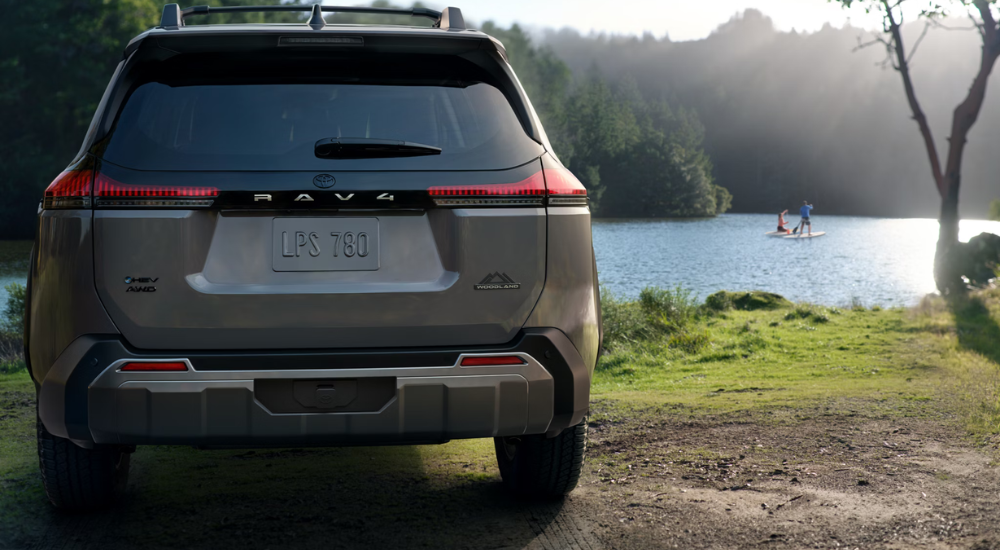
The last time the world saw a new generation of the Toyota RAV4 was the 2019 model year. During that time, electric powertrains have evolved from a novelty into a mainstay in the U.S. Electric vehicles made up roughly 2% of light-duty U.S. vehicle sales in 2019. By the first quarter of 2025, the market share of hybrid electric vehicles had grown to 12%, representing a 500% increase. Despite lagging behind this year, PHEVs and battery EVs have also seen significant growth over the past six years, now accounting for roughly 2% and 5% of sales, respectively.
Electrified power already accounted for more than half of all Toyota RAV4 sales — and starting in 2026, it will be 100%. For the first time since the RAV4’s debut in 1994, the 2026 model will not offer a gas-only powertrain. Its two options are a mild hybrid that produces up to 236 hp and a PHEV that jumps to 320 hp. Beyond offering way more power than the 203 hp on the 2025 RAV4 ICE combo, these powertrains will be the most efficient yet, delivering up to an estimated 44 MPG combined on FWD and select AWD trims, according to the manufacturer.
Of the major compact SUV players, the Toyota RAV4 is the first to go hybrid-only. Vehicles like the Honda CR-V, Hyundai Tucson, Nissan Rogue, and Subaru Forester all still offer a gas-only setup — and in a few cases, haven’t even introduced a hybrid powertrain. The starting price of the Toyota RAV4 will increase slightly as a result, but Toyota says it aims to keep base models in the low $30,000s, ensuring affordability isn’t compromised.
Will the country’s most popular SUV, which is going exclusively hybrid, force the hands of other automakers and models? Or will there be a backlash that hurts RAV4 sales, whether due to technology anxiety or a need for a more affordable vehicle? Time will tell.
All-New Active Safety and Infotainment Technology
There’s no escaping technology in a modern vehicle. However, small SUVs have historically been on the lighter end of active driver assistance and infotainment offerings. One of the reasons is sheer space — there’s only so much room for everything compared to a midsize or three-row SUV. The other reason is the affordability aspect I mentioned earlier, with more advanced features streamlined to keep the sticker price down.
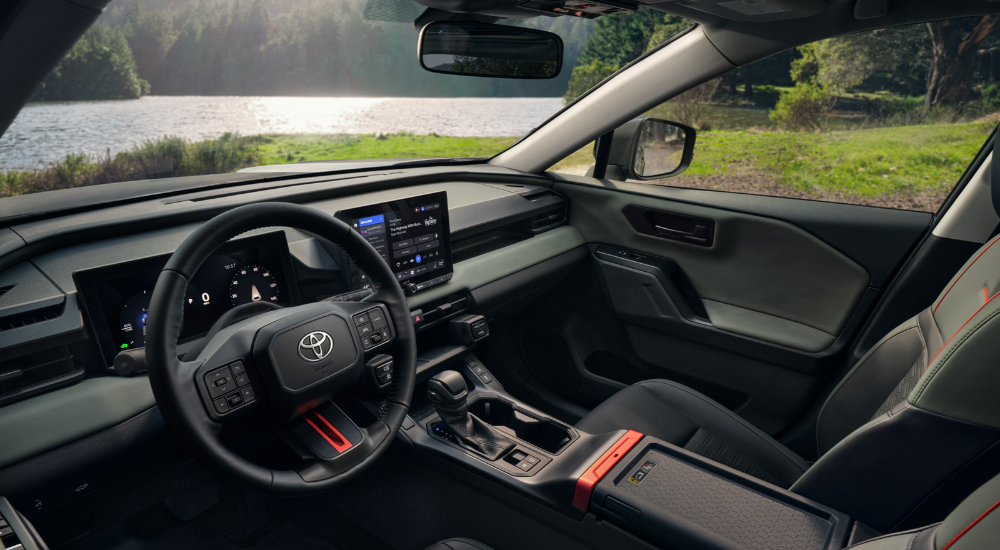
This makes the 2026 Toyota RAV4 all the more astounding and meaningful. The vehicle heralds the debut of Toyota Safety Sense 4.0, the automaker’s latest advanced driver assistance system (ADAS). Pilots will have access to the full range of ADAS safety features, including Pre-Collision Pedestrian Detection, Full-Speed Range Dynamic Radar Cruise Control, Lane-Tracing Assist, Road Sign Assist, and other advanced active safety aids, on all trim levels. Toyota is also equipping the RAV4 with improved sensor and radar detection capabilities, as well as a 3D Panoramic Viewing Monitor that provides a bird’s-eye view of the vehicle’s surroundings.
As for infotainment, Toyota has increased the multimedia touchscreen size to 10.5 inches on lower trim levels and 12.9 inches on premium models. The free-floating design of the digital gauge cluster is now 12.3 inches in diameter, featuring a matte finish to reduce glare. A wireless device charger comes standard, along with five USB-C ports. The 2026 RAV4 marks the debut of Toyota’s Arene Software Developed Vehicle platform, which serves as the foundation of select key features.
Toyota also upgrades interior convenience with a power driver’s seat, auto-dimming rearview mirror, and dash center stack among the “new normal” amenities. Together, these features make it clear that being a small SUV is no excuse for going light on technology. Toyota is establishing a new benchmark for other automakers; competing brands will need to adapt if they hope to avoid losing additional market share.
Go High-Performance With the RAV4 GR Sport
High-end cars and SUVs are nothing new, as are upgraded editions of budget-minded nameplates. Previous editions of the RAV4 have included off-road trim levels, sophisticated near-luxury models, and athletic variants. For 2026, however, Toyota is taking a different direction and relying on an unlikely source for design and inspiration.
Toyota Gazoo Racing (GR) has been on fire in recent years, winning races on the track and applying those exciting designs to public roads. Other well-known Toyota cars, such as the Supra, 86, and Corolla, have received the GR treatment. Now, for the first time, the GR is coming to the SUV segment.
The 2026 Toyota RAV4 GR Sport is unlike any RAV4 you’ve seen. Gazoo Racing engineers tuned its suspension and steering, and the aerodynamics were updated to maximize top speed and downforce. This includes a front lip, rear wing, and lower ground clearance to improve stability and reduce lift. It will be sold exclusively with the PHEV powertrain and AWD, so drivers get the most power, torque, and traction. Other expected additions include 20-inch wheels, sport-style synthetic suede seats, red brake calipers, and a two-tone exterior option.
To be fair, several premium brands already offer high-performance SUVs. These vehicles blend everyday utility with sports car-like performance, such as the Porsche Macan, Alfa Romeo Stelvio, BMW X1, and Audi SQ5. But this is arguably the first time an everyday compact SUV has gotten the all-out performance treatment. If the RAV4 GR Sport is successful, it could potentially pave the way for other mainstream manufacturers to follow suit.
Setting the Bar for the Largest U.S. Automotive Segment
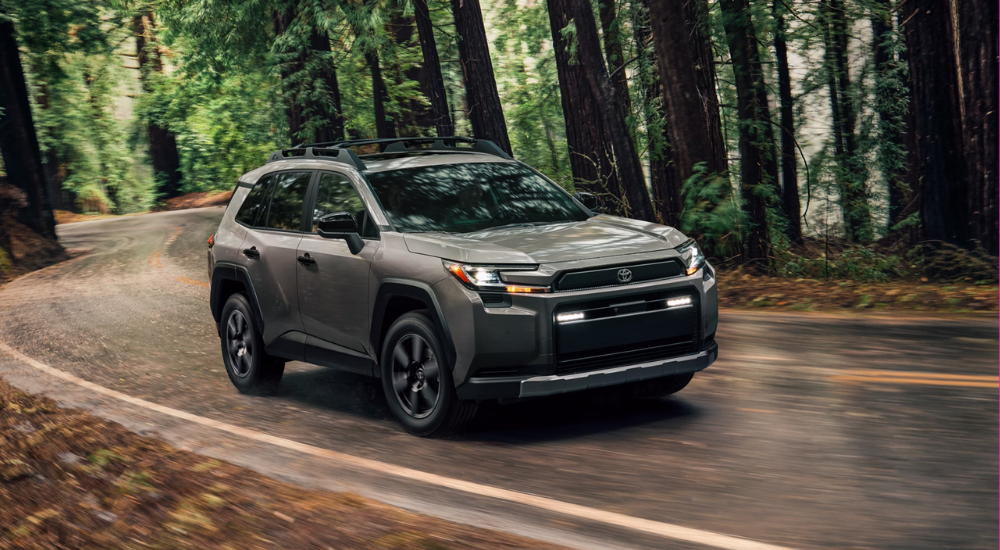
The Toyota RAV4 emerged as one of North America’s most popular vehicles because its engineers and designers refused to settle for merely blending in with the crowd. Each generation strives to be one step ahead of the pack by identifying not just what customers want now, but what they’ll demand for the next five to seven years. When the sixth-generation 2026 RAV4 finally hits showrooms, it will once again set the standard by which other small SUVs are judged.
Toyota’s shift to all-hybrid-only powertrains, advanced technology, and a performance-influenced sport model are developments that every competitor should be watching closely. I haven’t even begun to cover the other compelling aspects of the 2026 RAV4, including its new architecture and suspension, which use more rigid mounting points for sharper responsiveness and added sound damping, to cut ambient noise. It’s a true ground-up redesign that still preserves the RAV4’s core identity, and it could very well prompt broader changes in how automakers approach the compact SUV segment.