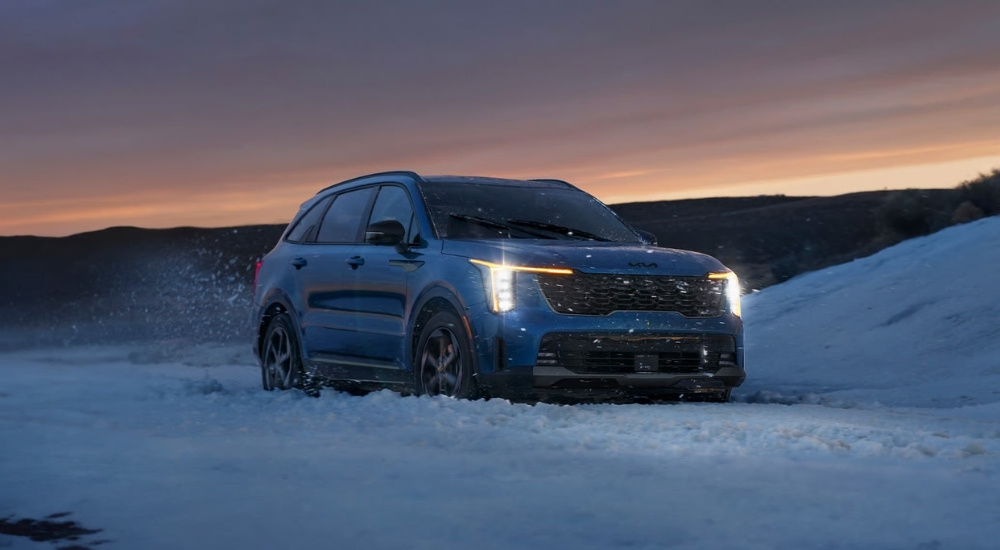
Segment sizes can be tricky business. Why opt for a subcompact when you could spend a little more and achieve the same fuel economy in a compact? Why opt for a midsize when you could get more power and towing from a three-row? Or why opt for a three-row when you could get more cargo capacity and features from a full-size model? A lot of it boils down to shopper preference. Nowhere is this overlap more visible than in Kia’s own three-row lineup. Kia has been treading a fine line with the Telluride and Sorento.
Choosing the right vehicle segment can be a challenge. Why go for a subcompact when a slightly higher price could get you the same fuel economy in a compact? Why settle for a midsize when a three-row SUV offers more power and towing capacity? Or, why choose a three-row SUV when a full-size SUV offers more cargo space and features? Ultimately, it all comes down to personal preference. This overlap is especially evident in Kia’s three-row lineup, where the Telluride and Sorento have both been treading a fine line between the two models, leaving many drivers questioning why shop for a Kia Sorento for sale when you could shop for a Kia Telluride?
Both vehicles offer three rows of seating, excellent cargo capacity, and a range of good performance options. However, are these differences enough to distinguish the two models from each other? Does the Telluride stand out on the market from the Sorento in a significant enough way? Can Kia do more to differentiate the two? That’s exactly what I’ll be exploring as I compare the two and break down their differences between the 2026 Sorento and the 2025 Telluride.
Let’s take a quick look down the list of features and where both SUVs sit on the market to determine if Kia needs to do more with their three-row offerings.
Powertrain Options and Performance Capabilities
Starting with the exterior, the two SUVs have different wheelbases, which impact their cargo capacity. The Sorento’s 110.8-inch wheelbase and the Telluride’s 114.2-inch wheelbase result in variations in both passenger space and cargo room. The Sorento seats up to seven passengers and has a max cargo volume of 75.5 cu.ft, while the Telluride seats up to eight passengers and has a max cargo volume of 87 cu.ft.
The two SUVs also have very distinct powertrains. The 2026 Sorento is designed to accommodate a wide range of drivers, from those who prefer turbocharged performance to those seeking a hybrid with excellent fuel economy. The Sorento truly came into its own during the fourth generation, featuring two distinct hybrid setups, a naturally aspirated 2.5-liter 4-cylinder engine, and a 2.5-liter turbocharged 4-cylinder engine. Of the four powertrains, the Sorento produces a maximum of 281 hp and 311 lb-ft of torque when opting for the turbocharged engine. With the HEV powertrain, the Sorento offers an EPA-estimated fuel economy of 37 MPG in the city and 36 MPG on the highway with front-wheel drive.
The first-generation 2025 Telluride offers a standard powertrain across the lineup, featuring a 3.8-liter Lambda V6 engine that produces up to 291 hp and 262 lb-ft of torque. The Telluride offers a maximum fuel economy of 20 MPG in the city and 26 MPG on the highway. The newer second-generation models starting with the 2027 model year will offer a more robust performance profile with a turbocharged engine, including a hybrid option. Interestingly, despite the Sorento’s better performance specs, the Telluride offers more towing capacity, at up to 5,500 lbs, whereas the Sorento tops out at 4,500 lbs.
The difference in size, performance, and fuel economy provides a distinct look at how the Sorento is aimed at those who want a smaller three-row SUV, offering good fuel economy, decent towing capabilities, and ample capacity. If you want everything the Sorento offers, but in a slightly larger package, with additional towing and cargo space, then the Telluride is the go-to option for potential shoppers. However, are these differences enough to warrant two completely different nameplates occupying the same market segment? To get a clear answer on that, we look at the sales data.
Telluride vs Sorento Sales Data
If we compare the sales averages from 2020 through 2025 between the Kia Sorento and the Kia Telluride, it gives a decent look at how the average three-row SUV shopper views both vehicles. The Sorento has averaged around 84,686 annual unit sales in the United States between 2020 and 2025, whereas the Telluride has averaged 99,287 unit sales in the United States. The sales difference is just under 15,000 units when looking at the averages between 2020 and 2025. What are the implications of this, though?
It means that the average customer–while typically leaning toward the Telluride–still finds the Sorento to be a highly enticing option as a three-row SUV. This is also significant, given that the Sorento has been on the market since 2002 and has had four generations to develop its market appeal. In contrast, the Telluride is more recent, with its first generation having debuted in 2019. What it signifies is that you have a large number of shoppers interested in a Kia Sorento for sale just as much as they are interested in a Kia Telluride.
The bigger question is whether either SUV is negatively impacting the sales of the other. Since the Telluride arrived in 2019, after the Sorento, we can actually go back and look at the trailing sales leading up to 2019, and compare the five-year average to after the Telluride was released. If we examine the Sorento’s sales between 2014 and 2019, they averaged 105,810 units per year.
There could be several reasons why the Sorento performed better before the Telluride was released. However, comparing the five years preceding the Telluride’s release with the five years following, the Sorento saw a 21,124-unit decline in its cumulative average sales. Could it be the Telluride eating into the Sorento’s market appeal, or stiffer competition from other auto manufacturers in the three-row SUV space?
Pricing Strategy & Long-Term Buyer Behavior
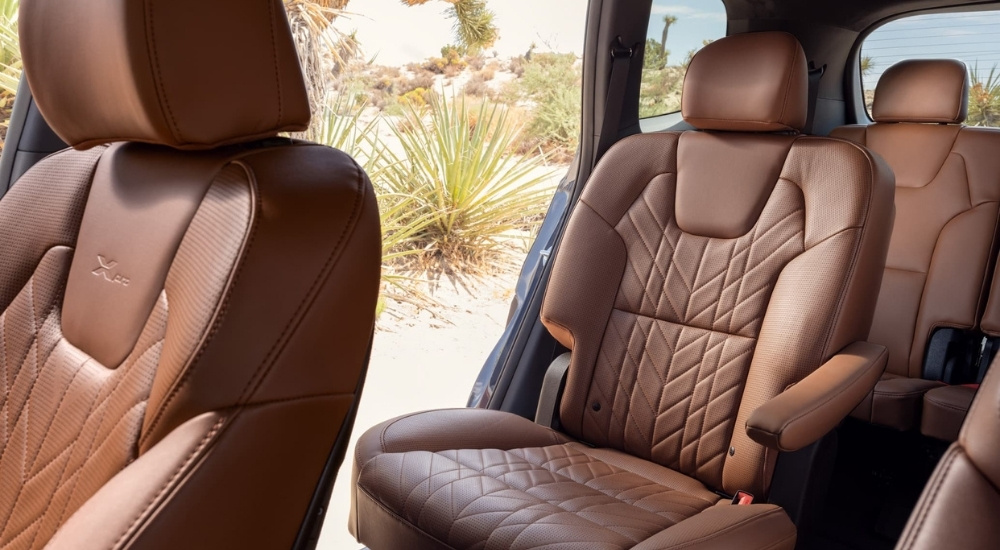
One possible answer is that, when considering the MSRP, the Telluride is about $4,000 more than the Sorento at its starting price, which isn’t a significant price increase when considering the features, capabilities, and premium interior. Despite the Sorento offering better performance and fuel economy, some families might see the Telluride as the safer, long-term option. If you’re considering long-term resale value, the vehicle you hold onto for longer and trade in might seem like the better option, as you could utilize the equity for your next big purchase.
Another consideration is that the Sorento, being closer to a midsize SUV than a full-size SUV, might make it seem as if it doesn’t offer sufficient space for large families. At the same time, being a three-row SUV might also make it seem like it’s too much of a vehicle for solo drivers looking for something convenient and practical for driving. The Sorento isn’t as fuel-efficient as a subcompact or compact SUV, and it’s too large to appeal to the sports-performance crowd. This mostly leaves it targeting the family segment.
If you’re a family-focused driver, then space and longevity will be your top priorities. Many people might figure that if they’re going with a three-row, they may as well plan for the future and invest in case they decide to expand the family. Some shoppers may view the Sorento as a short-term purchase, while others may consider the Telluride a long-term investment.
What Improvements Could Kia Make to Their Three-Row SUVs?
Let’s assume that the Sorento and Telluride target the same group of potential customers, and that the Telluride is, to some extent, taking sales away from the Sorento. What changes could Kia make to improve both SUVs? The most obvious answer would be to make both vehicles more distinct from one another.
Kia already seems to be on the right path with the Telluride. Expanding its performance profile for the second generation, with the 2027 model year featuring a turbocharged and hybrid powertrain, is the right move. This positions the Telluride as a high-performing, fuel-efficient three-row vehicle for large families. With the impressive sales they have now, it’s likely those figures will stay on track with the newer generation. The idea is not to rock the boat.
The Sorento, on the other hand, needs some tweaks. Personally, I think Kia needs to refine the Sorento to be more fuel-efficient and market it as a three-row vehicle with a lot of range. It may require scaling back on some equipment or better fine-tuning the powertrain offerings, but it’s also about maintaining impressive numbers. The Sorento still has a dedicated audience, and a few adjustments will go a long way to make this vehicle stand out as its own model from the Telluride.
Adding more off-road capabilities could boost its appeal, particularly for those seeking a larger vehicle than a typical two-row SUV, while still wanting the rugged utility for outdoor adventures and the maneuverability of a smaller size. This would position certain trims to compete with other midsize SUVs, like the Ford Bronco or Jeep Wrangler, but with a focus on families.
According to some speculative reports from auto blogs, it appears that Kia may be heading in this direction with the 2027 redesign of the Sorento, making it more rugged, fuel-efficient, and high-tech. Ultimately, this would broaden its market reach and give it more versatility among shoppers looking for a vehicle that is smaller than the Telluride, highly fuel-efficient, yet larger than the Kia Sportage.
What’s Your Take on Kia’s Three-Row SUVs?
Kia has continued to expand and grow its portfolio, and continues to appeal to a broad market of shoppers. While the Sorento has seen dips in its annual sales, it continues to sell impressive numbers year after year.
With a few tweaks made for its target audience, the Sorento could reposition itself and regain some of the fans it has lost over the years. It could easily rekindle interest in both new and old fans to start shopping for a Kia Sorento for sale in the coming years, thanks to an exciting refresh and a few performance adjustments.
In my opinion, Kia has the potential to further refine its three-row SUVs. With the right enhancements, the Sorento and Telluride could maintain their appeal, and even grow it, without sacrificing what makes them unique in the market.