
For years, I’ve watched car enthusiasts obsess over machines they can’t legally own yet. Not because they’re rare, fragile, or unobtainable, but because they’re too new. In the States, some of the most exciting vehicles to ever hit the market are locked in a bureaucratic time capsule known as the 25-Year Rule.
If you’ve ever wondered why people lose their minds when old Japanese imports hit American soil, or why certain cars become “legal” seemingly overnight, the answer sits somewhere between safety laws, emissions policies, and unintended cultural consequences. The 25-Year Rule isn’t just a regulation, but a slow-burning influence on automotive enthusiasm, design appreciation, and collector culture.
What It Is and What It Isn’t
At its core, the 25-Year Rule permits the importation of vehicles that are at least 25 years old into the United States without requiring compliance with modern Federal Motor Vehicle Safety Standards. That means, once a car hits its 25th birthday (calculated from its month and year of manufacture), the DOT no longer requires it to meet current U.S. crash, lighting, or safety regulations.
The EPA, however, runs on a slightly different timeline. Vehicles 25 years and older are generally exempt from EPA emissions compliance, provided they retain their original engine configuration. Together, these rules form the legal gateway for importing foreign-market vehicles that were never sold in the United States.
This doesn’t mean that the process becomes effortless, though. Customs paperwork, import tariffs, and state-level registration laws still apply. But the largest federal hurdles, the ones that make importing newer vehicles financially or mechanically impractical, are removed.
Cultural Impact
The Imported Vehicle Compliance Act of 1988 wasn’t written with car enthusiasts in mind. Its purpose was to protect general consumers from vehicles that didn’t meet U.S. safety and emissions standards, particularly during an era when gray-market imports were becoming more common. The assumption underlying the law is straightforward. If the car is old enough, it’s no longer competing with modern vehicles or threatening consumer safety norms. A 25-year cutoff created a clear and enforceable boundary, one that lawmakers likely never expected would shape car culture the way it has.
One of the most fascinating things about the rule is that instead of being a hindrance, it turned waiting into a ritual. There are entire communities that dedicate their time to tracking production dates like countdown clocks. Forums and Facebook groups light up when a specific chassis becomes eligible. Prices spike, not because the car suddenly got better, but because it is finally legal.
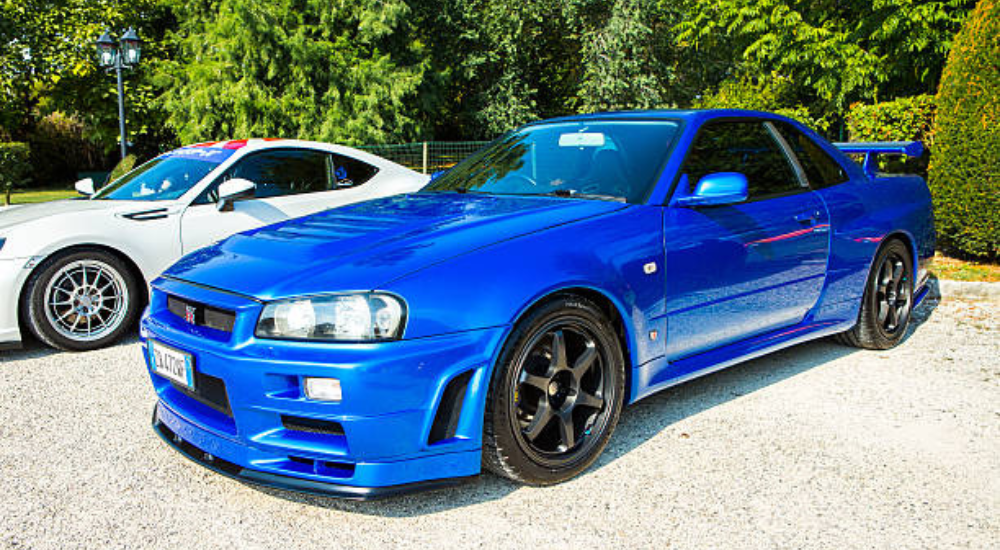
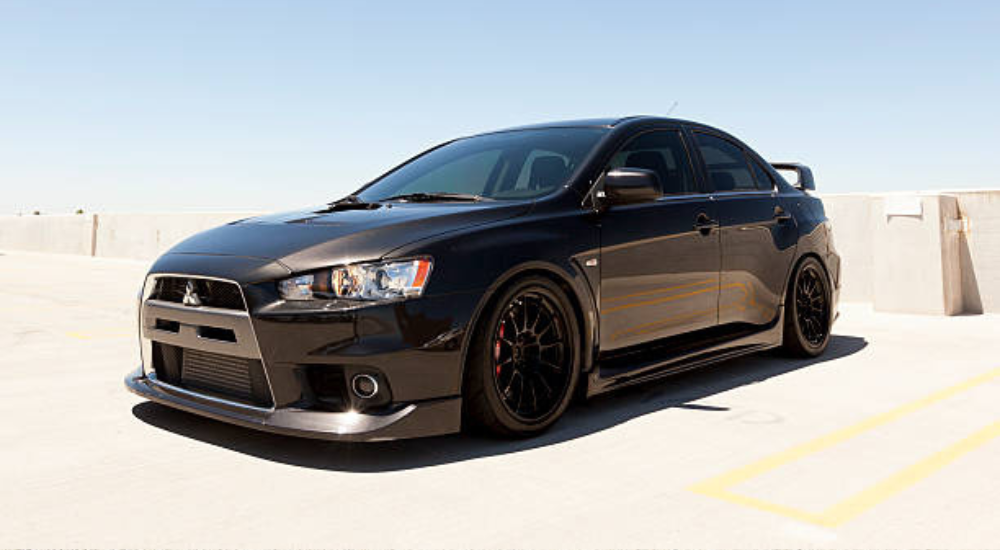
Cars like the Nissan Skyline GT-R, Toyota Chaser, and the earlier Mitsubishi Lancer Evolution, which Americans had only ever experienced through magazines and video games, have now become real, attainable objects because of this threshold. When the R34 Skyline crossed the 25-year mark, it didn’t just enter the U.S. It exploded into a culture that had been waiting decades for it.
The delay that the rule brings has also reshaped what Americans value in their vehicles. Instead of obsessing over the newest technology, import enthusiasts often focus on aspects such as engineering purity, mechanical feel, and design integrity. These traits tend to age better than any touchscreen interface.
Misconceptions
The most common misconception regarding this legislation is that once a car is 25 years old, it’s automatically a simple task to import. In reality, legality and practicality are two distinct aspects of the same coin. Even exempt vehicles must clear U.S. Customs and Border Protection, be properly declared using DOT Form HS-7 and EPA Form 3520-1, and still pay the applicable import tariffs, typically 2.5% for passenger vehicles.
There’s also concern for vehicle condition. Many of the vehicles now eligible under the rule were never designed for long-term preservation. Sourcing parts, translating documentation, and adapting to local inspection requirements can turn a dream import into a long-term commitment rather than a quick weekend purchase.
Mail-Order Cars?
The idea of importing cars into the U.S. has been largely romanticized by enthusiasts. Scroll through a Japanese auction site, wire some money, and wait for the shipping container to come ashore. The reality is far more involved, and understanding the process ahead of time can be the difference between a smooth transaction and an expensive headache.
The process, of course, begins overseas. Buyers can either work through an importer or broker, or purchase directly through foreign auctions, dealers, or even private sellers. This stage requires a great deal of trust, patience, and due diligence. Auction sheets must be accurately translated, chassis codes must be verified, and production dates must be confirmed to ensure that the vehicle truly qualifies under the 25-year exemption. Something as simple as an incorrect build month can delay legality by an entire year.
Once the car has been purchased, it is taken to a port, prepared for export, and loaded for shipping, usually via roll-on/roll-off (RoRo) or shipping container. RoRo is typically cheaper, but doesn’t offer nearly as much protection as container shipping. Container shipping also allows for perks like spare parts to be shipped in the same box as the car. The shipping process alone can take weeks, and delays are increasingly common.
When the vehicle does make it to U.S. soil, the paperwork can begin. Importers have to file DOT Form HS-7 declaring the vehicle’s exemption, EPA Form 3520-1 confirming emissions status, and a customs entry summary. Import duties are calculated, and Customs may inspect the vehicle. Any discrepancy, such as missing VIN plates, incorrect forms, or undocumented modifications, can stall release indefinitely.
Once the vehicle is cleared by customs, the real-world challenges begin. Registering an imported vehicle varies dramatically from state to state. Some states are welcoming, while others seem to want to deter buyers altogether. Title acquisition, VIN inspections, safety checks, and emissions testing are a few of the variations depending on where you live. What’s perfectly legal on a federal level can still be a bureaucratic maze on the local level. The end result, though, is ownership with context. Importing a car yourself requires you to understand its origin, history, and limitations. You don’t just buy the car. You earn the car.
Shaping a Market
This rule doesn’t just affect individuals. It reshapes entire markets. Automakers unintentionally reap the benefits of renewed interest in their older model designs. Entire aftermarket ecosystems grow up around the newly available cars. Values either stabilize or skyrocket once federal uncertainty goes away.
It’s also created a culture of secondary education among enthusiasts. People are learning to decode VIN plates, understand production codes, and distinguish model differences with forensic accuracy. In a high-tech world dominated by software updates and subscriptions, this kind of mechanical literacy is a breath of fresh air to many. It almost feels rebellious.
Relevant or Ridiculous?
Critics argue that modern safety and emissions concerns lead to irresponsible exemptions. Supporters counter that the low production volume and limited usage of imported classics pose a minimal risk. Personally, I see the rule as less of a loophole and more of a historical acknowledgment. These cars are artifacts. They’re special to those willing to go through the trouble to get them here. They represent philosophies, market demands, and engineering solutions from a different era. Forcing them to conform to standards they were never built to meet doesn’t preserve safety, but erases context.
Back to the Future
The 25-Year Rule may have started as a regulatory safeguard, but it has evolved into far more. It protects not just consumers, but also automotive history, allowing vehicles to exist as they were intended, not as they would have to be retrofitted. By spacing out access, the rule has slowed down consumption and deepened appreciation. It’s turned cars into milestones instead of commodities. In an industry obsessed with the next greatest thing, the enforced pause might just be the best unintended gift. For anyone curious about where the car enthusiast community is headed, sometimes the answer isn’t found in the future, but waiting patiently, 25 years at a time.